Standard Systems & Case Studies
SMD Special Machinery Division delivers reliable, field-proven standard automation solutions engineered to respond rapidly to common manufacturing demands, ensuring uncompromised quality, precision, and safety. Our standard systems provide the ideal baseline for manufacturers seeking immediate efficiency, operational flexibility, and reduced deployment times.
However, SMD’s true competitive edge lies in our capability to design and manufacture fully customized special machinery, built to solve unique and complex production challenges. Our case studies offer tangible evidence of this expertise: each project demonstrates how we seamlessly integrate diverse automation processes—from welding and machining to assembly and testing—into bespoke, tailored systems engineered to maximize throughput, repeatability, and end-product quality.
WELDING STANDARDS
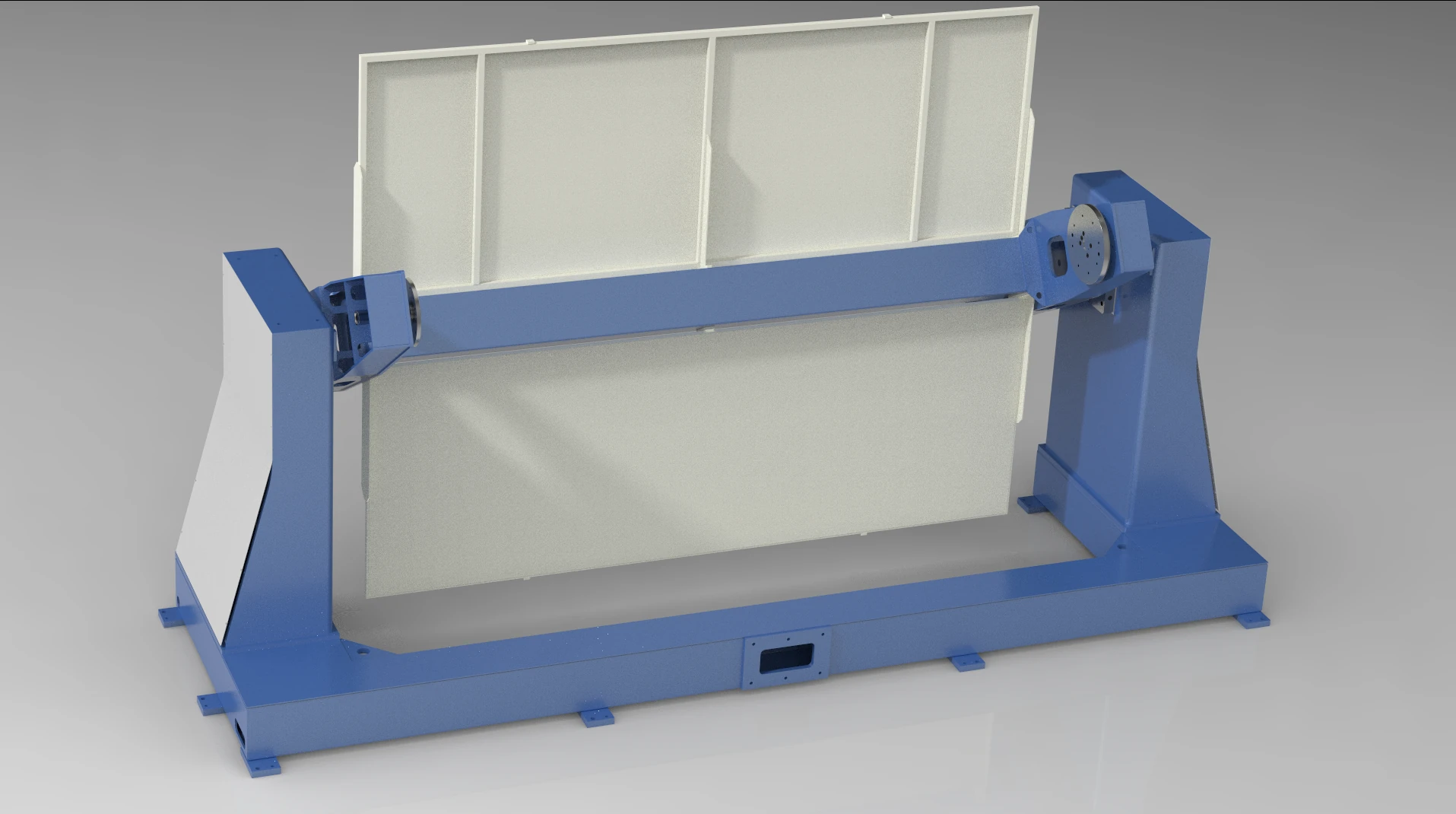
DTV – Double Lathe with Vertical Exchange Axis
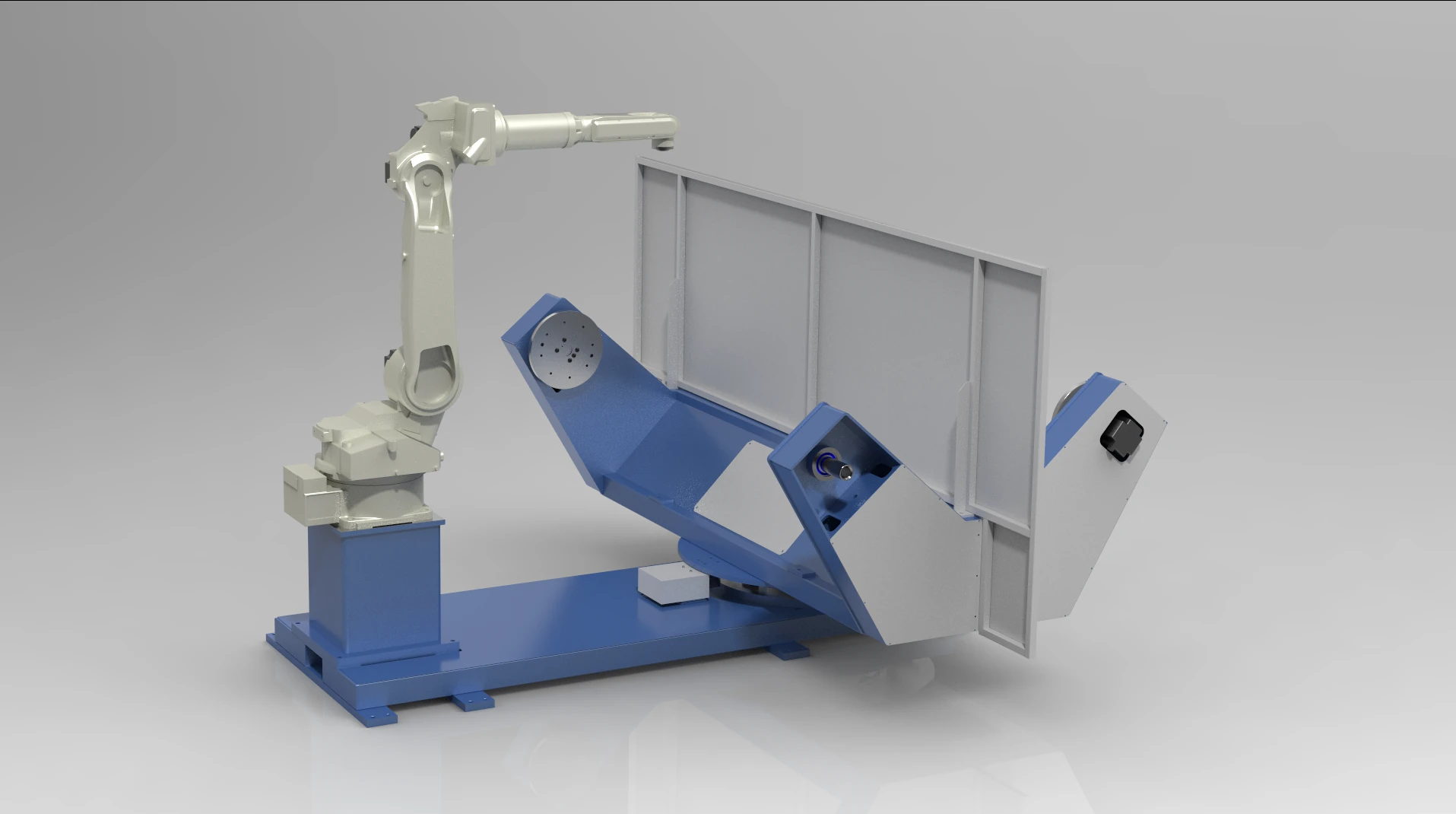
The DTV (Double Lathe with Vertical Exchange Axis) is a dual-station positioning system engineered for robotic welding applications, designed to maximize productivity and minimize robot downtime during part loading and unloading operations.
The system features two horizontal-axis workstations mounted onto a vertical exchange framework. This configuration enables the automatic alternation of stations between the robot’s active working zone and the operator’s loading/unloading area.
Available Configurations
Flexible Sizing: Engineered and manufactured in multiple dimensions and payload capacities.
Tailored Setup: Configurations custom-defined based on specific component dimensions and production requirements.
Large-Scale Options: Integration with linear tracks for robots available on larger-sized versions.
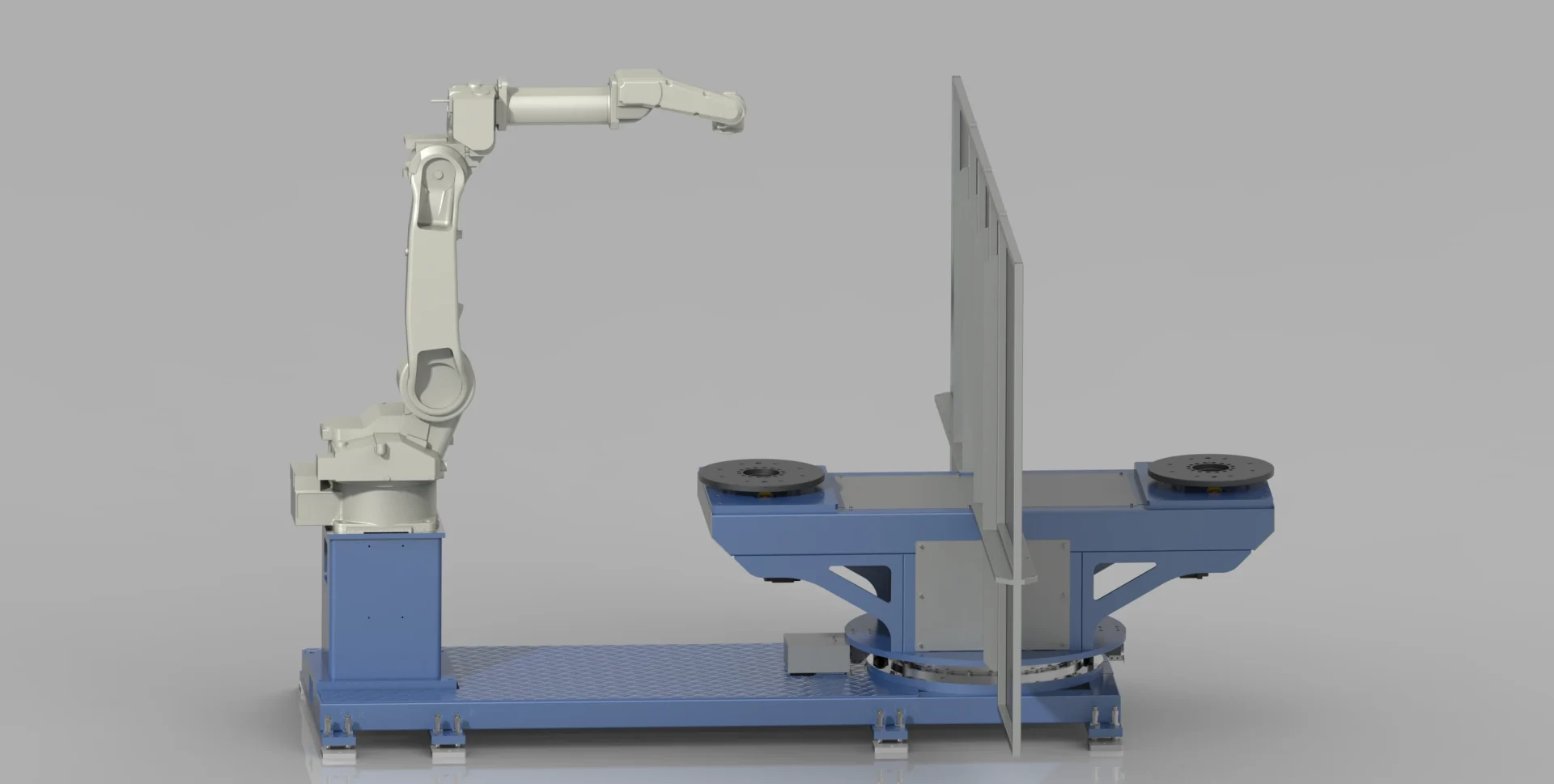
DTO – Double Lathe with Horizontal Exchange Axis
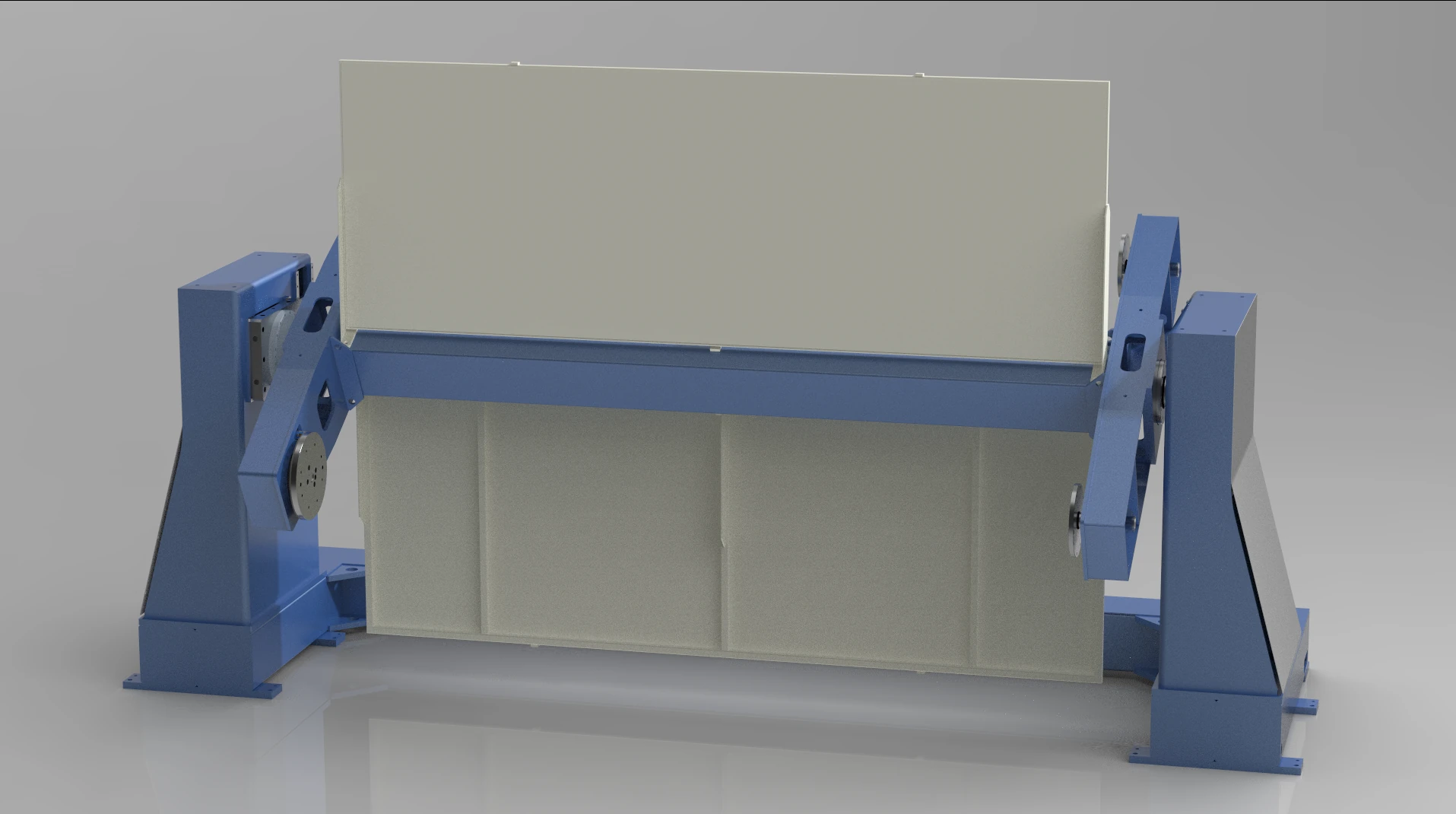
The DTO (Double Lathe with Horizontal Exchange Axis) is a dual-station positioning system engineered for robotic welding applications, designed to optimize productivity and minimize downtime during part loading and unloading operations.
The system features two horizontal-axis workstations mounted onto a horizontal exchange framework. This configuration enables the automatic alternation of stations between the robot’s active working zone and the operator’s loading/unloading area.
Available Configurations
Flexible Sizing: Engineered and manufactured in multiple dimensions and payload capacities.
Tailored Setup: Configurations custom-defined based on specific component dimensions and production requirements.
Large-Scale Options: Integration with linear tracks for robots available on larger-sized versions.
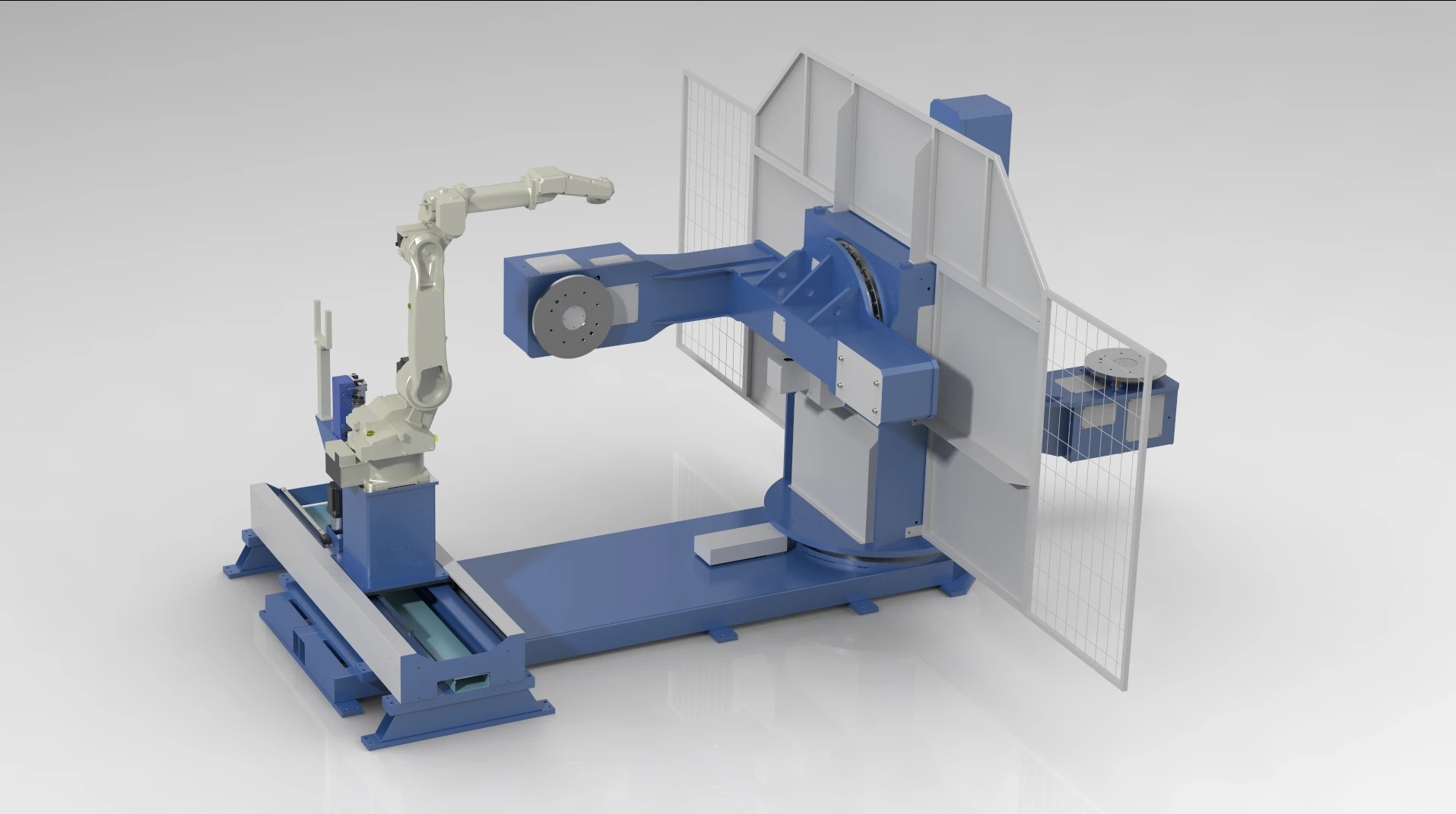
2BA – Dual L-Configuration Roto-Tilting Positioner
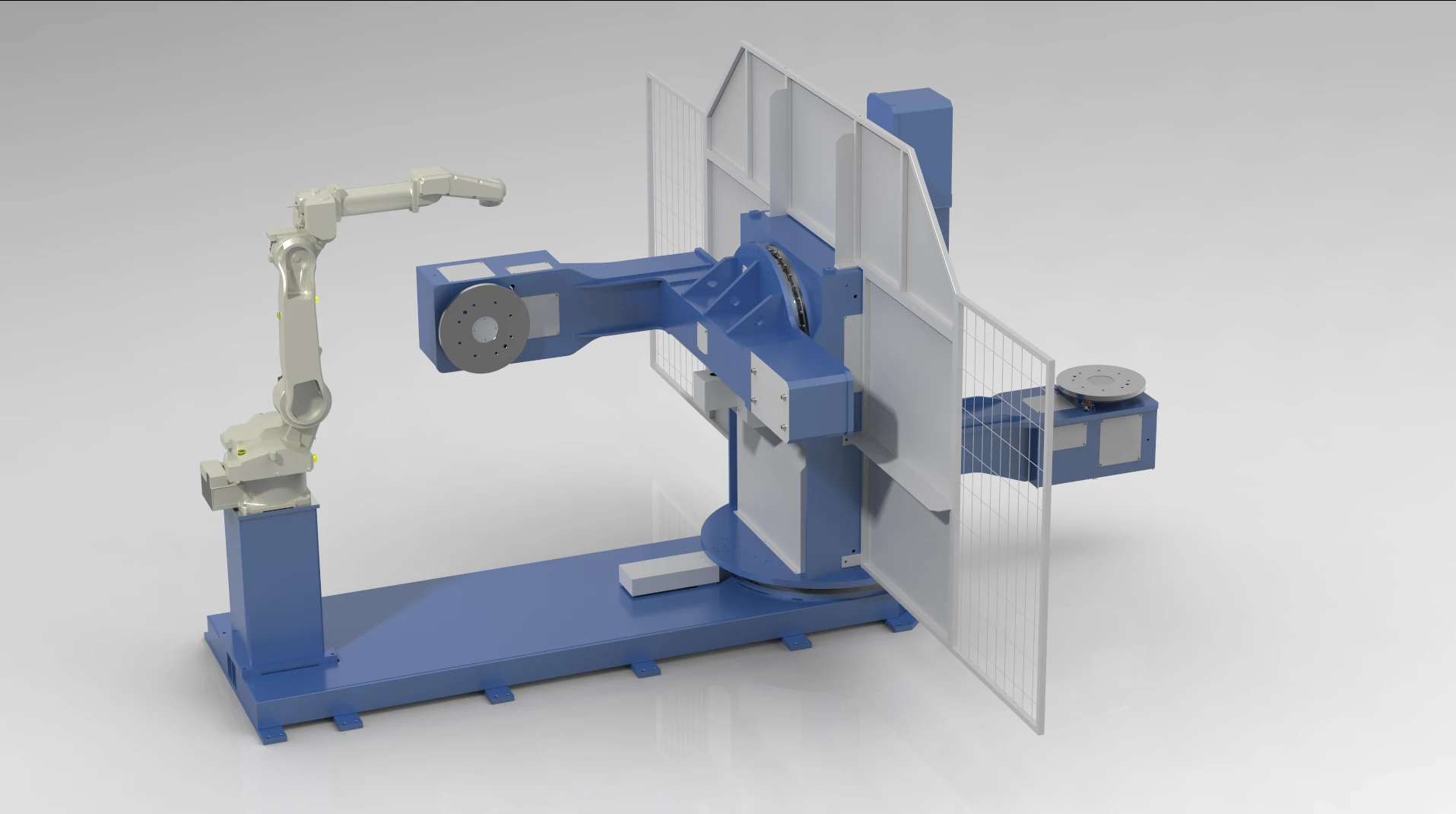
The 2BA (Dual L-Configuration Roto-Tilting Positioner) is a dual-station positioning system engineered for robotic welding applications, designed to ensure continuous operation and maximum component accessibility throughout the process.
The “L” geometry layout optimizes the arrangement of the two workstations, allowing for safe, automatic alternation between the robot’s active working zone and the operator’s loading/unloading area.
Each station is equipped with both a rotation and a tilting axis, enabling ideal part positioning for optimal welding posture, which enhances weld quality and minimizes overall cycle times.
Available Configurations
Flexible Sizing: Engineered and manufactured in multiple dimensions and payload capacities.
Tailored Setup: Configurations customized based on specific component geometry and production requirements.
Fixturing Integration: Ability to integrate with dedicated clamping and fixturing systems.
Large-Scale Options: Provisions for linear track integration for robots available on larger-sized versions.
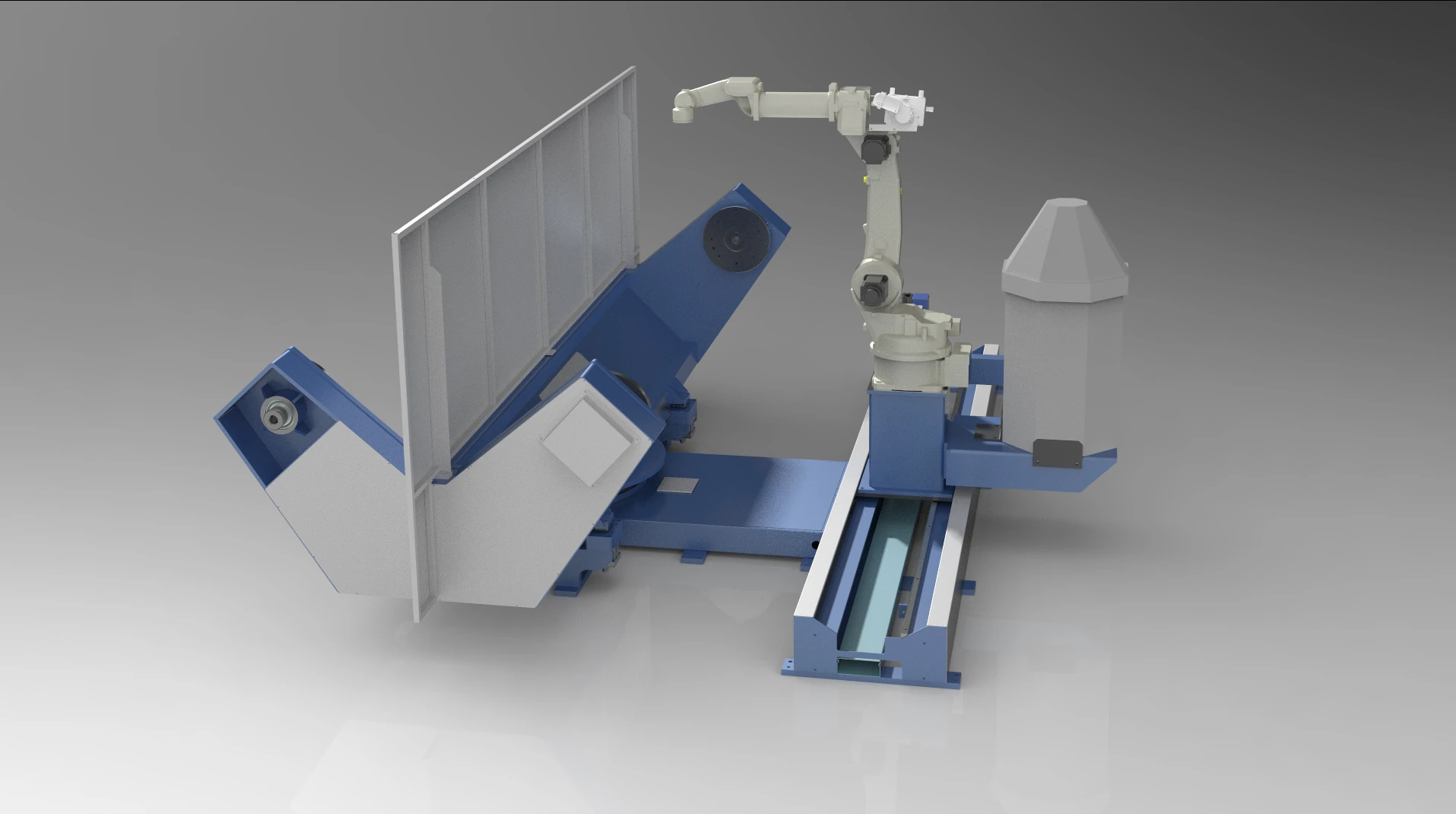
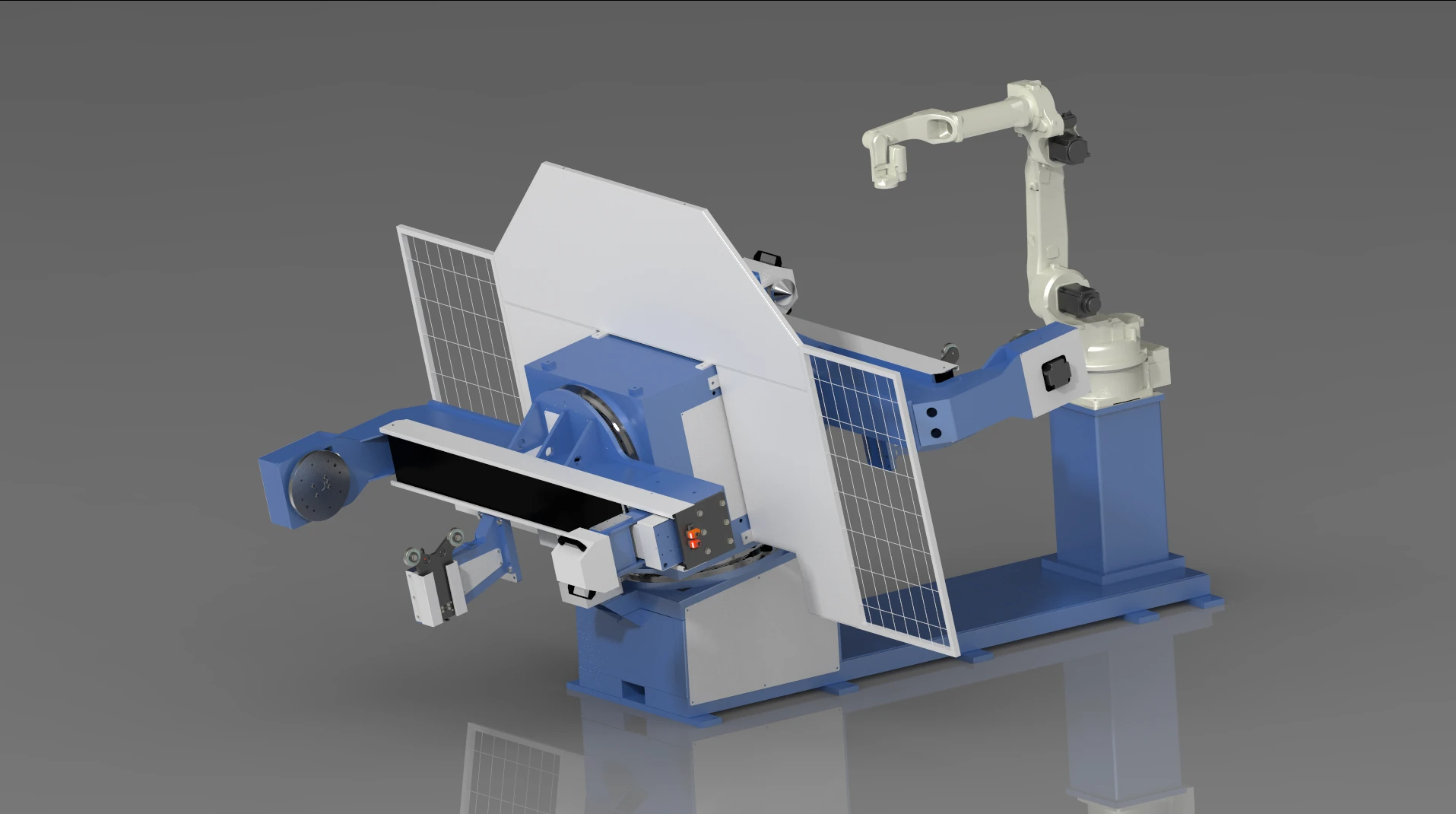
2BA-CPi – Dual Roto-Tilting Positioner with Tailstock on Inclined Base
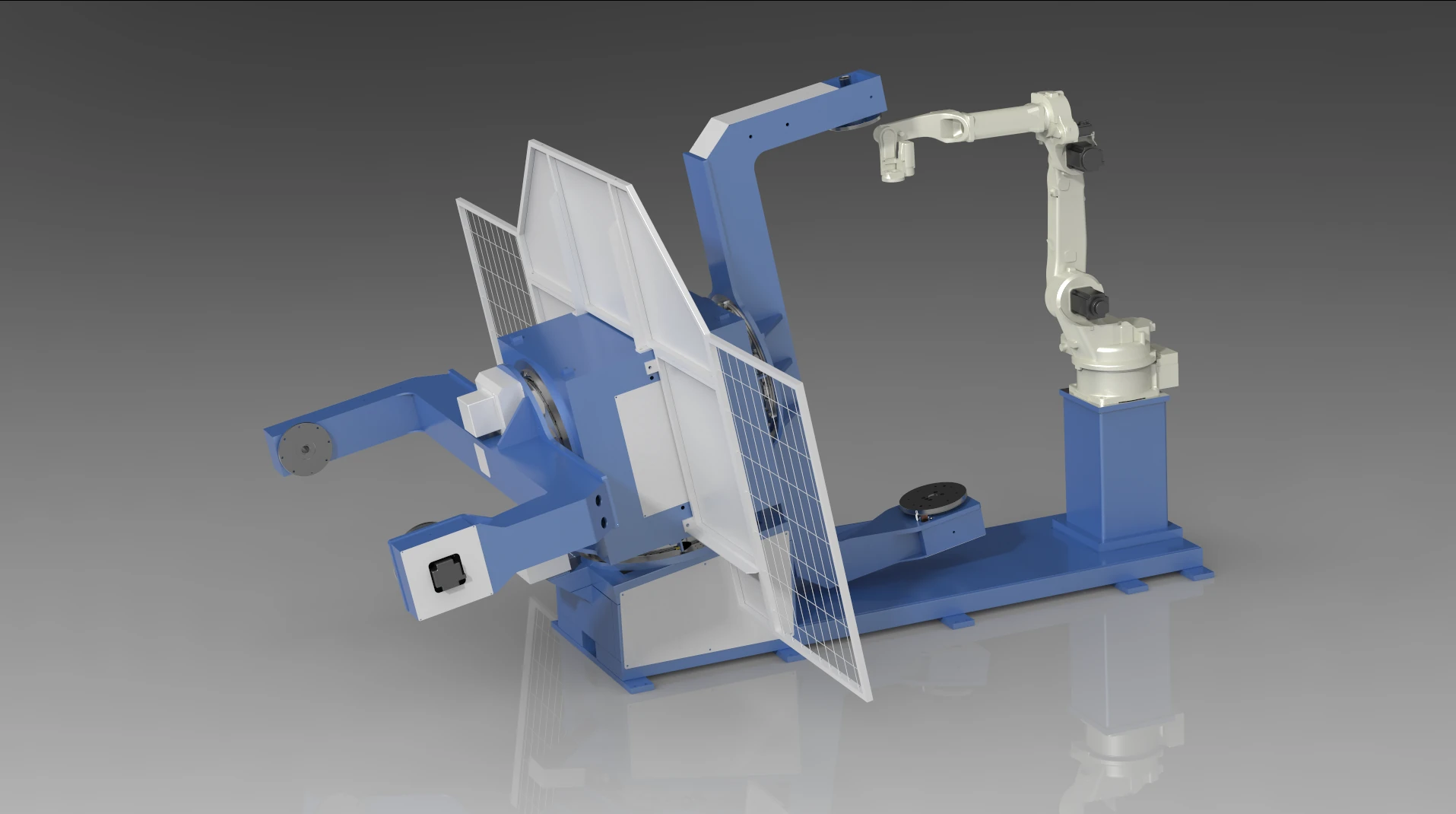
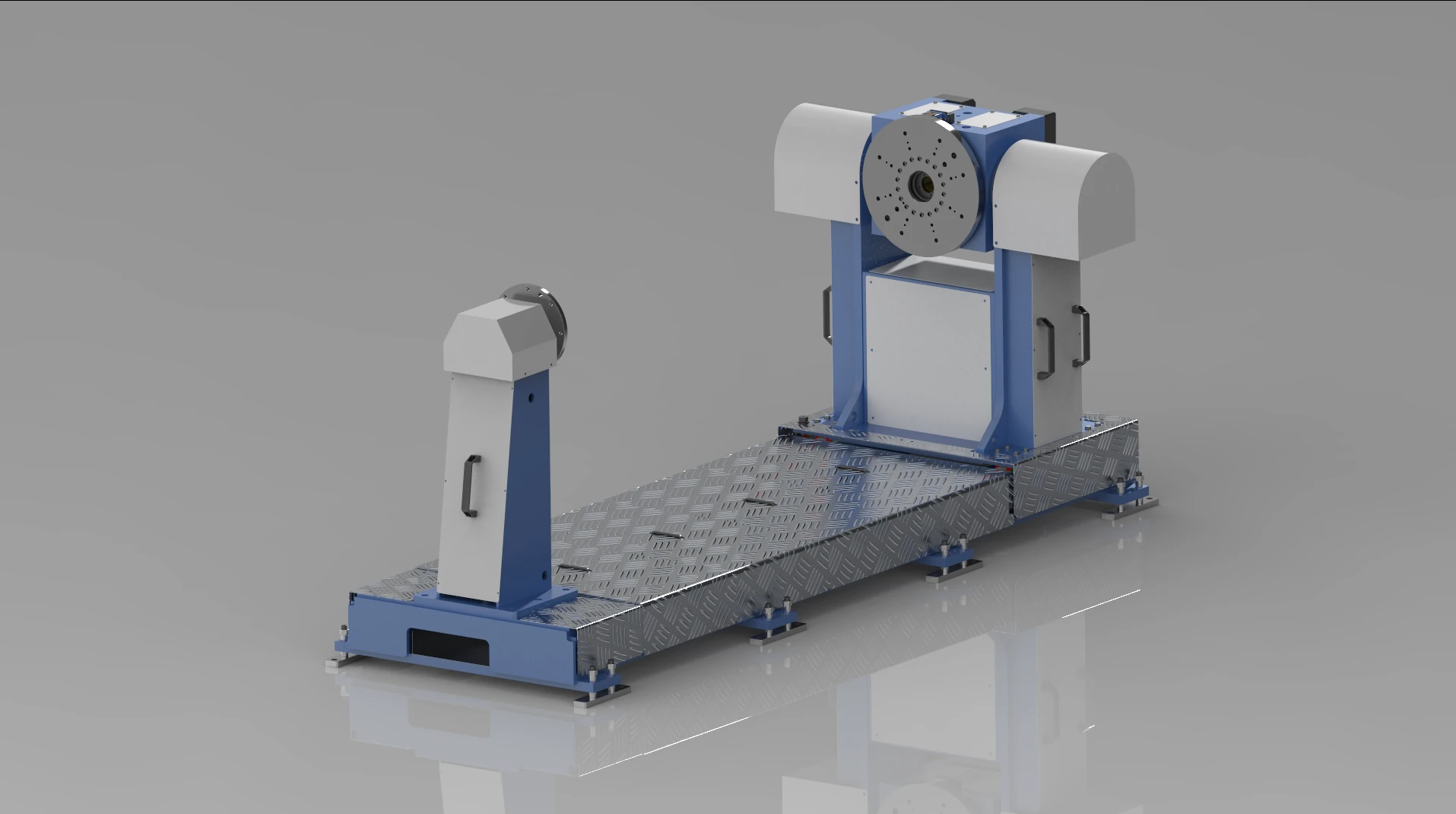
The 2BA-CPi (Dual Roto-Tilting Positioner with Tailstock on Inclined Base) is a dual-station positioning system engineered for robotic welding applications, ideally suited for processing long components or parts with geometries requiring additional support.
The integrated tailstock ensures stable and precise clamping of the workpiece, while the inclined base design enhances robot accessibility and improves operator ergonomics during loading and unloading operations.
Each station is equipped with both a rotation and a tilting axis, allowing for optimal component positioning during the welding process to guarantee high quality and productivity standards.
Available Configurations
Flexible Sizing: Engineered and manufactured in multiple dimensions and payload capacities.
Tailored Setup: Configurations customized based on specific component length and geometry.
Clamping & Tailstock Options: Ability to integrate with adjustable tailstocks and dedicated fixturing systems.
Large-Scale Options: Provisions for linear track integration for robots available on larger-sized versions.
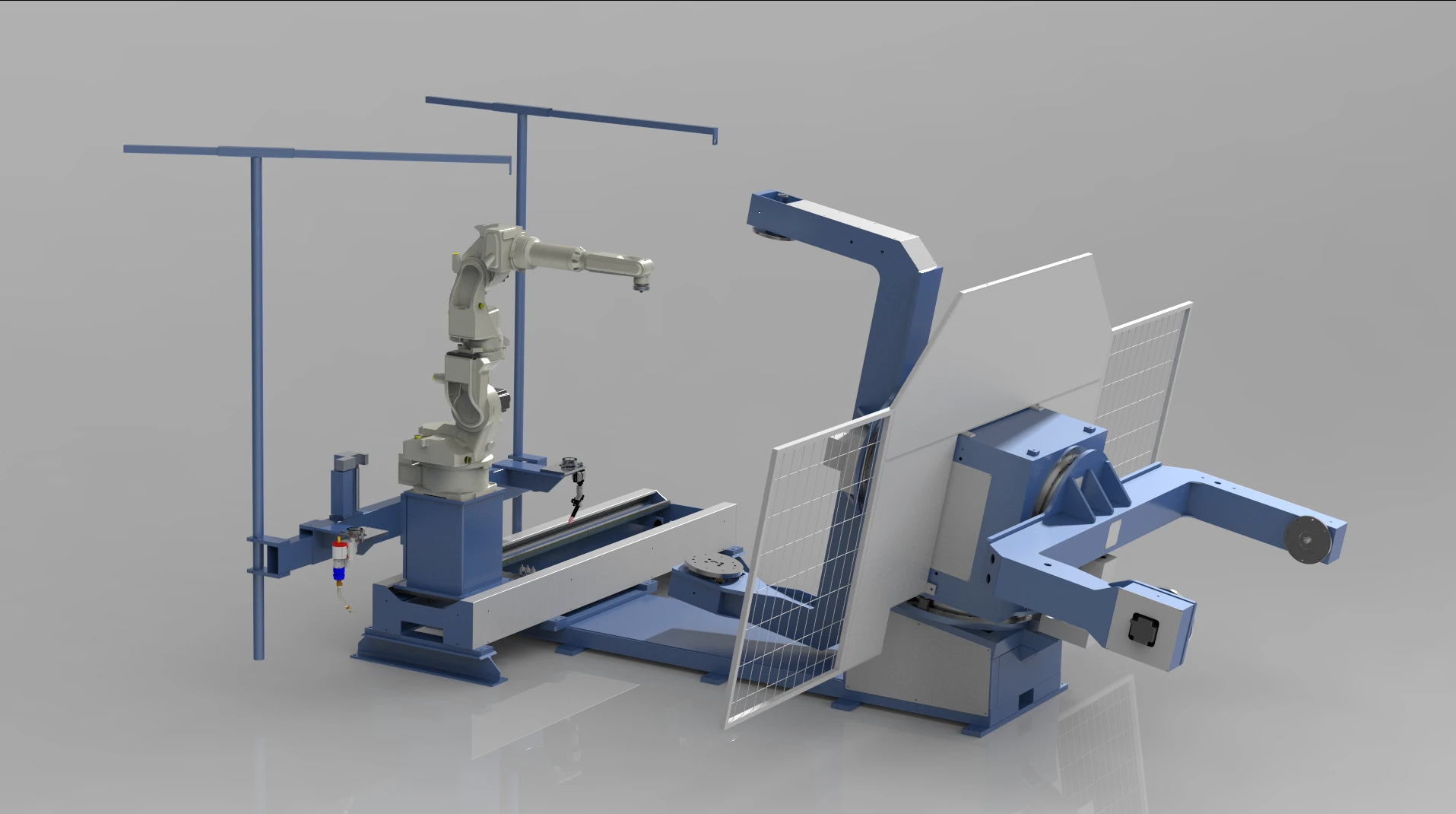
2Ri – Dual Roto-Tilting Positioner
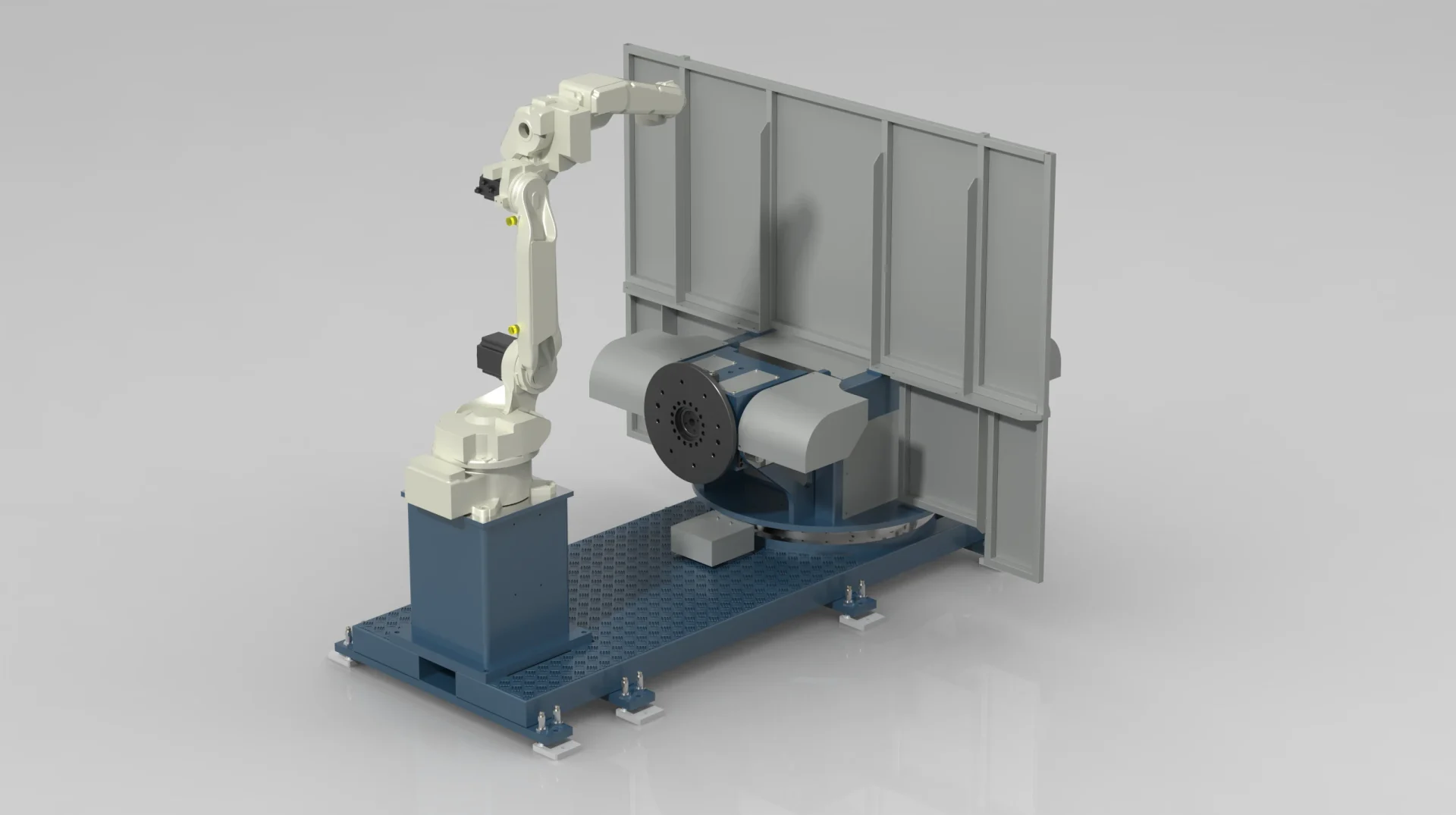
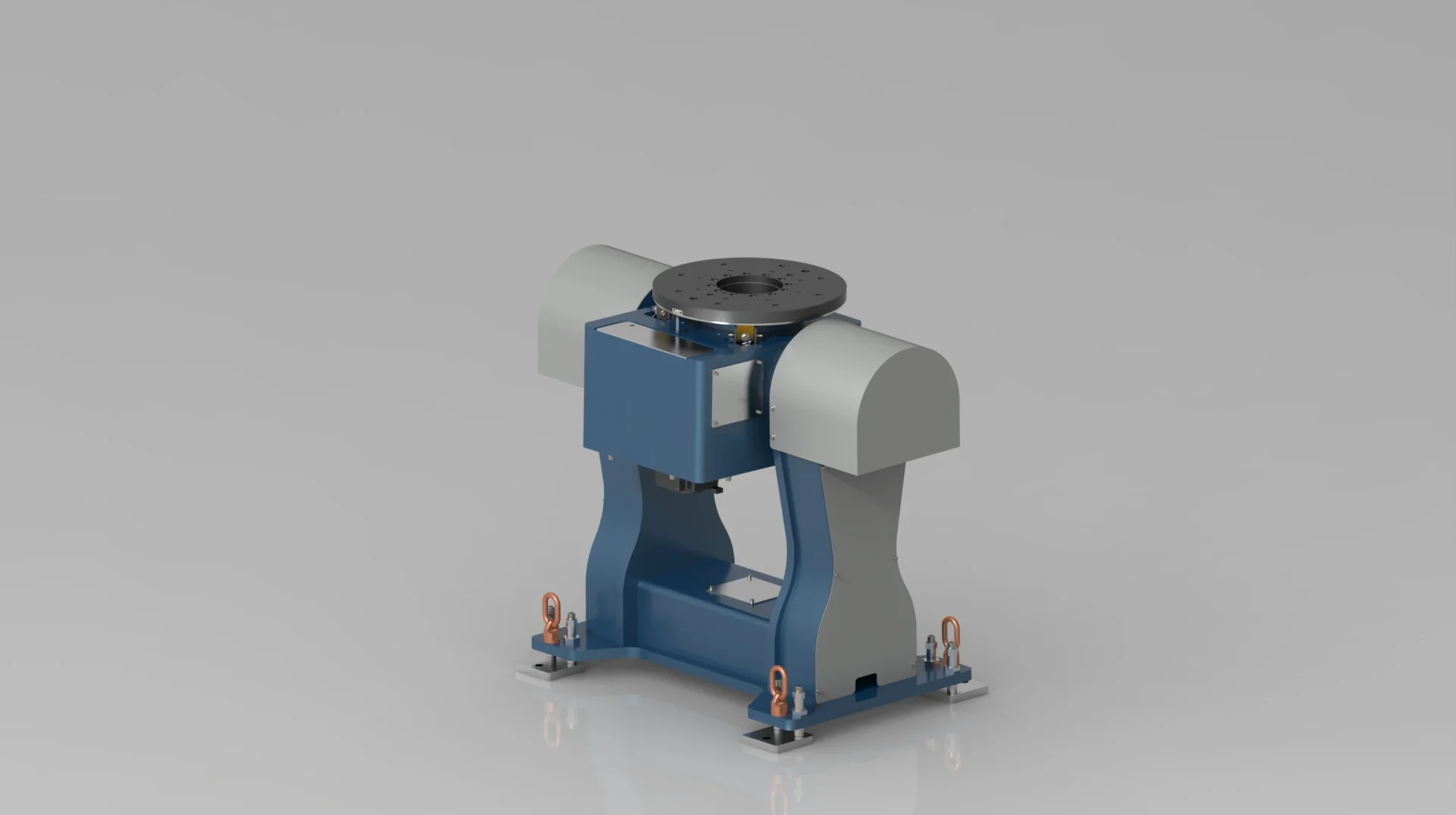
The 2Ri (Dual Roto-Tilting Positioner) is a dual-station positioning system engineered for robotic welding applications, designed to ensure high flexibility and continuous operation.
The system features two workstations that automatically alternate between the robot’s active working zone and the operator’s loading/unloading area, minimizing cycle times and optimizing overall productivity.
Each station is equipped with both a rotation and a tilting axis, allowing the component to be placed in the ideal position for processing and ensuring optimal robot accessibility throughout all stages of the cycle.
Available Configurations
Flexible Sizing: Engineered and manufactured in multiple dimensions and payload capacities.
Tailored Setup: Configurations customized based on specific component characteristics and production requirements.
Fixturing Integration: Ability to integrate with dedicated clamping and fixturing systems.
Large-Scale Options: Provisions for linear track integration for robots available on larger-sized versions.
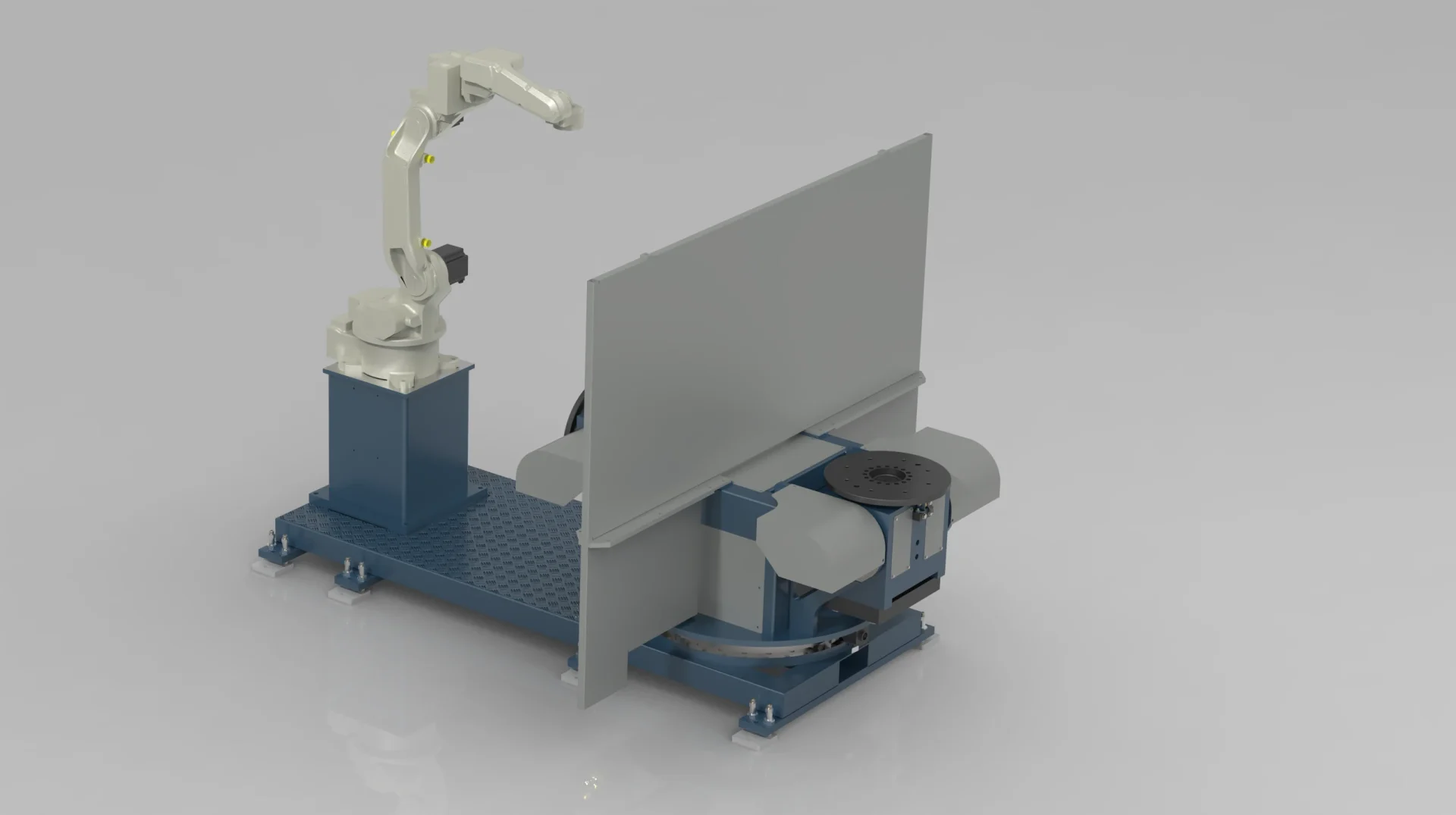
DSV – Double Station with Vertical Turntable Rotation
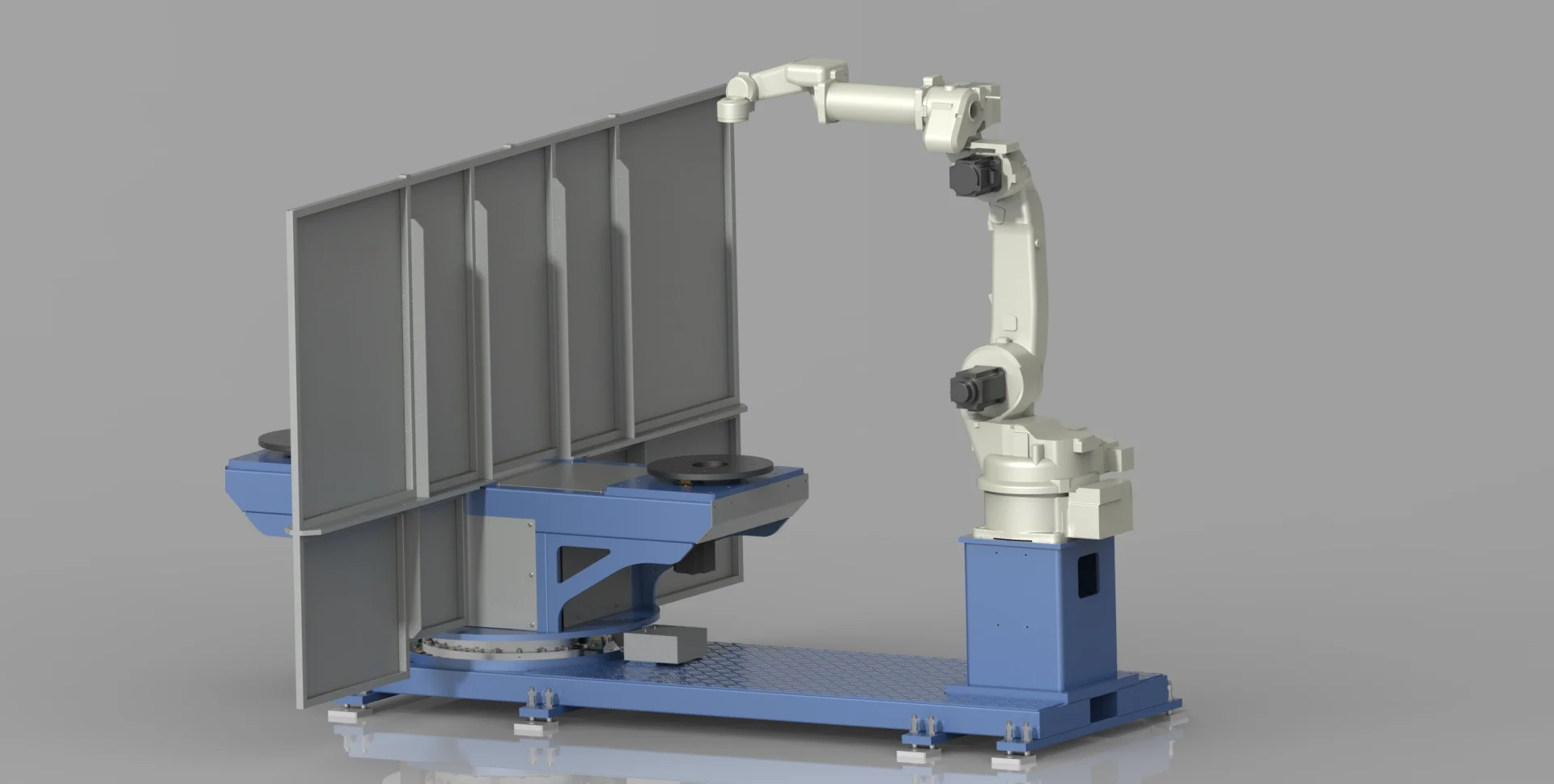
The DSV (Dual Station with Vertical Turntable Rotation) is a dual-station positioning system engineered for robotic welding applications, designed to optimize cycle times and ensure maximum component accessibility during processing.
The system features two vertical faceplates that rotate independently, enabling the automatic alternation between the robot’s active working zone and the operator’s loading/unloading area. This configuration maintains high production continuity and simplifies the handling of components of various shapes and sizes.
Available configurations
Flexible Sizing: Engineered and manufactured in multiple dimensions and payload capacities.
Tailored Setup: Configurations customized based on specific component characteristics and production requirements.
Fixturing Integration: Ability to integrate with dedicated clamping and fixturing systems.
Large-Scale Options: Provisions for linear track integration for robots available on larger-sized versions.
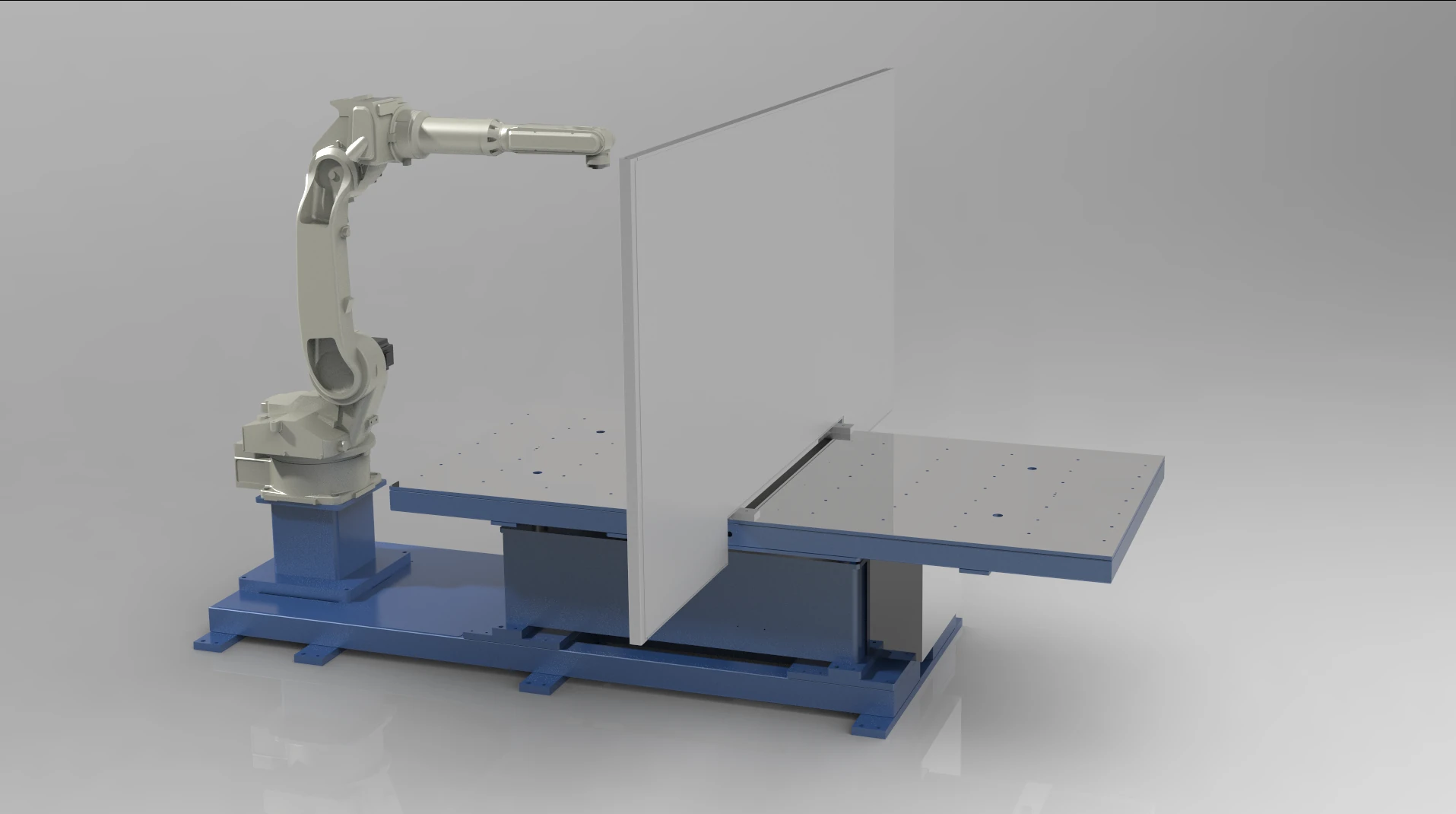
STR – Double-Station Rotary Table
The STR (Dual-Station Table) is a positioning system engineered for robotic welding applications, designed to ensure high productivity and continuous operation.
The system features two side-by-side workstations that automatically alternate between the robot’s active working zone and the operator’s loading/unloading area, enabling an efficient workflow and reducing downtime. Each station allows for optimal positioning of the workpiece, ensuring maximum robot accessibility throughout all stages of the process.
Available configurations
Flexible Sizing: Engineered and manufactured in multiple dimensions and payload capacities.
Tailored Setup: Configurations customized based on specific component dimensions and geometry.
Fixturing Integration: Ability to integrate with dedicated clamping and fixturing systems.
Large-Scale Options: Provisions for linear track integration for robots available on larger-sized versions.
Welding Lathes with Fixed/Mobile Tailstock
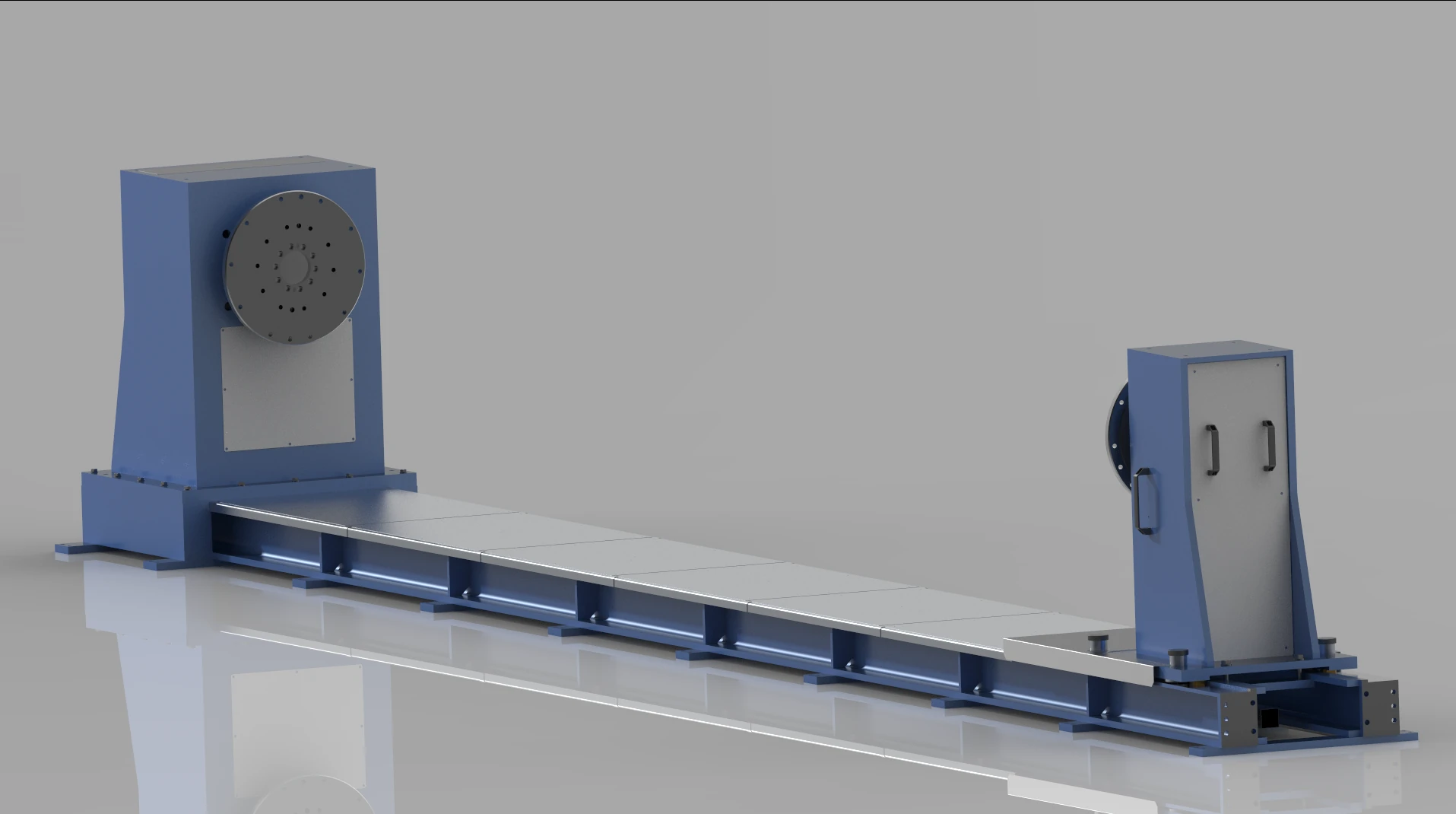
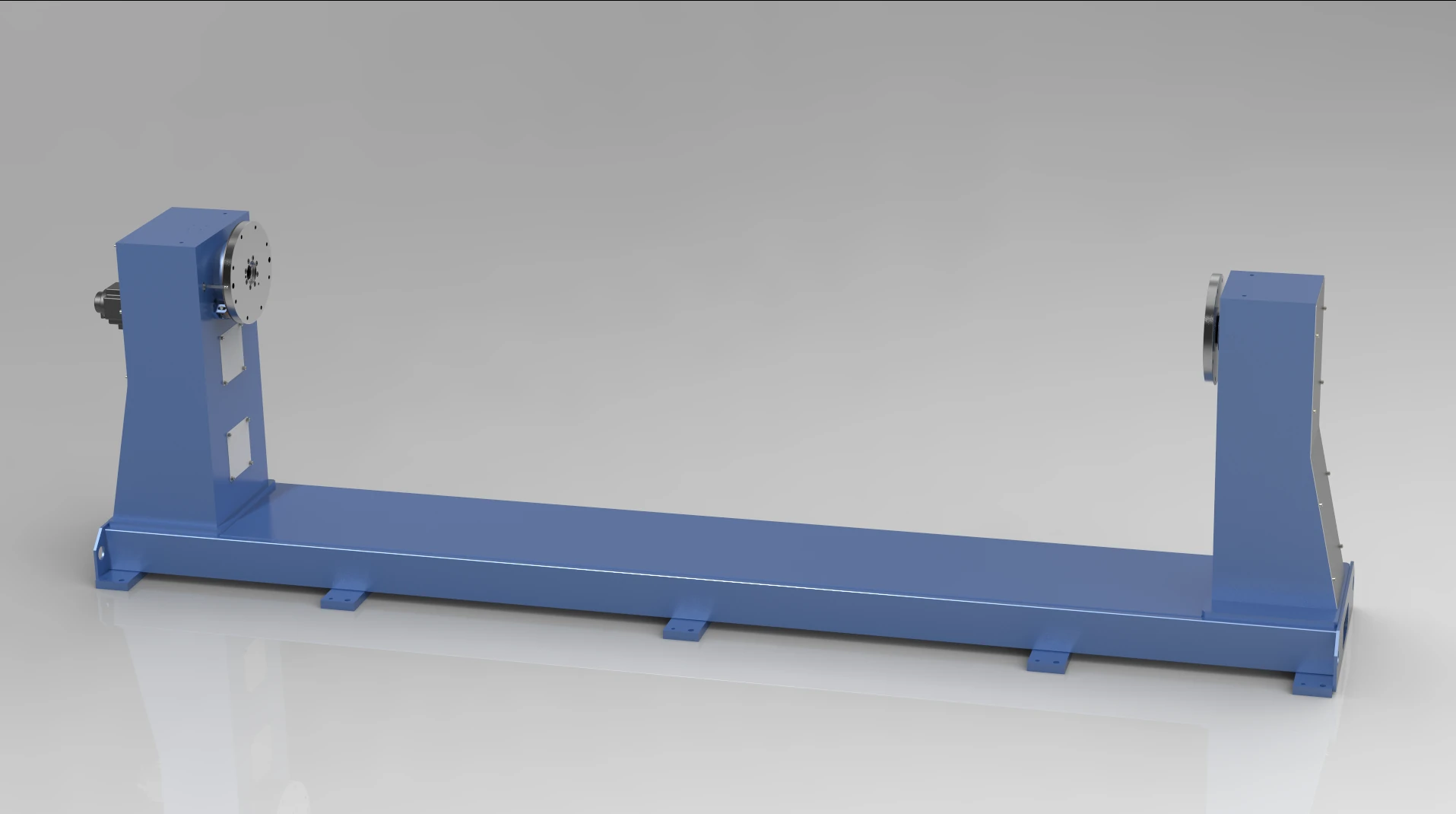
Welding Lathes with Fixed or Mobile Tailstocks are positioning systems engineered for robotic welding applications, ideally suited for cylindrical or elongated components that require longitudinal support.
The tailstock—available in either a fixed or mobile configuration—guarantees stable and precise clamping of the workpiece during the welding process, ensuring high accuracy and safety. The design provides optimal robot accessibility to the component, reducing overall cycle times and increasing production efficiency.
Available configurations
Flexible Sizing: Engineered and manufactured in multiple dimensions and payload capacities.
Tailstock Selection: Choice between a fixed or mobile tailstock based on the length and weight of the component.
Fixturing Integration: Ability to integrate with dedicated clamping and fixturing systems.
Large-Scale Options: Provisions for linear track integration for robots available on larger-sized versions.
1Ri – Roto-Tilting Positioner with Tailstock
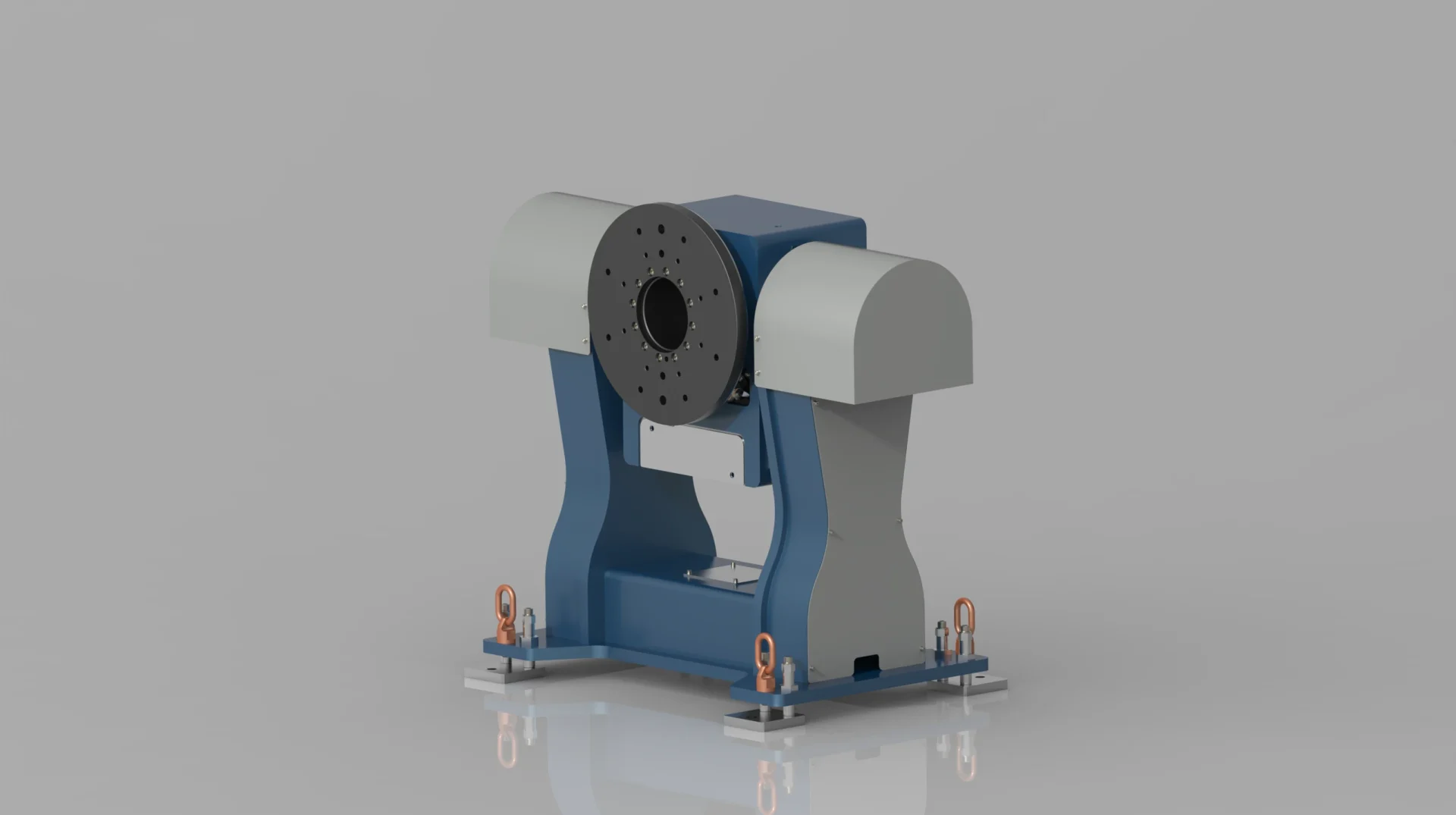
The 1Ri (Roto-Tilting Positioner with Tailstock) is a positioning system engineered for robotic welding applications, ideally suited for components that require additional support and precise orientation during processing.
The integrated tailstock ensures stable clamping of the workpiece, while the rotation and tilting axes allow for optimal part positioning relative to the robot. This setup minimizes cycle times, enhances weld quality, and increases overall safety during loading and unloading operations.
Available configurations
Flexible Sizing: Engineered and manufactured in multiple dimensions and payload capacities.
Tailored Setup: Configurations customized based on specific component length and geometry.
Clamping & Tailstock Options: Ability to integrate with adjustable tailstocks and dedicated fixturing systems.
Large-Scale Options: Provisions for linear track integration for robots available on larger-sized versions.
SL / SM / SP Linear Slides – Floor Tracks (Light / Medium / Heavy Duty)
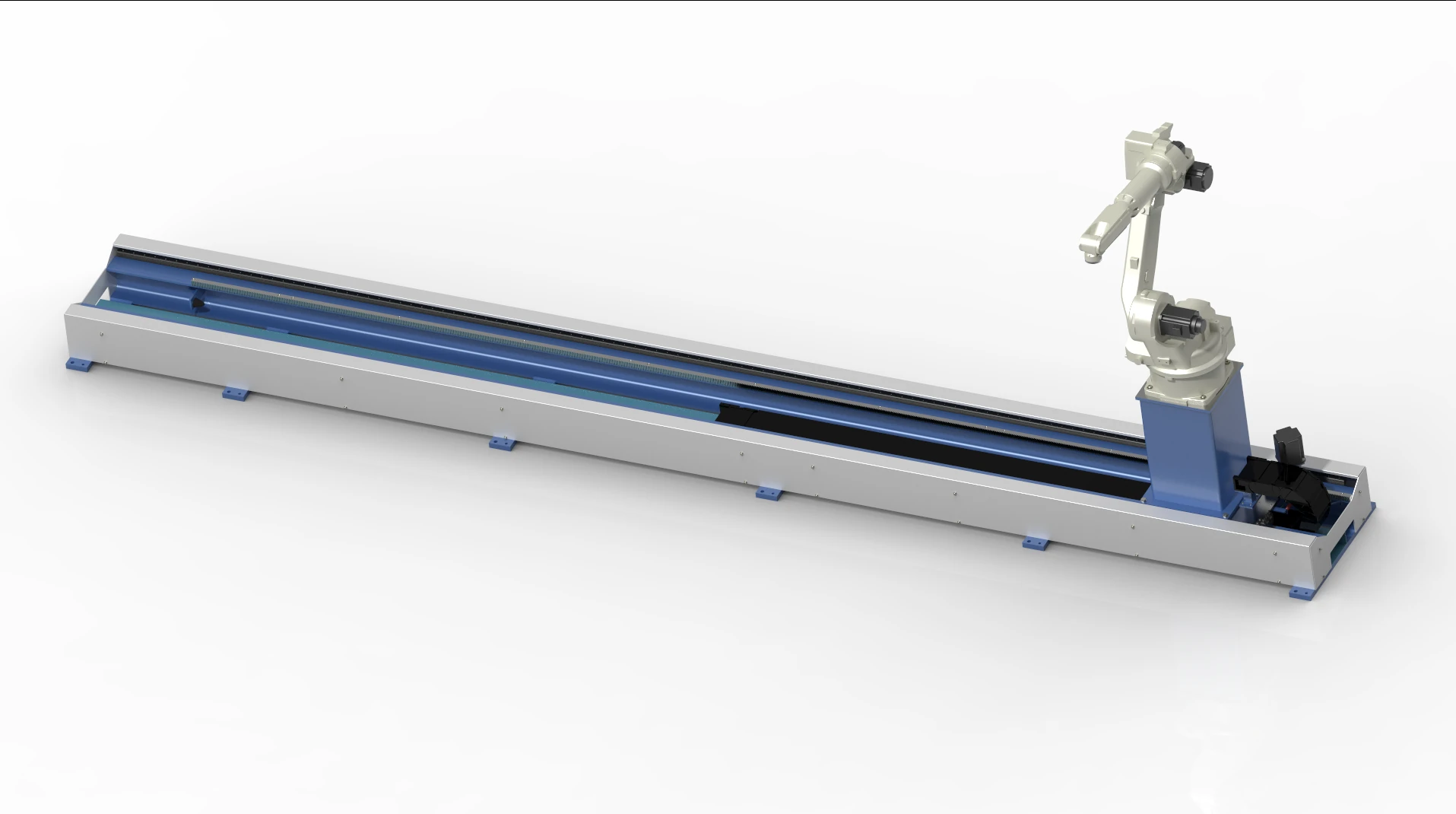
The SL, SM, and SP Linear Tracks are linear motion systems engineered for industrial and robotic welding applications, designed to ensure precision, reliability, and continuous operation.
These floor-mounted tracks enable the smooth transport of components or positioners across different workstations, optimizing production workflows and reducing downtime. Thanks to a modular structural design, the ideal track type can be selected based on the specific payload class: light, medium, or heavy duty.
Available configurations
SL (Light Track): Tailored for light-duty payloads.
SM (Medium Track): Designed for medium-duty payloads.
SP (Heavy Track): Engineered for heavy-duty, high-capacity payloads.
System Integration: Ability to integrate seamlessly with clamping systems, positioners, or welding lathes.
Custom Engineering: Custom-built to match specific length, payload capacity, and required travel path requirements.
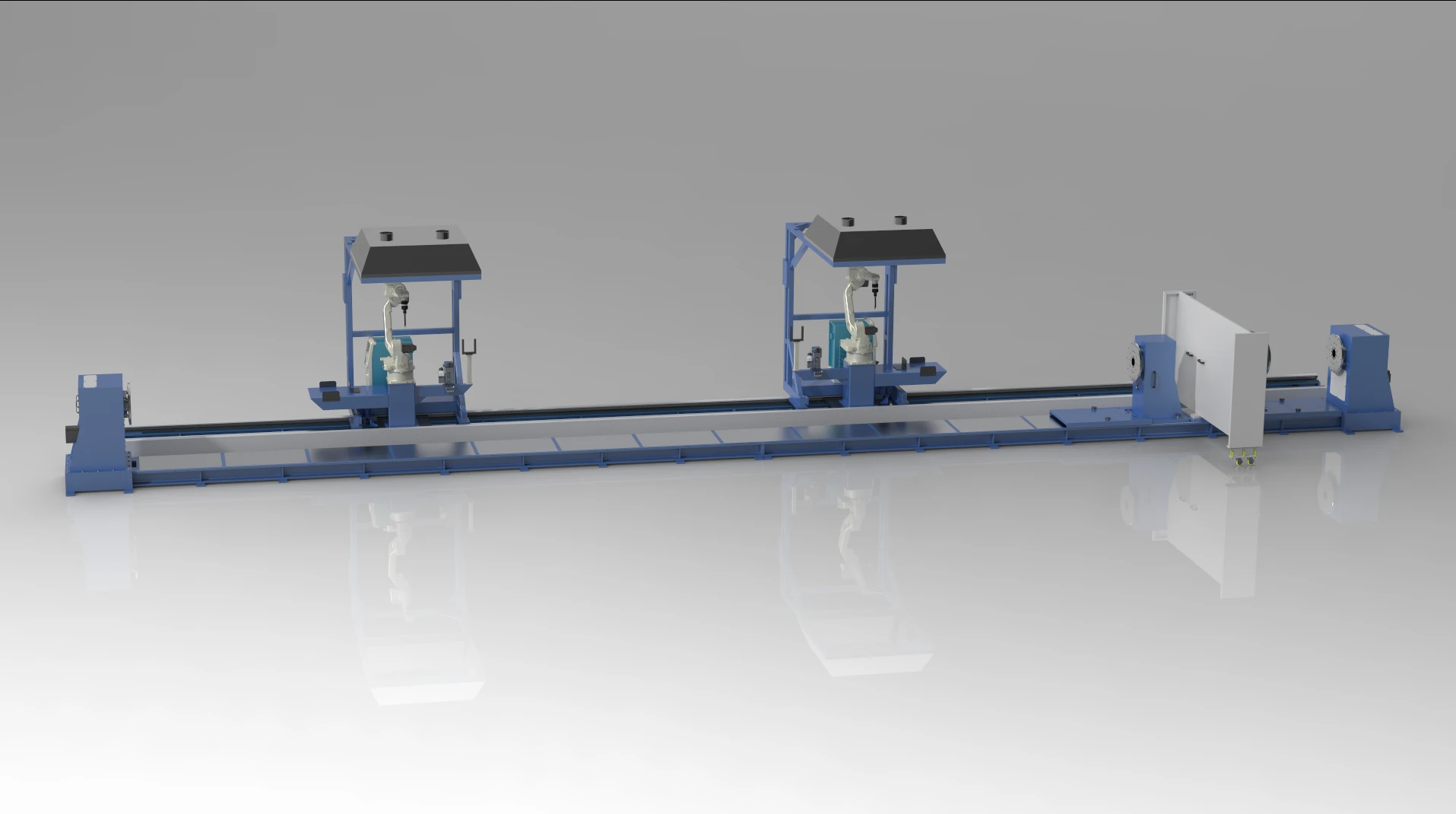
Complete System – Dual-Carriage Linear Track with In-Line Lathes
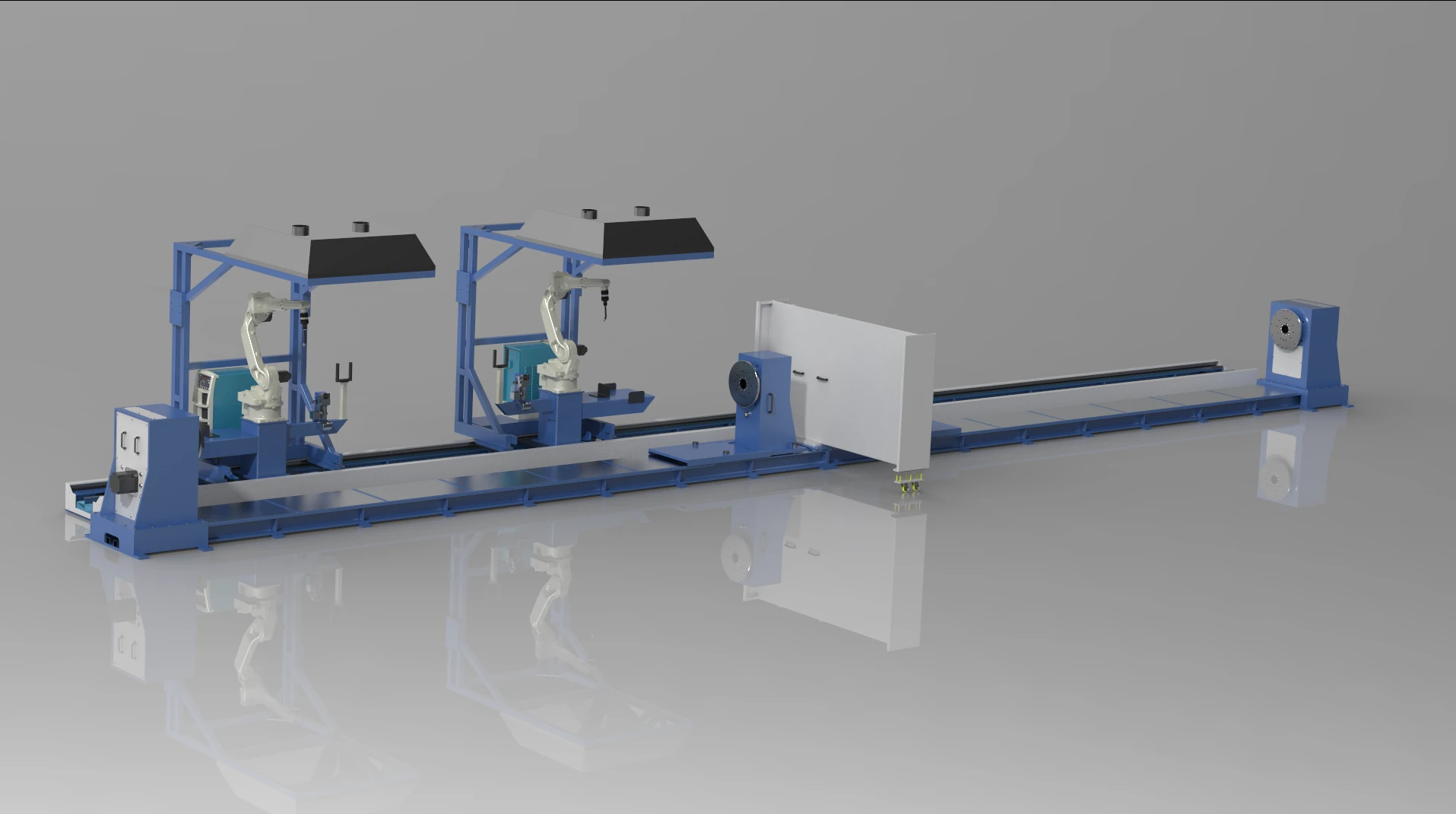
The Complete System is an integrated positioning and motion system engineered for robotic welding applications, designed to guarantee maximum productivity and operational flexibility.
The system features a linear track with two independently traversing carriages and two inline welding lathes with mobile tailstocks mounted on a common base frame. This setup allows for both dual-station and single-station operation, utilizing the combined double working distance of the lathes to process exceptionally large components.
The combination of the linear track and welding lathes ensures a continuous workflow, minimizing robot downtime and optimizing component accessibility throughout all stages of the welding process.
Available configurations
Independent Dual-Carriage Track: Features two independently traversing carriages, available for light, medium, or heavy-duty payloads.
Inline Lathes with Mobile Tailstock: Mounted on a common base frame, enabling flexible single or dual-station operations.
Fixturing Integration: Ability to integrate with dedicated clamping and fixturing systems.
Custom Engineering: Custom-built to match specific component dimensions, payload capacity, and required travel paths.
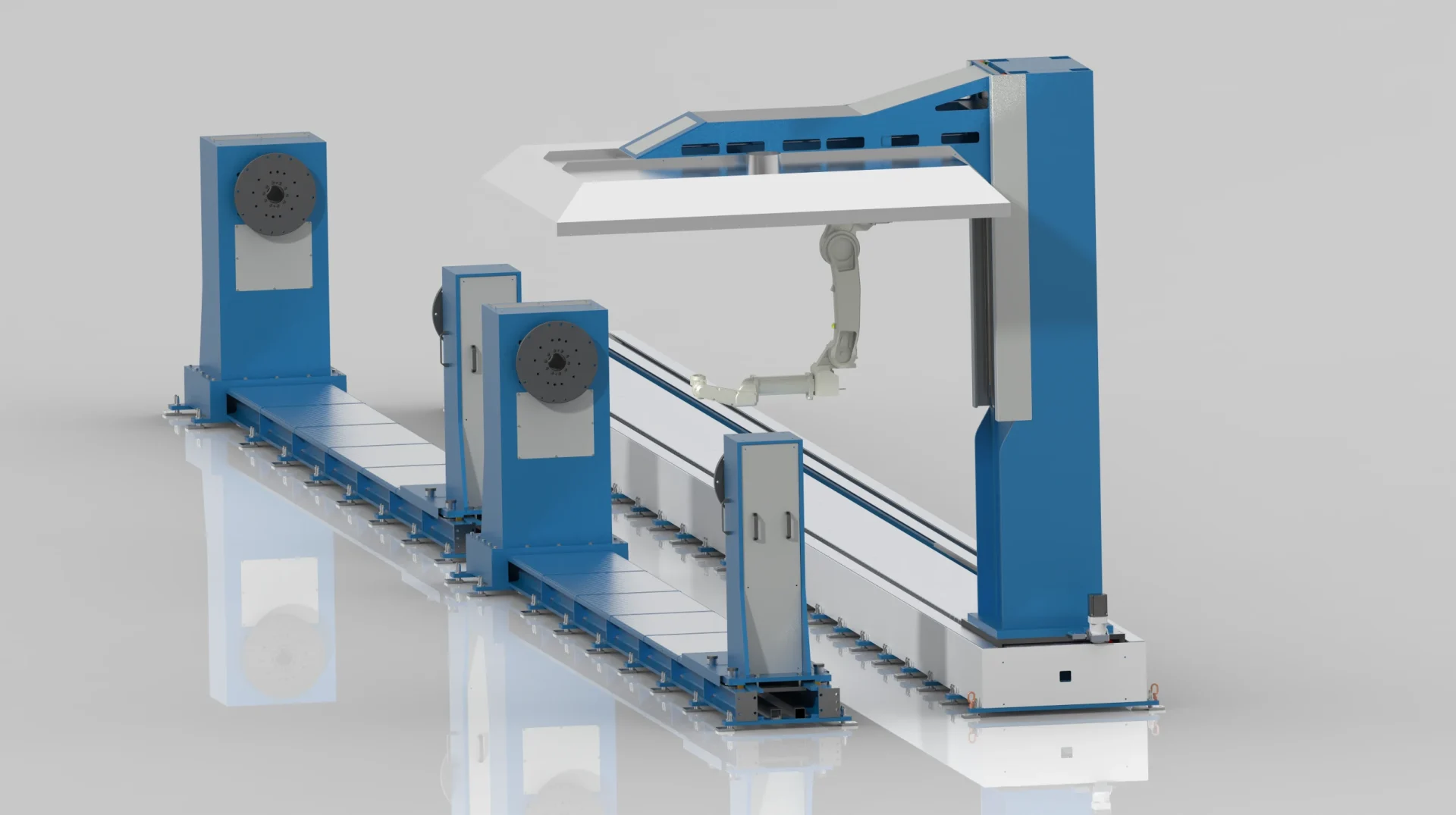
Complete System – Cartesian Robot on Linear Slide with Two In-Line Lathes
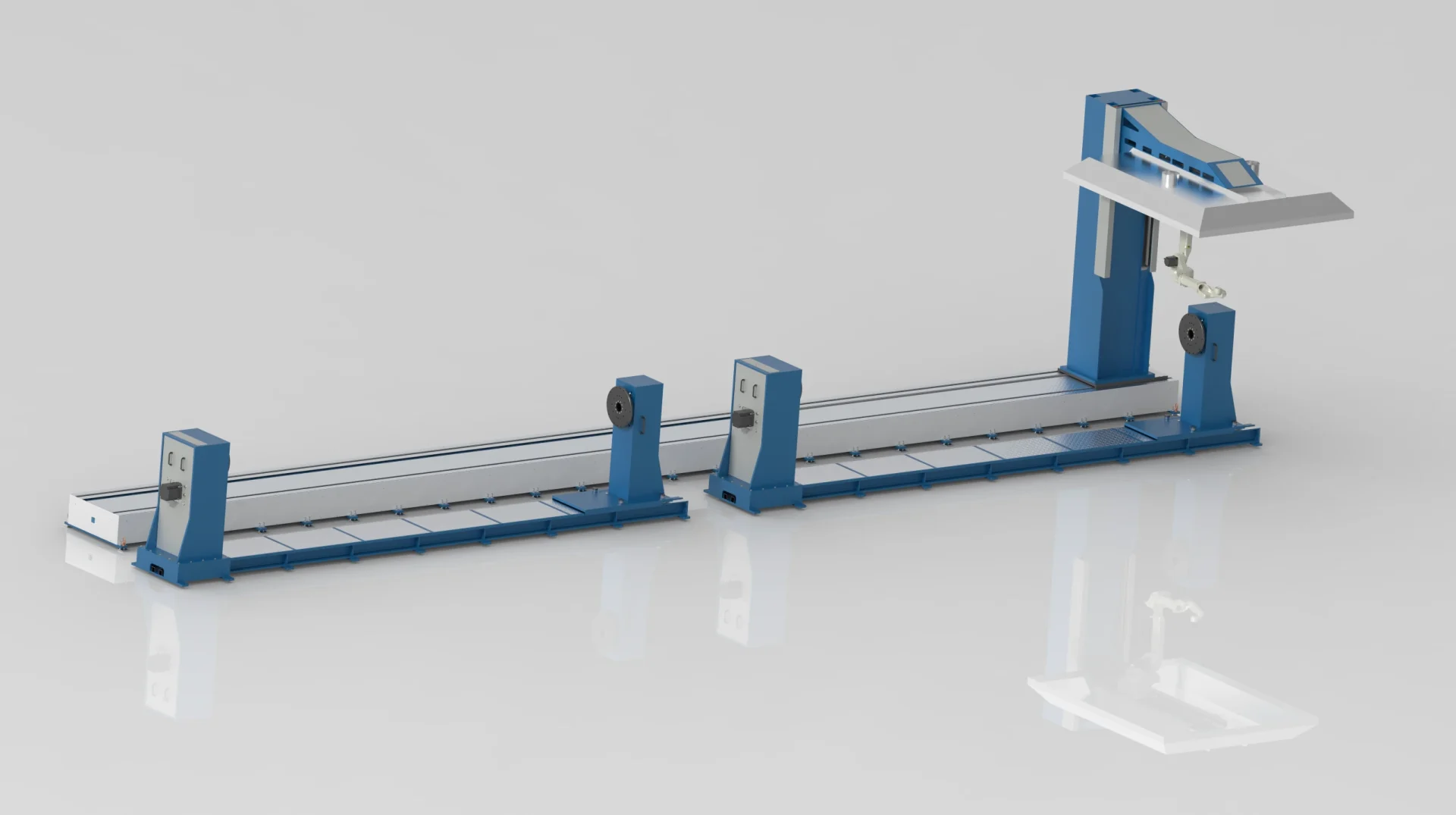
The Complete System is an integrated positioning and motion system engineered for robotic welding applications, designed to guarantee high productivity, precision, and maximum operational flexibility.
The system features a Cartesian robot installed on a linear track, equipped with three controlled axes (X, Y, Z), and two inline welding lathes with sliding tailstocks mounted on a common base frame. This configuration allows the robot to reach both workstations, optimizing component accessibility and ensuring production continuity throughout all operational phases.
The combination of Cartesian motion and positioning lathes enables processing on components of various shapes and lengths, minimizing cycle times and enhancing the overall quality of the welding process.
Available configurations
Cartesian Robot on Linear Track: Features three fully controlled axes (X, Y, Z) for high-precision movement.
Inline Lathes with Sliding Tailstocks: Mounted on a shared base frame, engineered for both single and dual-station operations.
Versatile Geometry Handling: Configuration optimized to accommodate components of various shapes, dimensions, and lengths.
Fixturing Integration: Ability to integrate with dedicated clamping and fixturing systems.
Custom Engineering: Custom-built to match specific component dimensions, payload capacity, and required stroke/travel path.
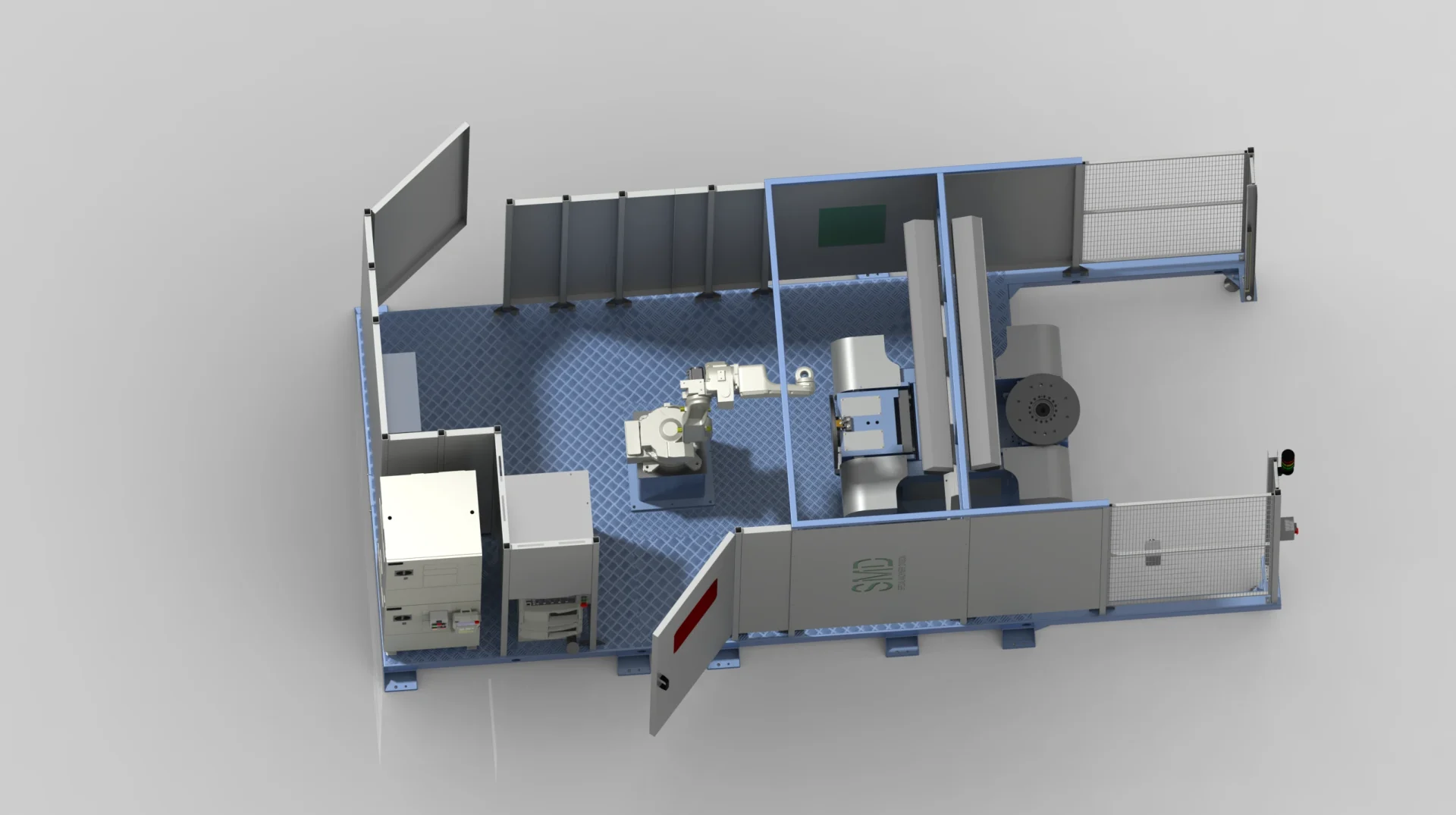
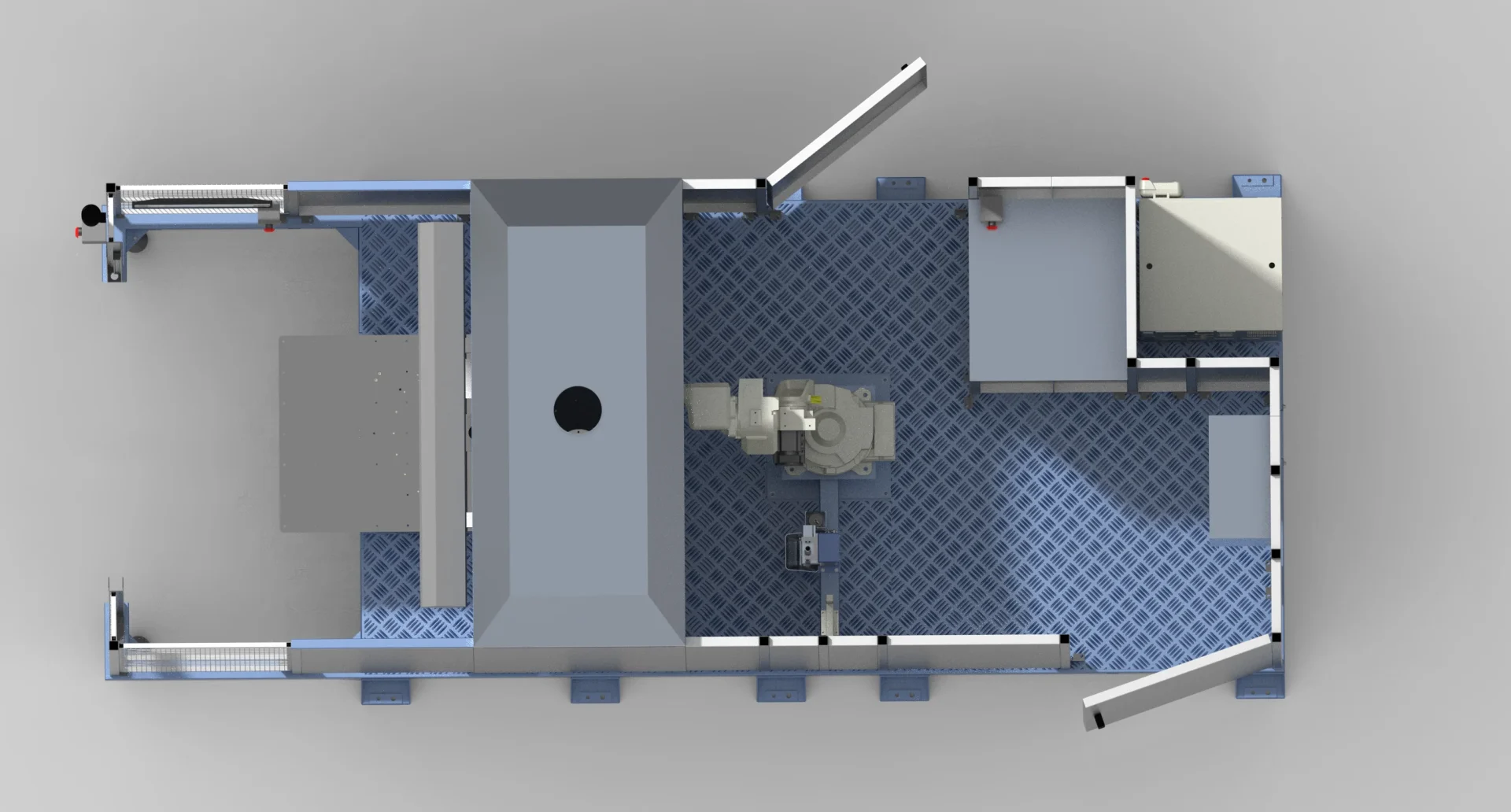
The Monolithic Cells (Dual Station)
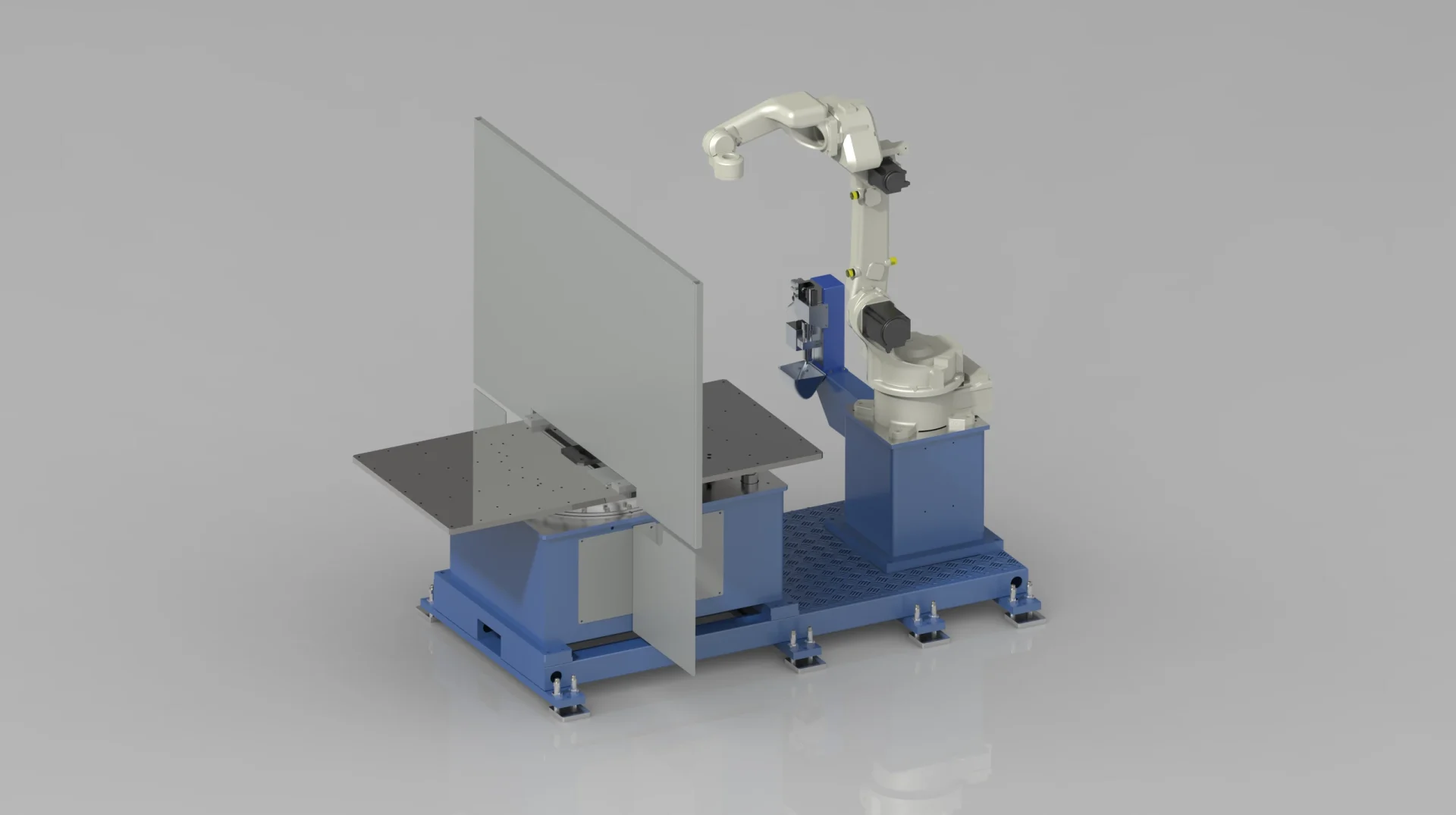
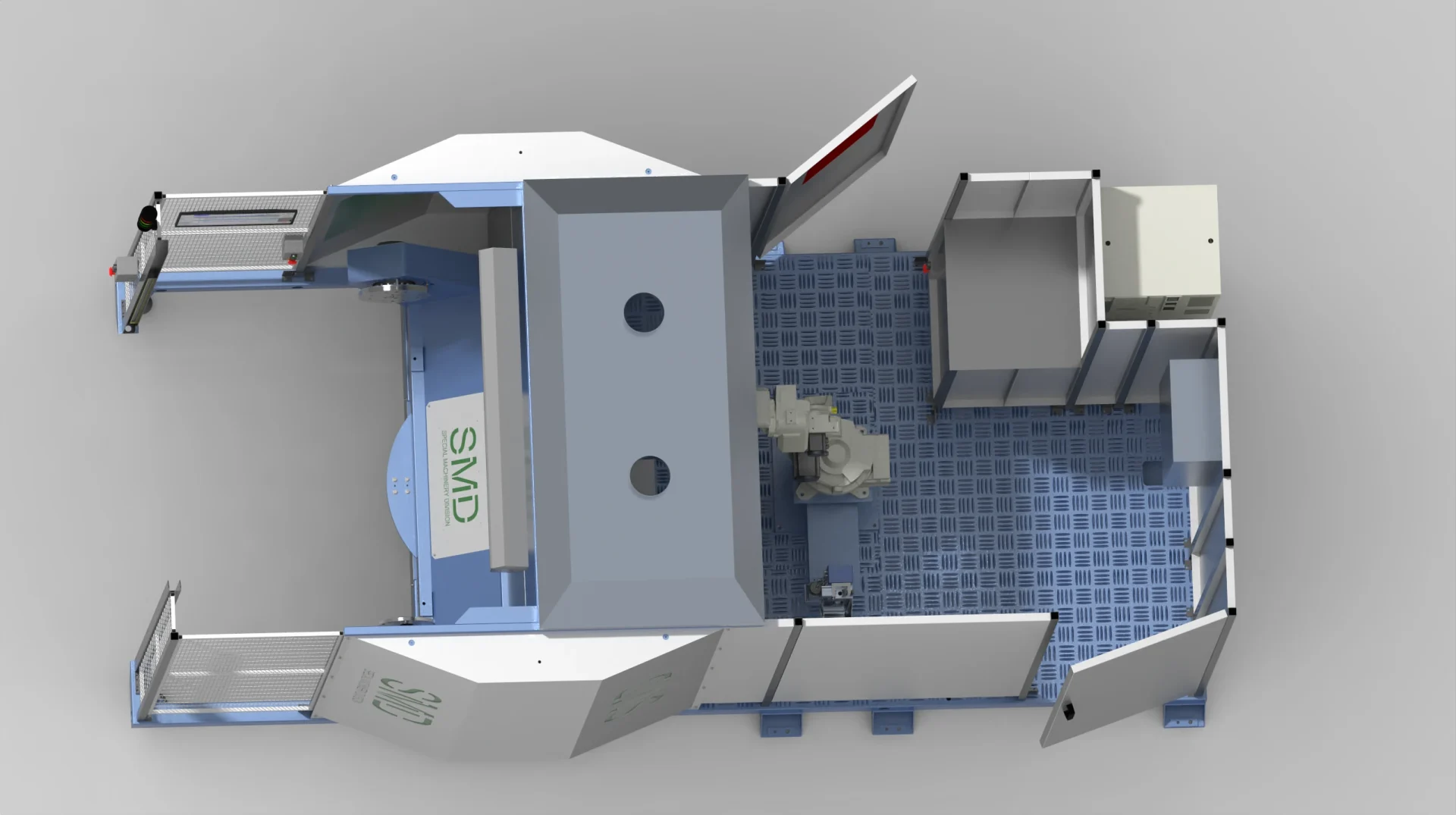
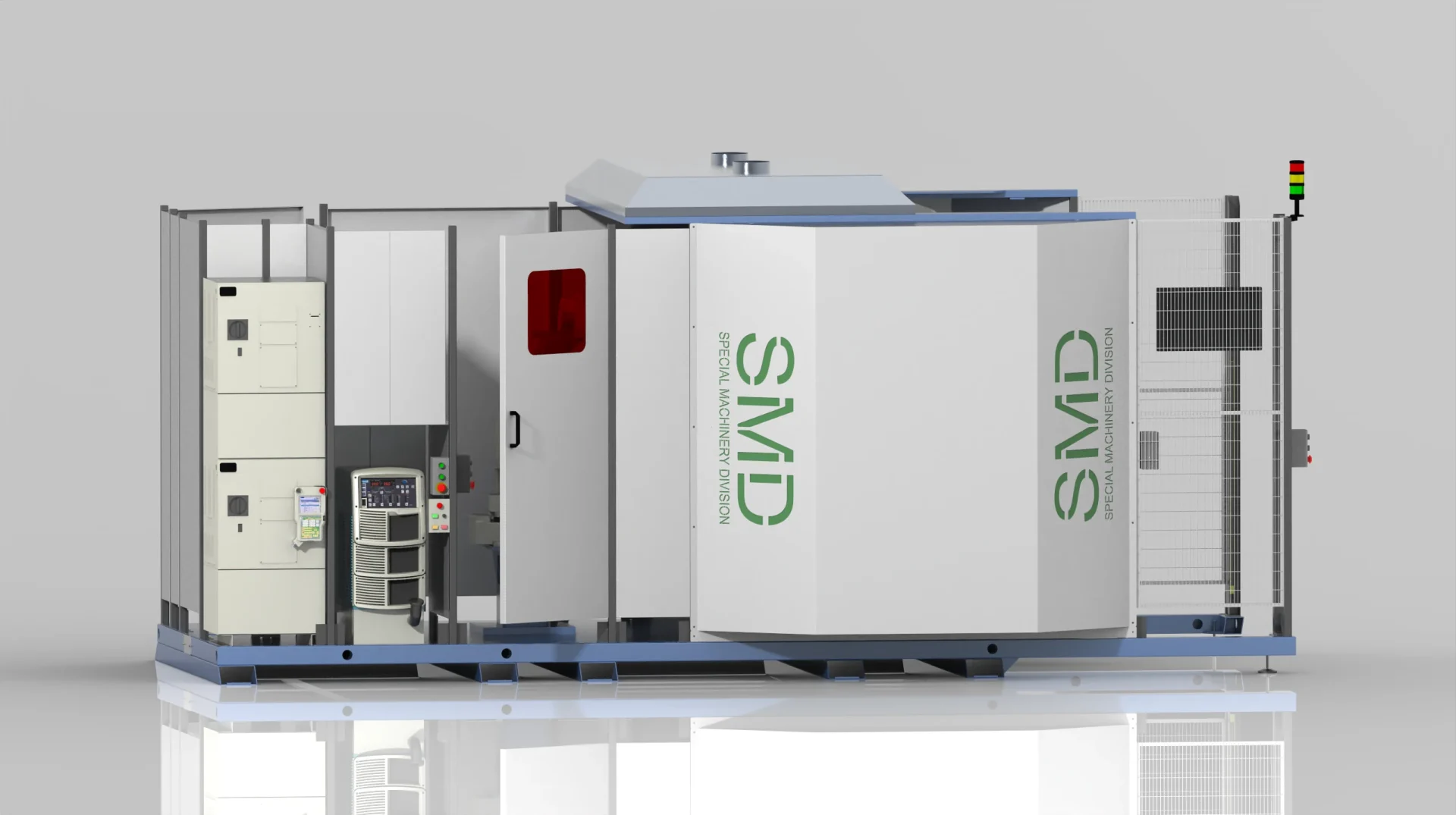
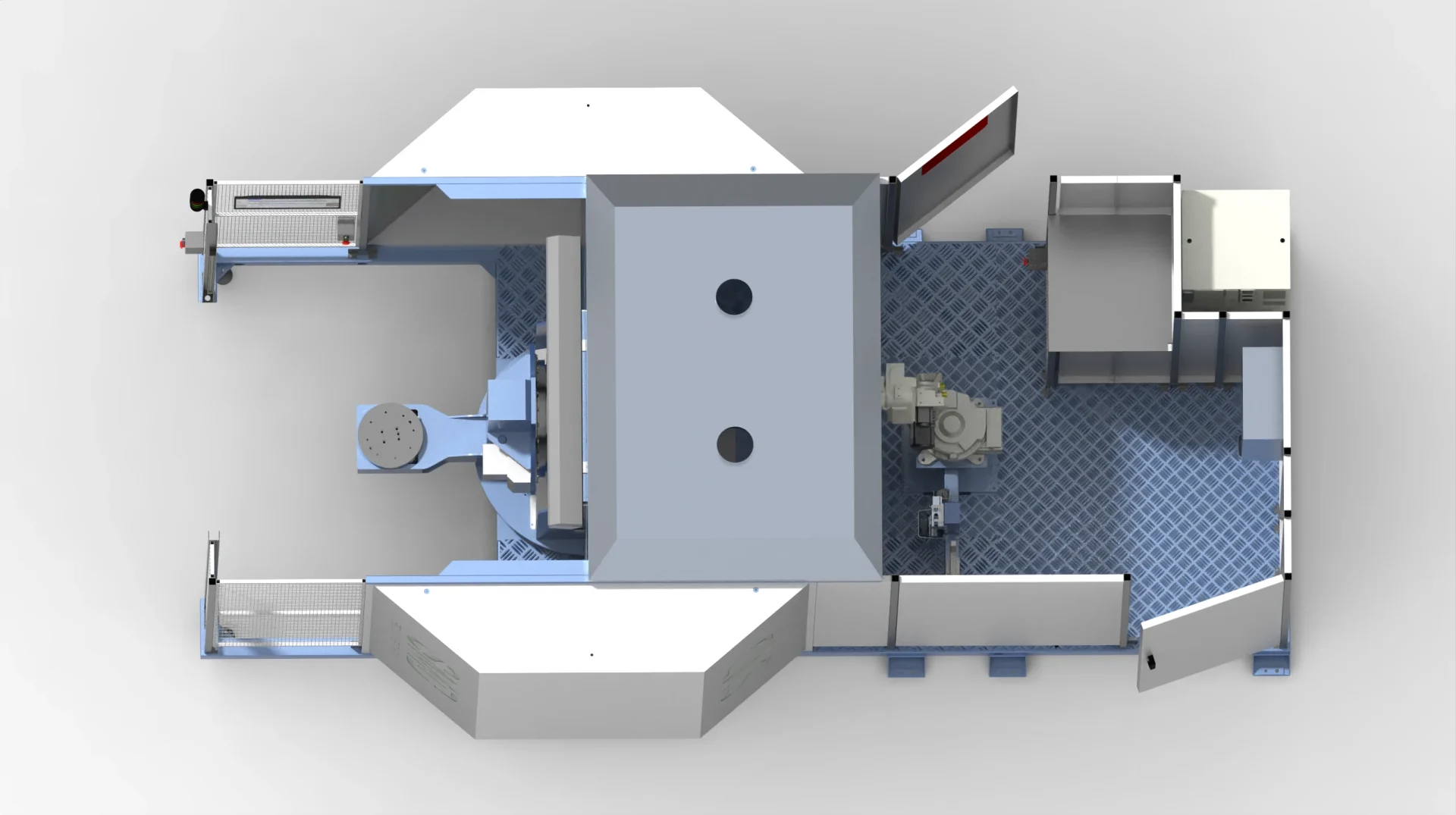
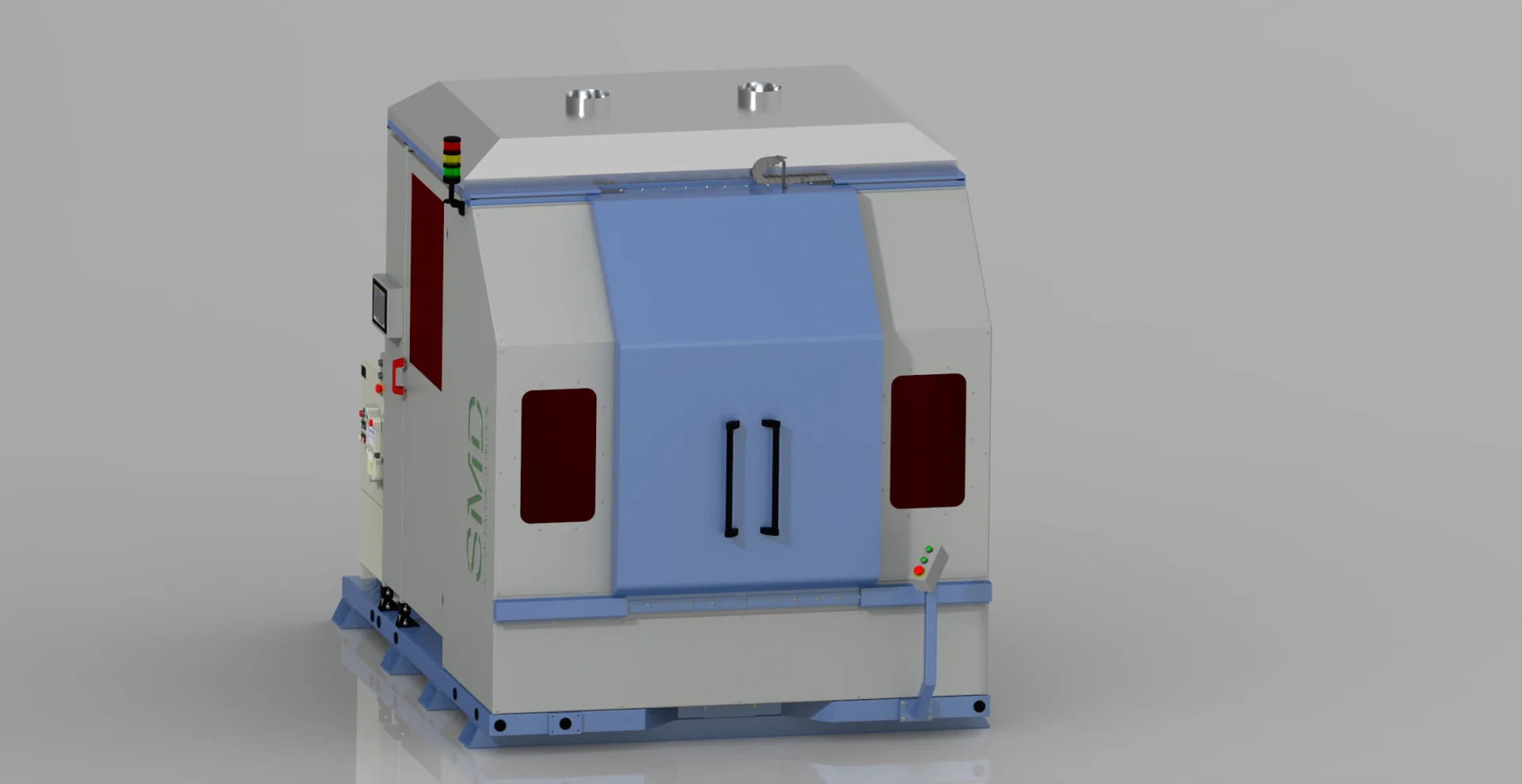
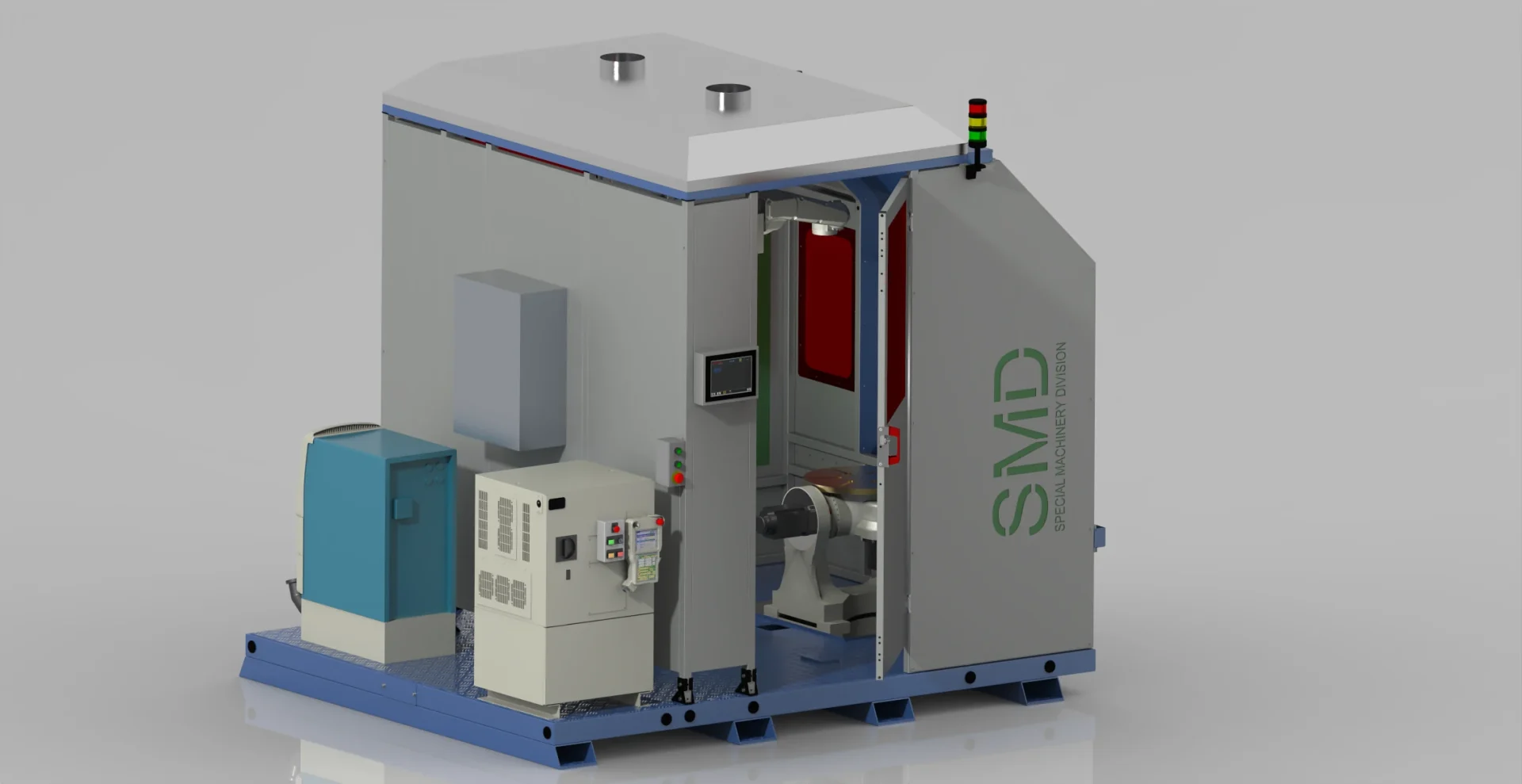
Monolithic, dual-station cells are positioning systems designed for robotic welding applications, characterized by compactness, robustness, and ease of integration.
Built on a common base, these cells can accommodate all the components of the robotic system, ensuring high stability and precision during operations. The dual-station configuration allows for alternating stations between the robot’s operating area and the loading/unloading area, ensuring operational flexibility, production continuity, and reduced robot downtime.
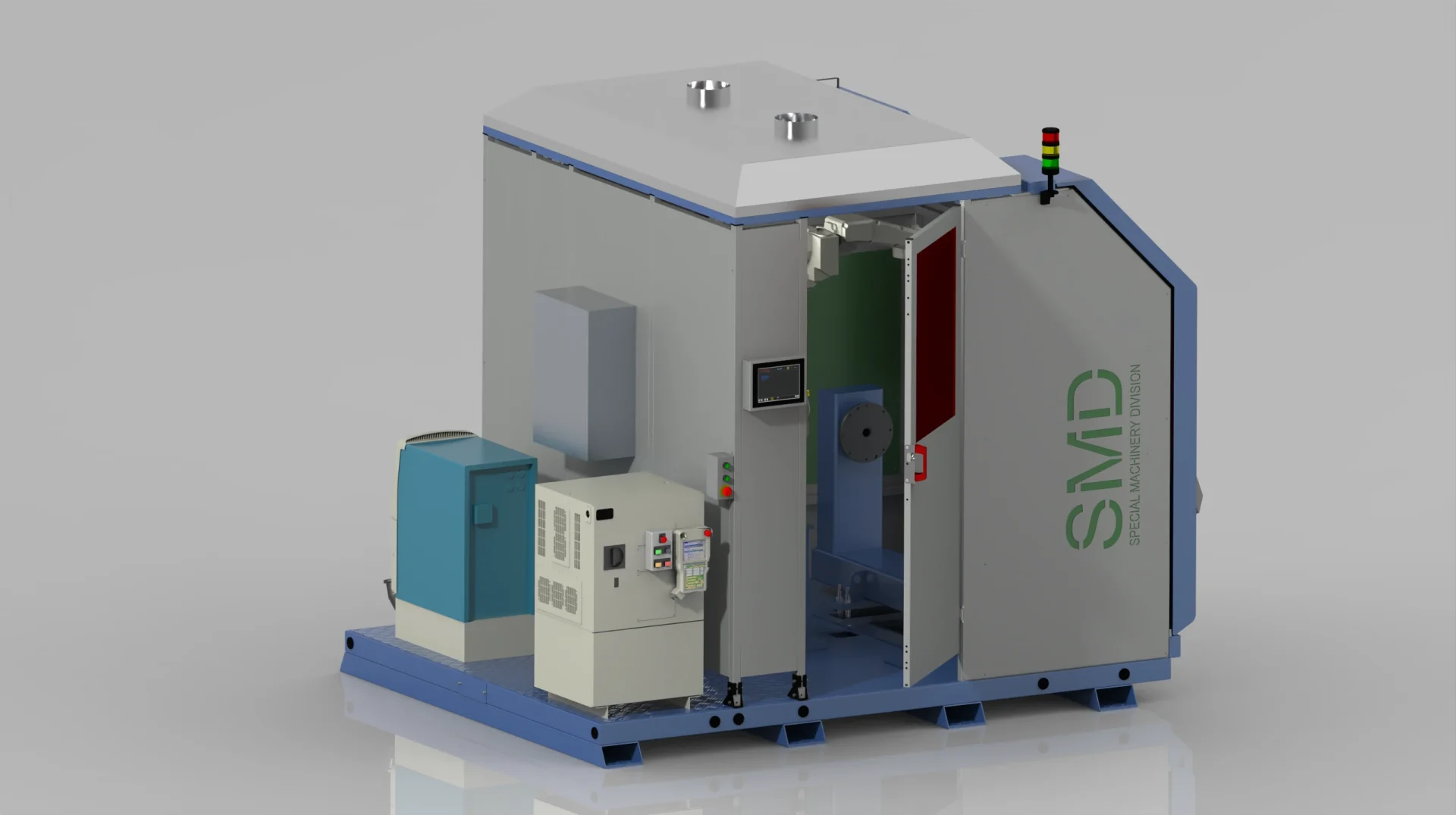
Cell 2Ri300-1006 – Monolithic Cell Complete with Roto-Tilting Positioner
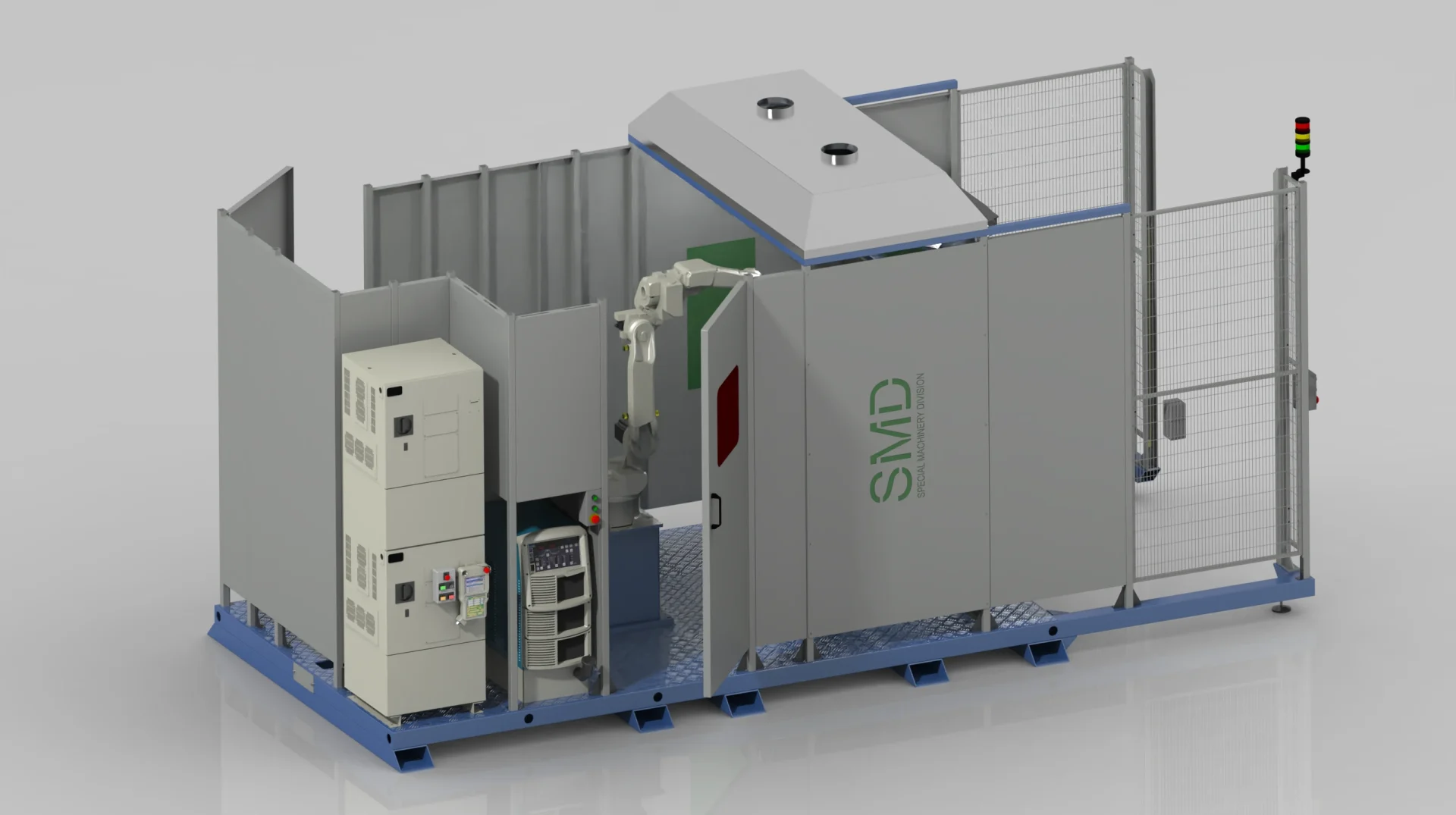
The 2Ri300-1006 Cell is a monolithic cell designed for robotic welding applications, characterized by its high compactness and robustness.
Built on a common base, the cell integrates a rotary-tilt positioner, allowing for optimal positioning of components for welding. This configuration allows for completely safe operations and reduced cycle times, ensuring production continuity and maximum accessibility to the robot during all operational phases.
Available configurations
• Complete monolithic version with integrated rotary-tilt positioner
• Base designed to house all robotic system components
• Option of integration with dedicated mounting systems
• Customized construction based on the size, load, and geometry of the components
STR Cell – Monolithic Cell Complete with Double Station Table
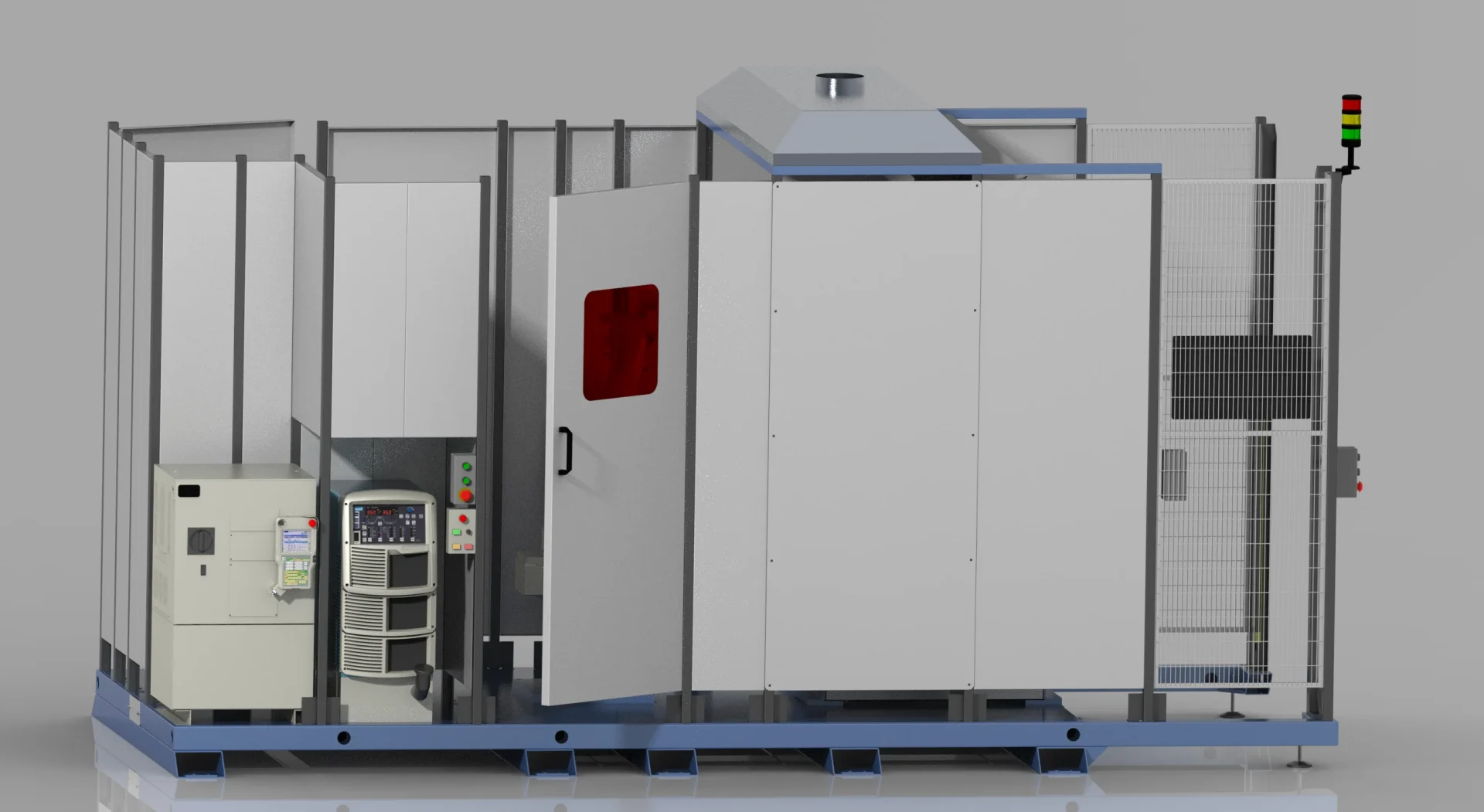
The STR Cell is a monolithic cell designed for robotic welding applications, characterized by compactness, robustness, and ease of integration.
Built on a common base, the cell integrates a dual-station table that allows for automatic switching between the robot’s operating area and the loading/unloading area. This configuration ensures production continuity, reduced cycle times, and maximum component accessibility during all processing phases.
Available configurations
• Integrated dual-station table with automatic station switching
• Common base designed to house all robotic system components
• Option of integrating with dedicated clamping systems
• Customized production based on component size, load, and geometry
DTV500-1016V Cell – Monolithic Cell Complete with Double Lathe
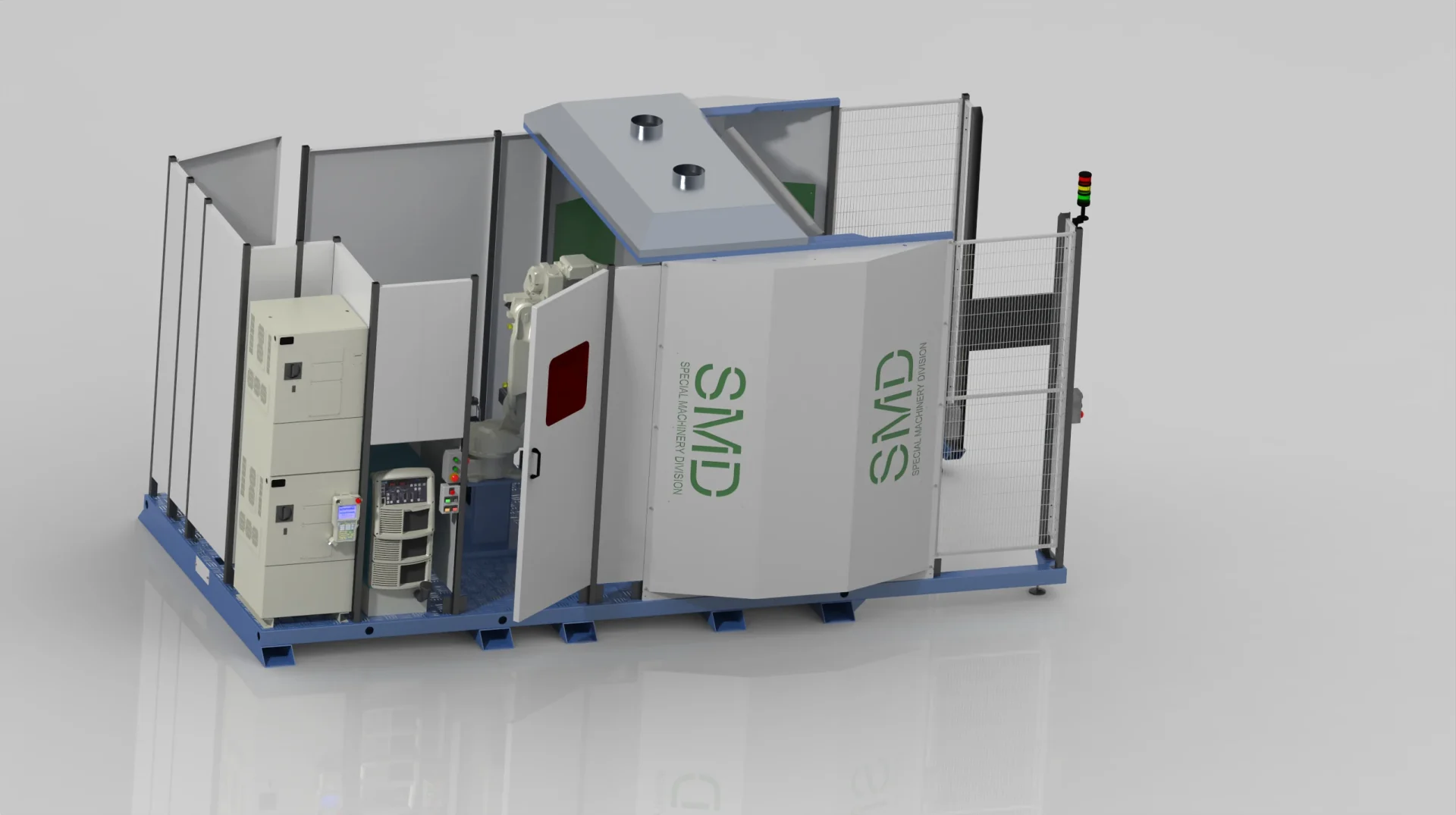
The DTV500-1016V Cell is a monolithic cell designed for robotic welding applications, characterized by compactness, robustness, and ease of integration.
Built on a common base, the cell integrates a double lathe that allows for automatic switching between the robot’s operating area and the loading/unloading area. This configuration ensures production continuity, reduced cycle times, and maximum component accessibility during all processing phases.
Available configurations
• Integrated double lathe, with automatic station switching
• Common base designed to house all robotic system components
• Option of integrating with dedicated clamping systems
• Customized production based on component size, load, and geometry
Cell 2BA300-1010 – Monolithic Cell Complete with Double Roto-Tilting Door with “L” Geometry
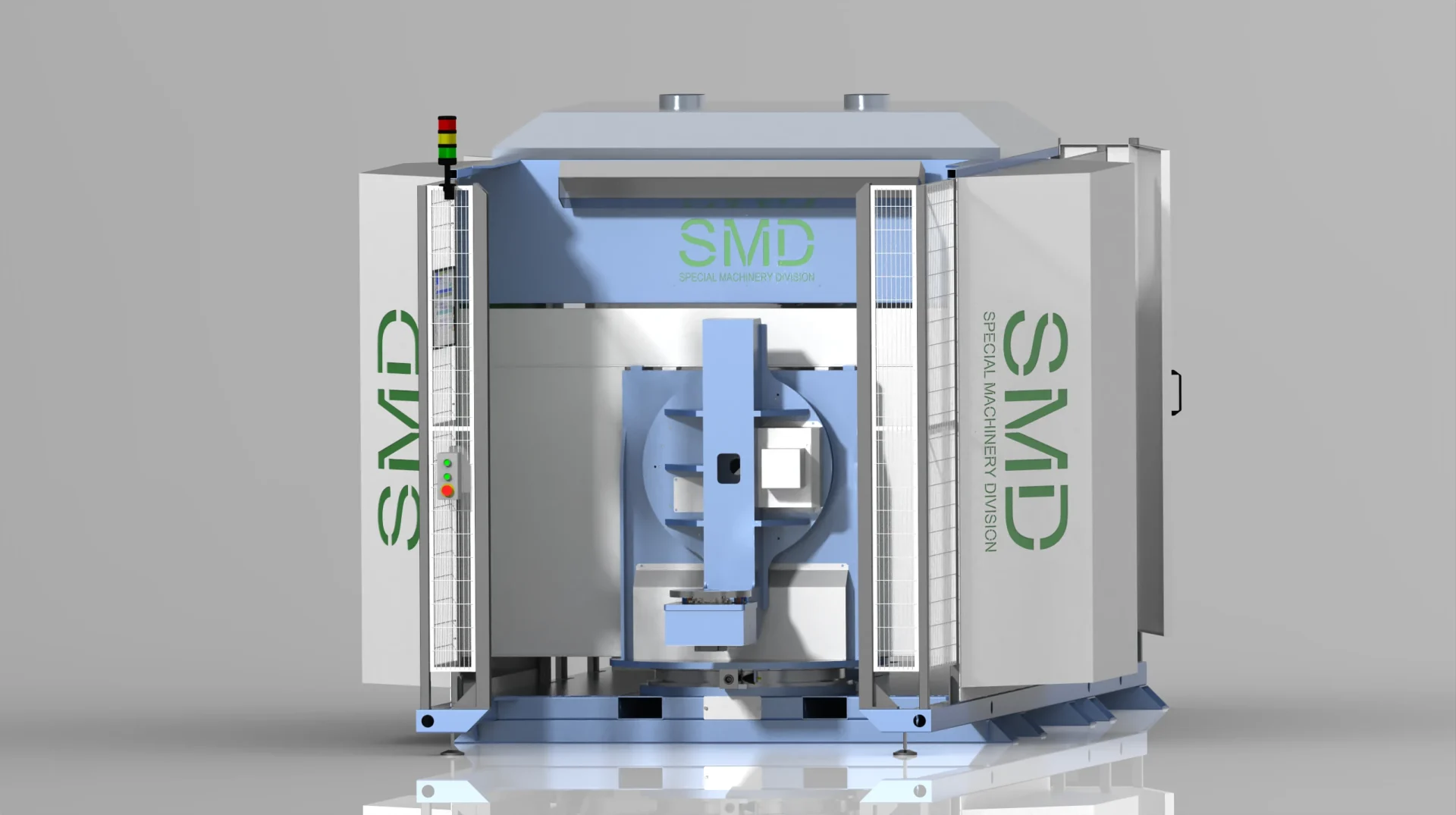
The 2BA300-1010 Cell is a monolithic cell designed for robotic welding applications, characterized by compactness, robustness, and ease of integration.
Built on a common base, the cell integrates a double L-shaped rotary/tilting system, which allows for automatic switching between the robot’s operating area and the loading/unloading area. This configuration ensures production continuity, reduced cycle times, and maximum component accessibility during all processing phases.
Available configurations
• Integrated double rotary-tilting system with “L” geometry, with automatic station switching
• Common base designed to house all robotic system components
• Option of integrating with dedicated mounting systems
• Customized construction based on the size, load, and geometry of the components
Monolithic cells (mono-station)
Single-station monolithic cells are compact and robust systems for robotic welding applications.
Built on a common base, they house all the robotic system components and ensure stability and precision. This configuration is ideal for lower-volume production or small batch sizes, offering operational flexibility, production continuity, and reduced robot downtime.
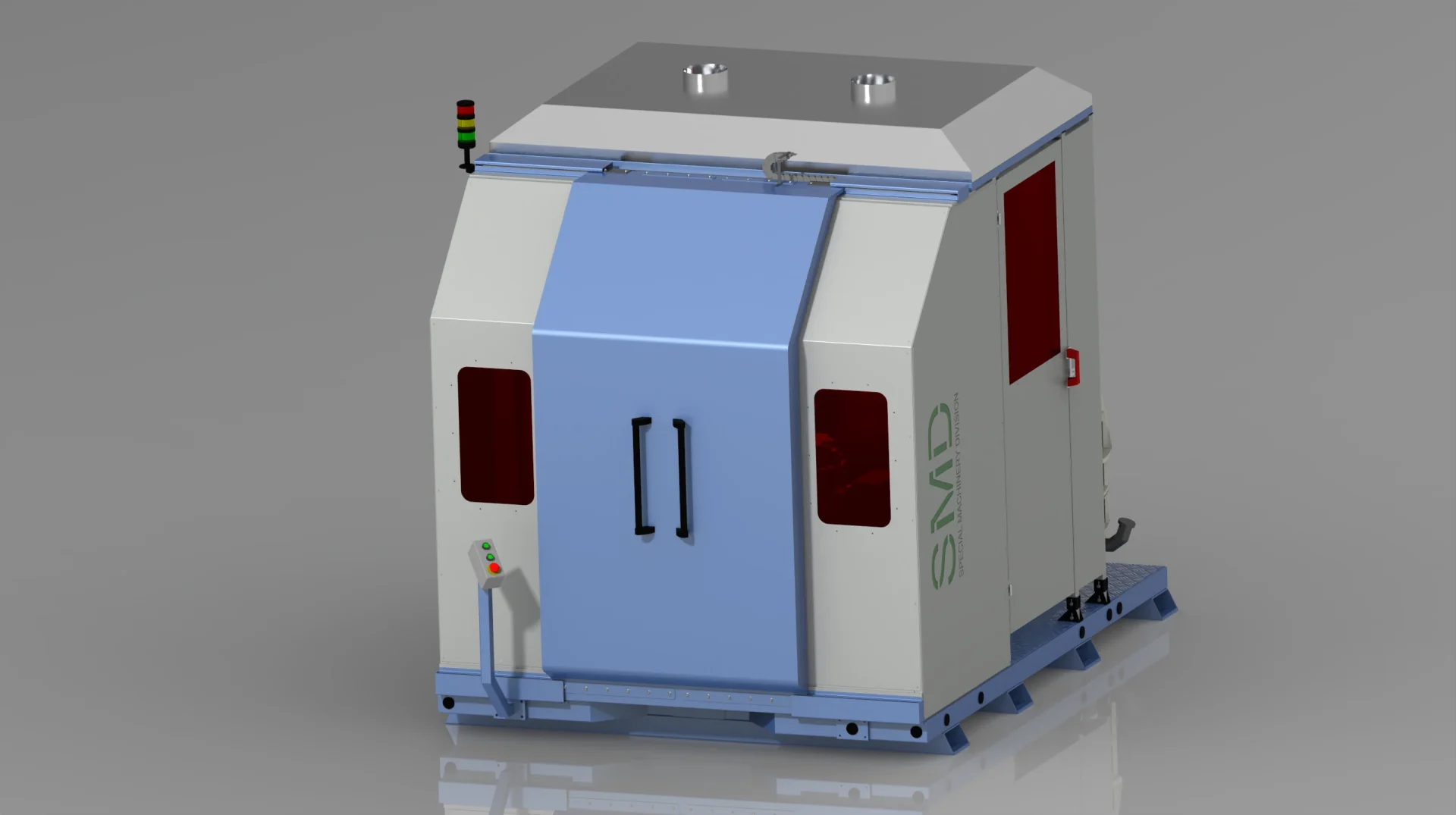
CFS-1Ri Cell – Single-Station Monolithic Cell with Sliding Window and Roto-Tilting Positioner
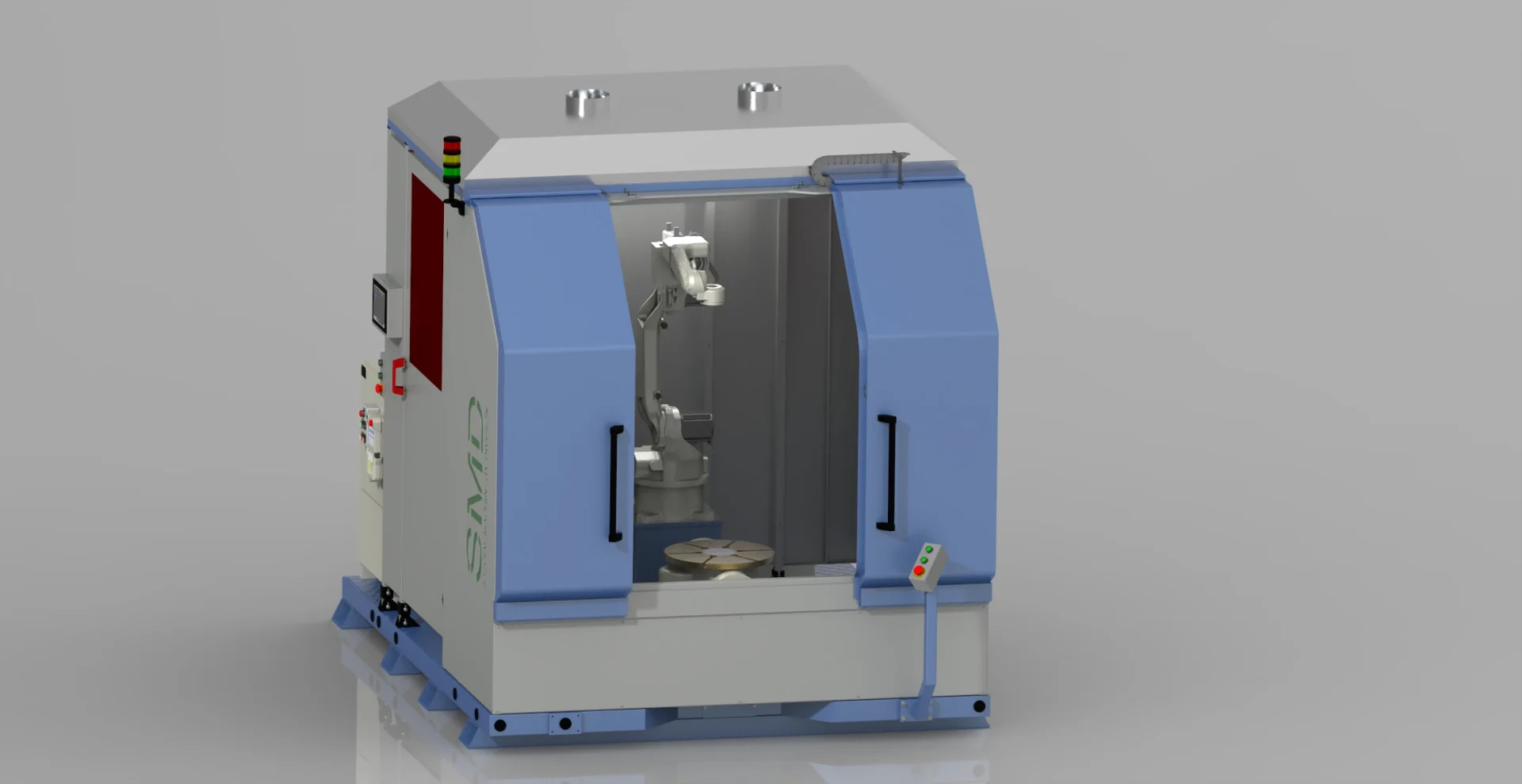
The CFS-1Ri Cell is a compact and robust monolithic cell designed for robotic welding applications.
Built on a common base, it integrates a rotary-tilt positioner and a sliding window, ensuring stability, precision, and component accessibility. The single-station configuration is ideal for small batch or volume production, ensuring operational flexibility and reduced robot downtime.
Available configurations
• Integrated tilt-rotary positioner with sliding window
• Common base designed to house all robotic system components
• Option of integrating with dedicated mounting systems
• Customized construction based on the size, load, and geometry of the components
CPS-T300/0812CP Cell – Single-Station Monolithic Cell with Sliding Door and Lathe Positioner
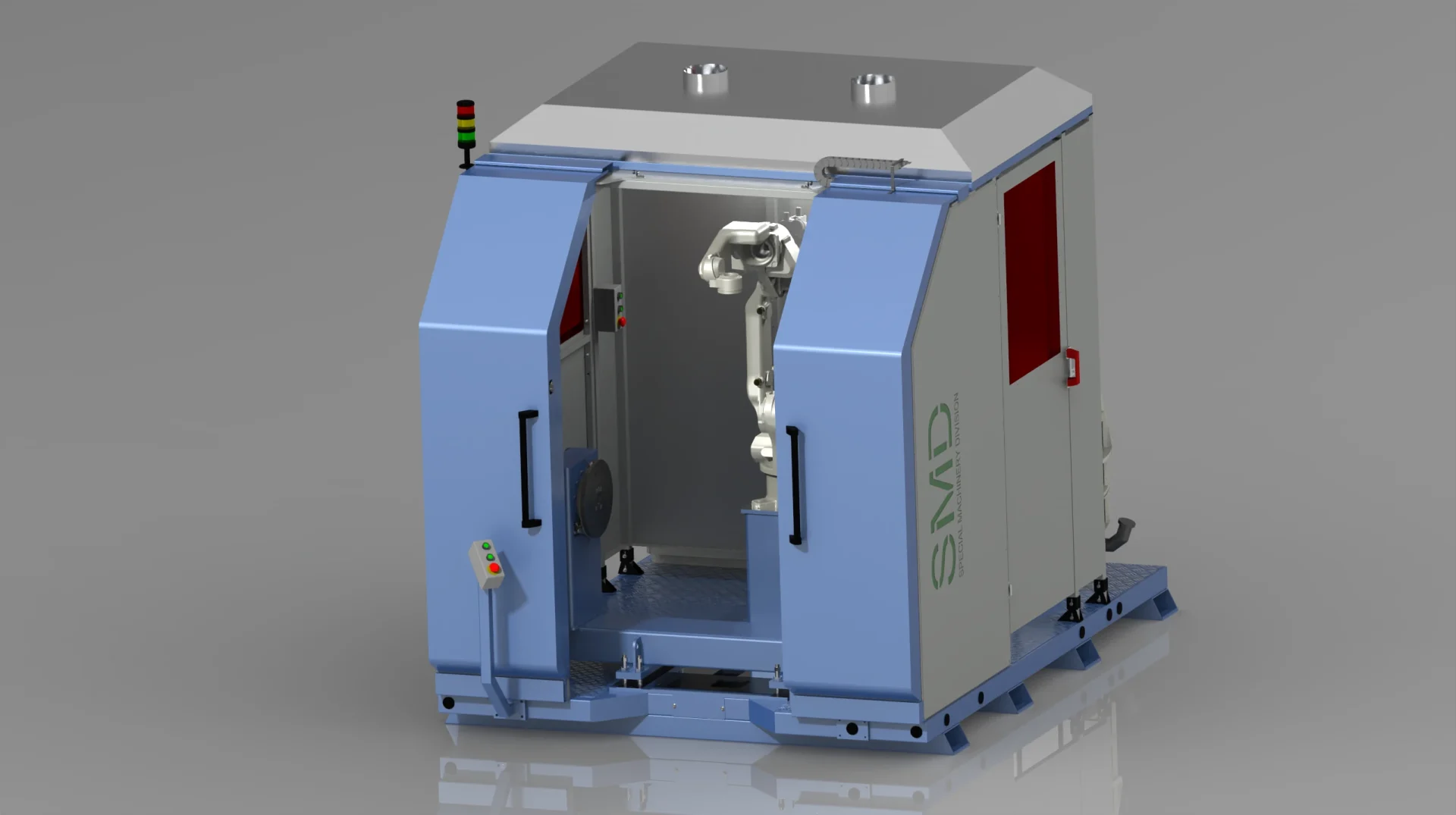
The CPS-T300/0812CP Cell is a compact and robust monolithic cell designed for robotic welding applications.
Built on a common base, it integrates a lathe positioner and a sliding door, ensuring stability, precision, and component accessibility. The single-station configuration is suitable for small batch or volume production, ensuring operational flexibility and reduced robot downtime.
Available configurations
• Integrated lathe positioner with sliding door
• Common base designed to house all robotic system components
• Option of integrating with dedicated mounting systems
• Customized production based on component size, load, and geometry
CASE STUDY
Special Welding Systems
Specialty welding systems are tailor-made solutions designed to optimize productivity, precision, and safety in industrial processes.
Each system is designed to meet specific production needs, integrating monolithic cells, positioners, lathes, and handling systems in dedicated configurations. The modular and flexible approach allows for the management of components of varying sizes and geometries, reducing cycle times and ensuring operational continuity.
Our case studies demonstrate how implementing these solutions can significantly improve production efficiency and welding quality, even in complex production environments or variable batches.
Double-Station Robotic System for Stator Pack Assembly and Welding
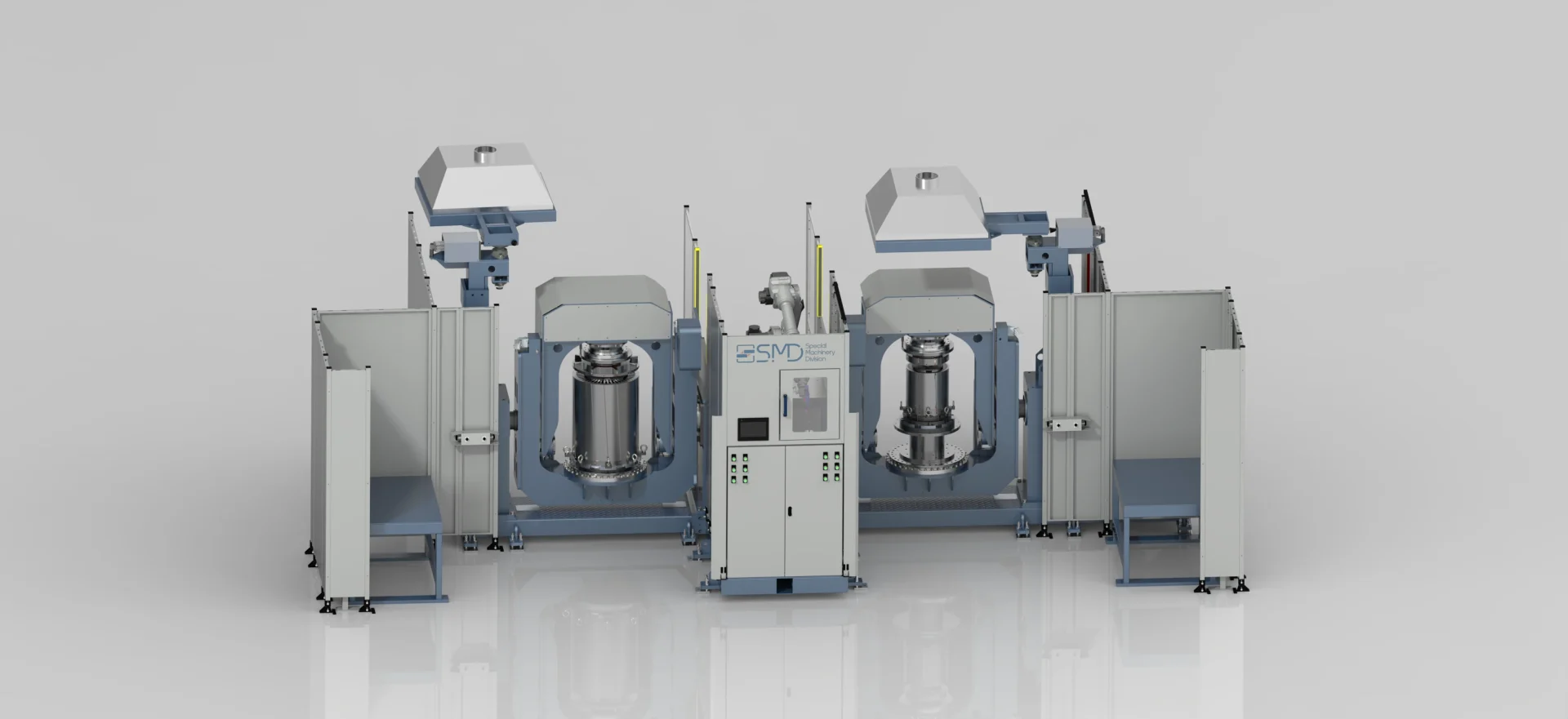
The dual-station robotic system is designed for the assembly and welding of stator packs, ensuring high precision and continuous production.
The system consists of a hydraulic expansion device, which allows precise centering and referencing of the stator pack laminations, and a hydraulic press dedicated to compacting and pressing the packs. An integrated welding robot performs TIG-Plasma welding, ensuring uniform and repeatable quality across all components.
The dual-station configuration allows alternation between the robot’s operating area and the loading/unloading area, optimizing cycle times and enabling continuous processing of small-to-medium and large batches.
Available configurations
- Hydraulic expansion system for centering and referencing the laminations
- Hydraulic press for compacting and pressing stator packs
- Integrated robot for TIG-Plasma welding
- Dual-station configuration with automatic station alternation
- Custom-built according to the dimensions and number of laminations of the stator packs
Robotic System for TIG Welding of Single-Edge Electrical Enclosures
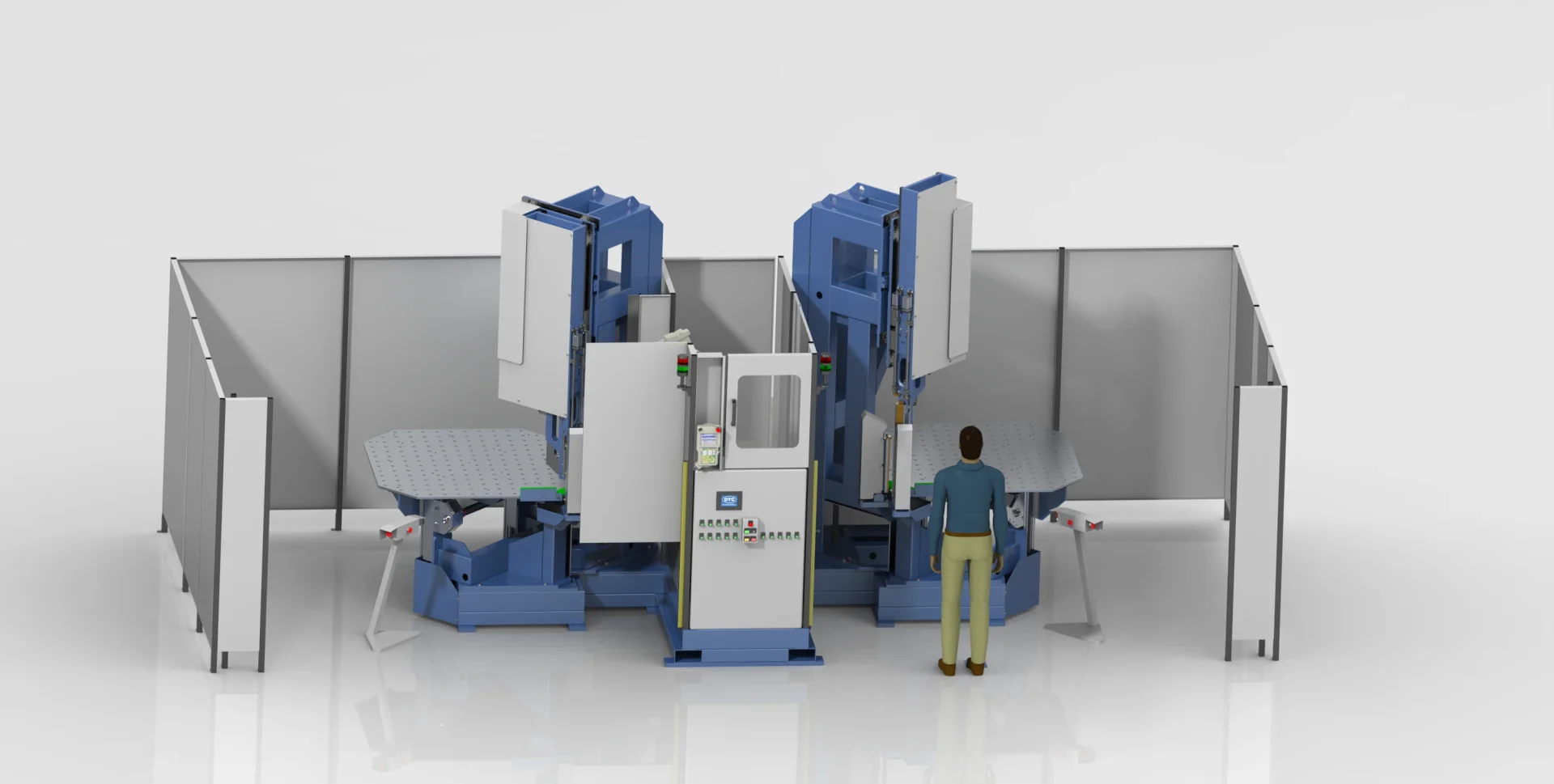
The dual-station robotic system is designed for TIG welding of electrical enclosures, ensuring precision, continuous production, and optimal joint quality.
The system welds one edge of the electrical enclosure at a time, with setup times reduced to just a few seconds for format changes (width and height) thanks to an automatic system that adapts to the enclosure’s format. The dual-station configuration allows alternation between the robot’s operating area and the loading/unloading area, optimizing cycle times.
Welding is performed without oxidation, ensuring a uniform, “perfectly white” result, ideal for applications where aesthetic quality and precision are essential.
Available configurations
- Automatic format-adjustment system for quick changeovers
- TIG welding robot with precise edge control
- Dual-station configuration with automatic station alternation
- Custom-built according to the dimensions and format of the electrical enclosures
Robotic System for TIG + MIG-MAG Welding of Electrical Cabinets
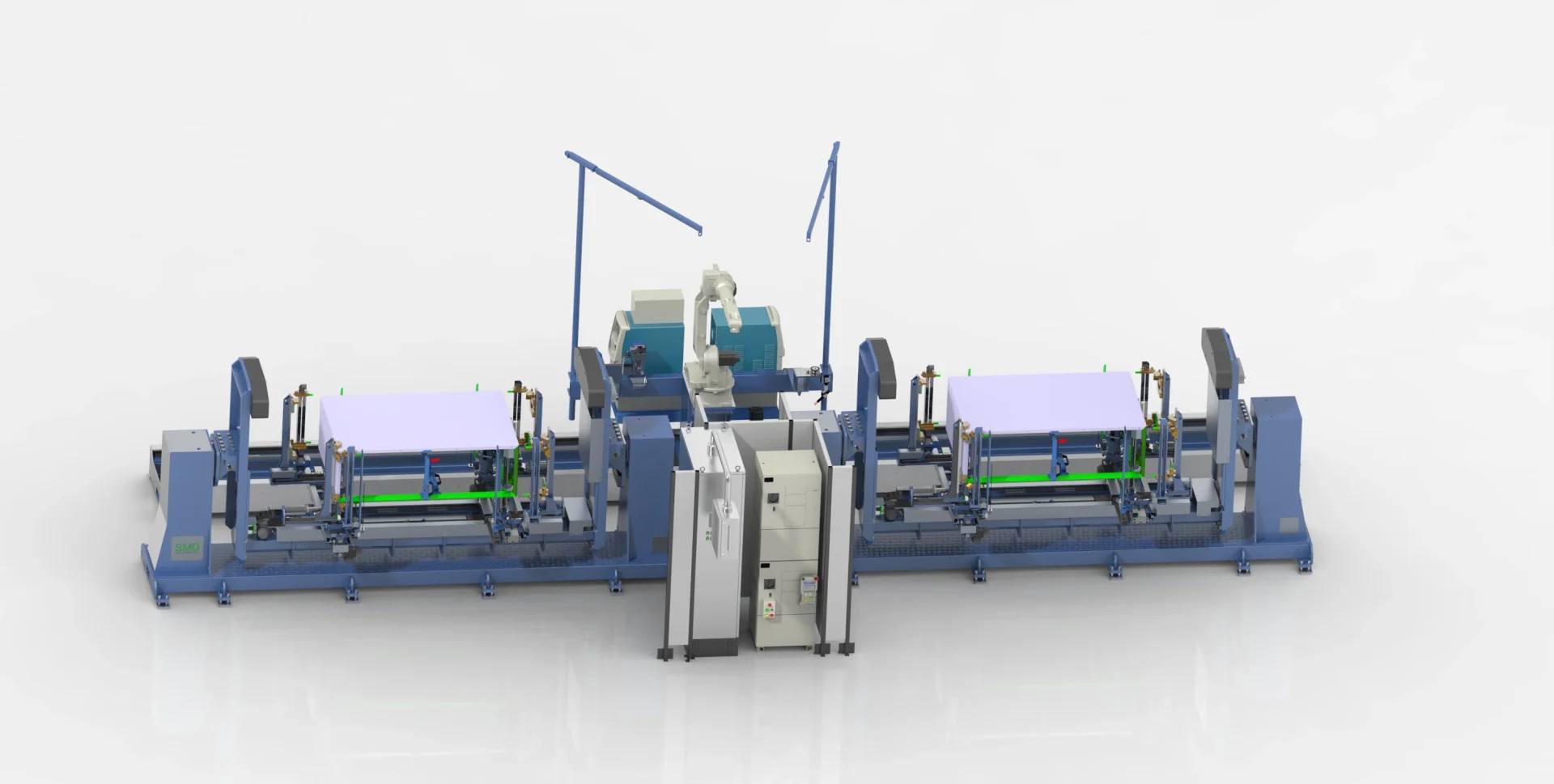
Robotic Welding System for Electrical Cabinets
The robotic system is designed for TIG and MIG-MAG welding of electrical cabinets, ensuring high flexibility, precision, and continuous production.
The system consists of a robot mounted on a floor-mounted track, allowing it to serve multiple work stations, and two in-line lathe-type positioners. Each positioner is equipped with a dedicated jig and reference/clamping systems for the components that make up the metal cabinet.
This configuration enables efficient management of the welding process, optimizing cycle times and ensuring quality and repeatability of the joint across all operations.
Available configurations
- Robot on a floor-mounted track for managing multiple work stations
- Two in-line lathe-type positioners with dedicated tooling
- Reference jigs and clamping systems specific to the components
- Possibility of integration with dedicated fixturing systems
- Custom-built according to the dimensions and configuration of the electrical cabinets
Robotic TIG Welding System for Electrical Panel Doors
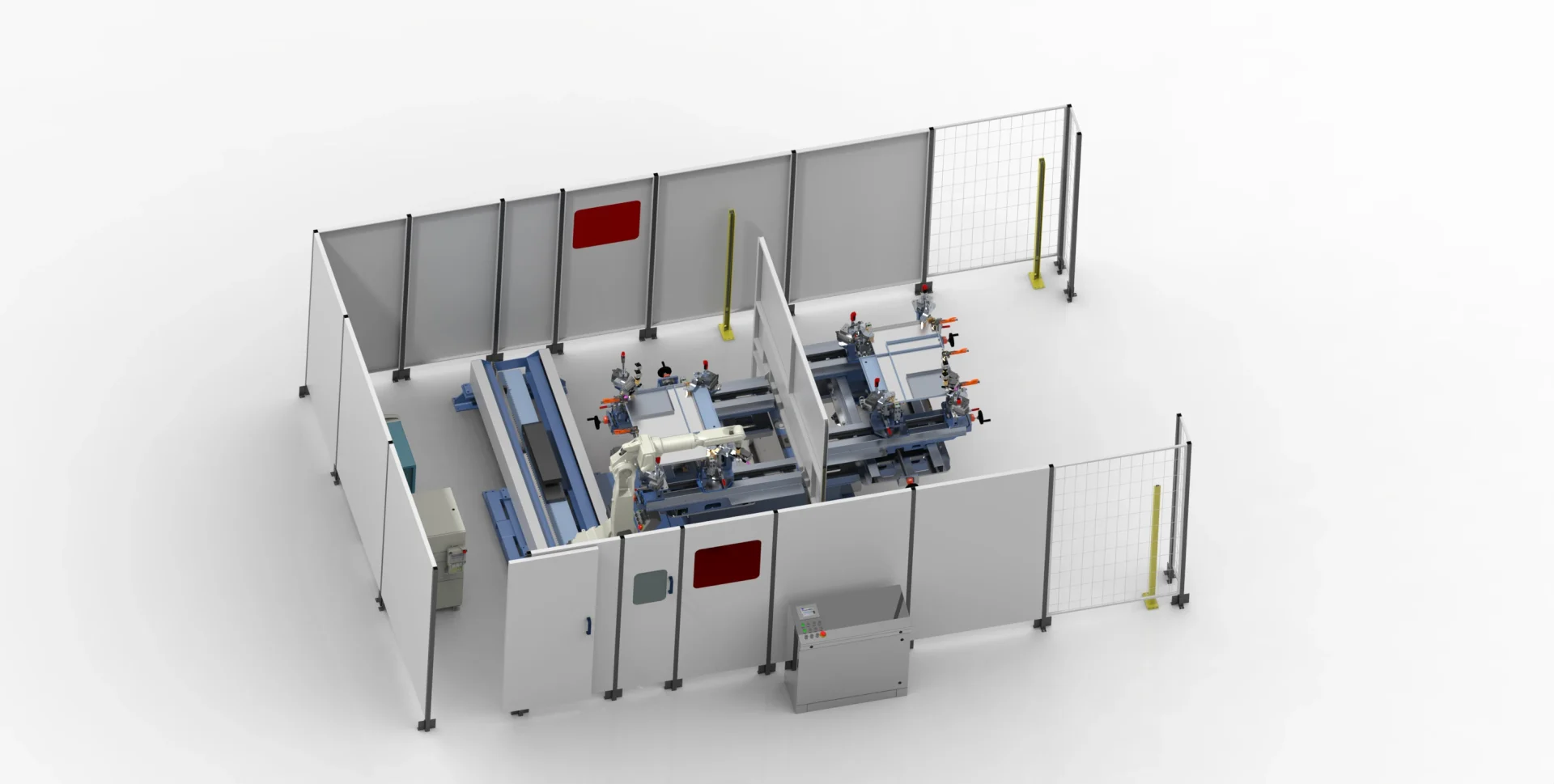
The robotic system is designed for TIG welding of electrical panel doors and their hinges, ensuring precision, repeatability, and continuous production.
The system consists of a robot mounted on a floor-mounted rail track and a dual-station table, which allows alternation between the robot’s operating area and the loading/unloading area. This configuration optimizes cycle times and ensures a continuous workflow.
The system is designed to guarantee accurate component positioning and high welding quality, even on parts requiring precision and aesthetic care.
Available configurations
- Robot on a floor-mounted rail track for managing work stations
- Dual-station table with automatic station alternation
- Dedicated reference and clamping systems for doors and hinges
- Possibility of integration with dedicated fixturing systems
- Custom-built according to the dimensions and configuration of the electrical panels
Special Systems: Handling and Welding
Specialized handling and welding systems are tailor-made solutions designed to meet specific production needs, integrating handling, positioning, and robotic welding systems into a single, optimized process.
Each system is developed to ensure efficiency, precision, and operational continuity, adapting to components of varying geometries, sizes, and production volumes. The integration of handling systems and welding technologies improves workflows, reduces cycle times, and ensures high quality standards.
The case studies presented highlight real-world application solutions, demonstrating how an engineered and customized approach can optimize production performance even in the most complex contexts.
Automatic Robotic Line for Assembly and MIG-MAG Welding of Tubular Frames
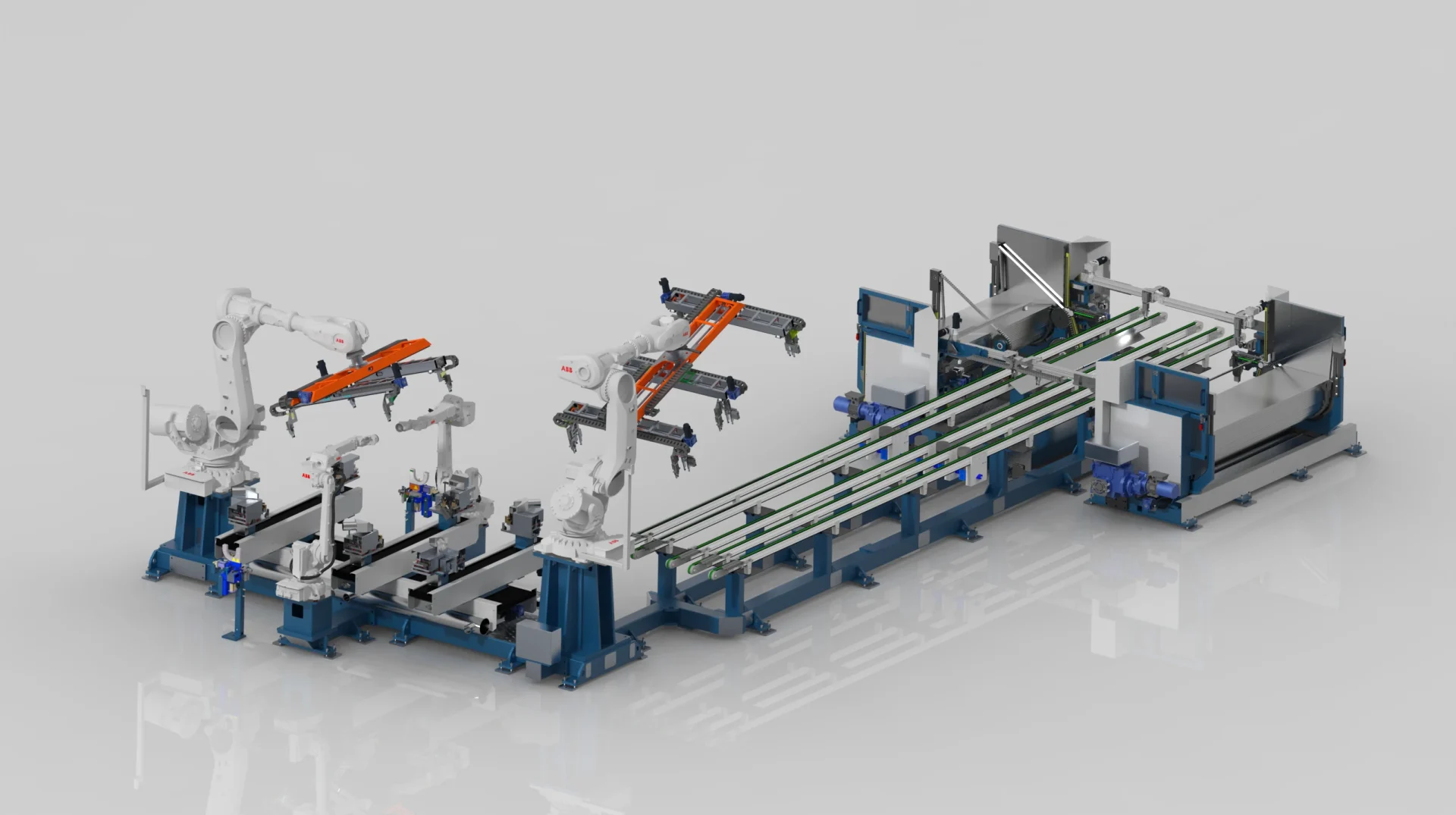
The automatic robotic line is designed for the assembly and MIG-MAG welding of tubular frames for safety guards, ensuring high productivity, precision, and process repeatability.
The system integrates automated assembly and welding stations, enabling continuous component management and optimized production flows. The line’s configuration is designed to ensure correct positioning and locking of the tubular elements, improving joint quality and reducing cycle times.
The system is particularly suitable for mass production, where high volumes and consistent quality standards are required.
Available configurations
- Integrated automatic assembly and welding stations
- Dedicated reference and locking systems for tubular frames
- Option to integrate with handling and transfer systems
- Customized production based on frame size and configuration
Automatic Robotic Line for Assembly and MIG-MAG Welding of Door and Window Frames
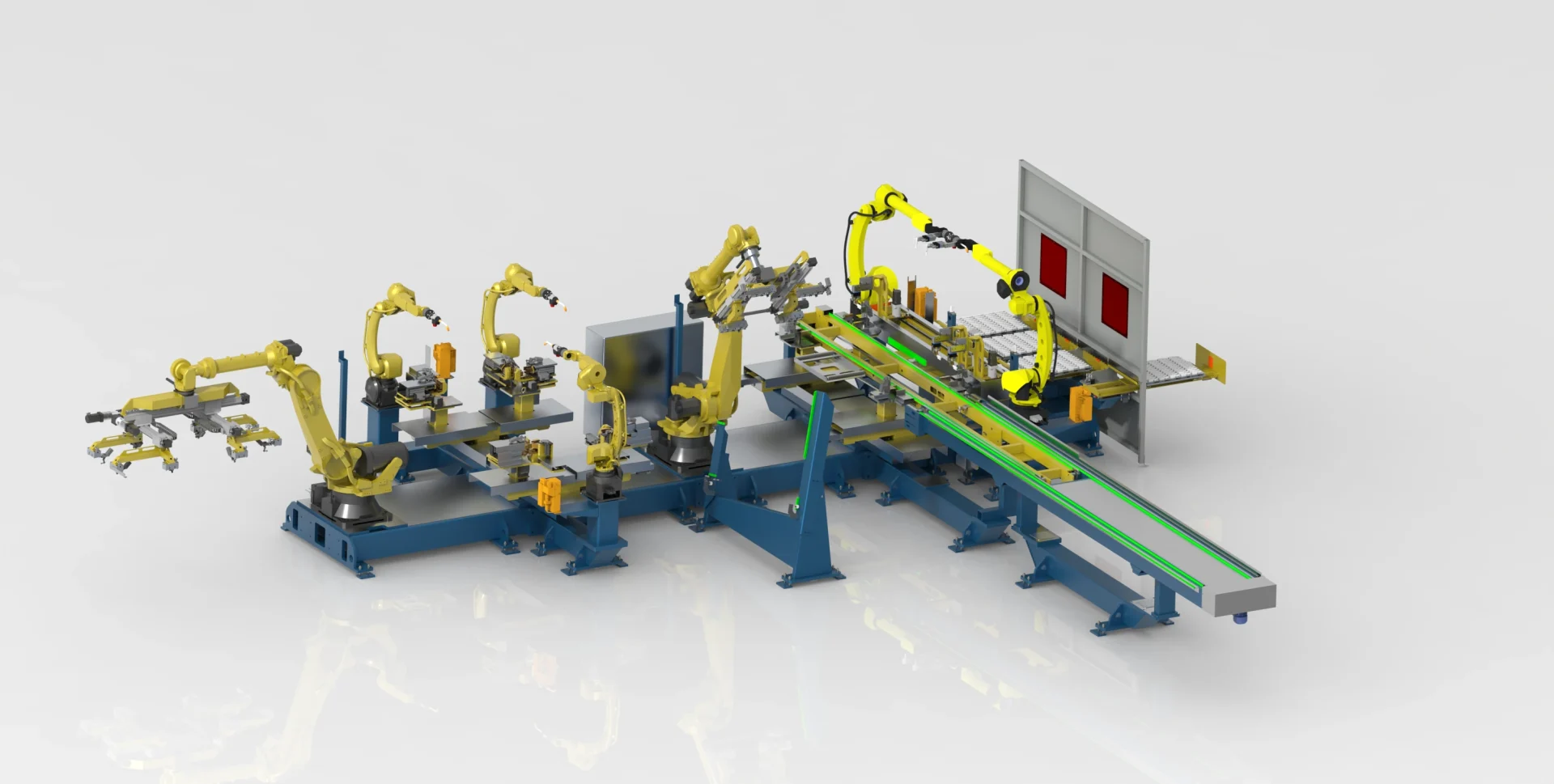
The automatic robotic line is designed for the assembly and MIG-MAG welding of door and window frames, ensuring high productivity, precision, and process repeatability.
The system integrates automatic assembly and welding stations, enabling continuous component management and optimized production flows. The line’s configuration is designed to ensure correct positioning and locking of the frames, improving joint quality and reducing cycle times.
The system is particularly suitable for mass production, where high volumes and consistent quality standards are required.
Available configurations
- Integrated automatic assembly and welding stations
- Dedicated frame reference and locking systems
- Option to integrate with handling and transfer systems
- Customized production based on frame size and configuration
Multi-Robot System for Handling and MIG-MAG Welding of Ice Cream Batch Freezers
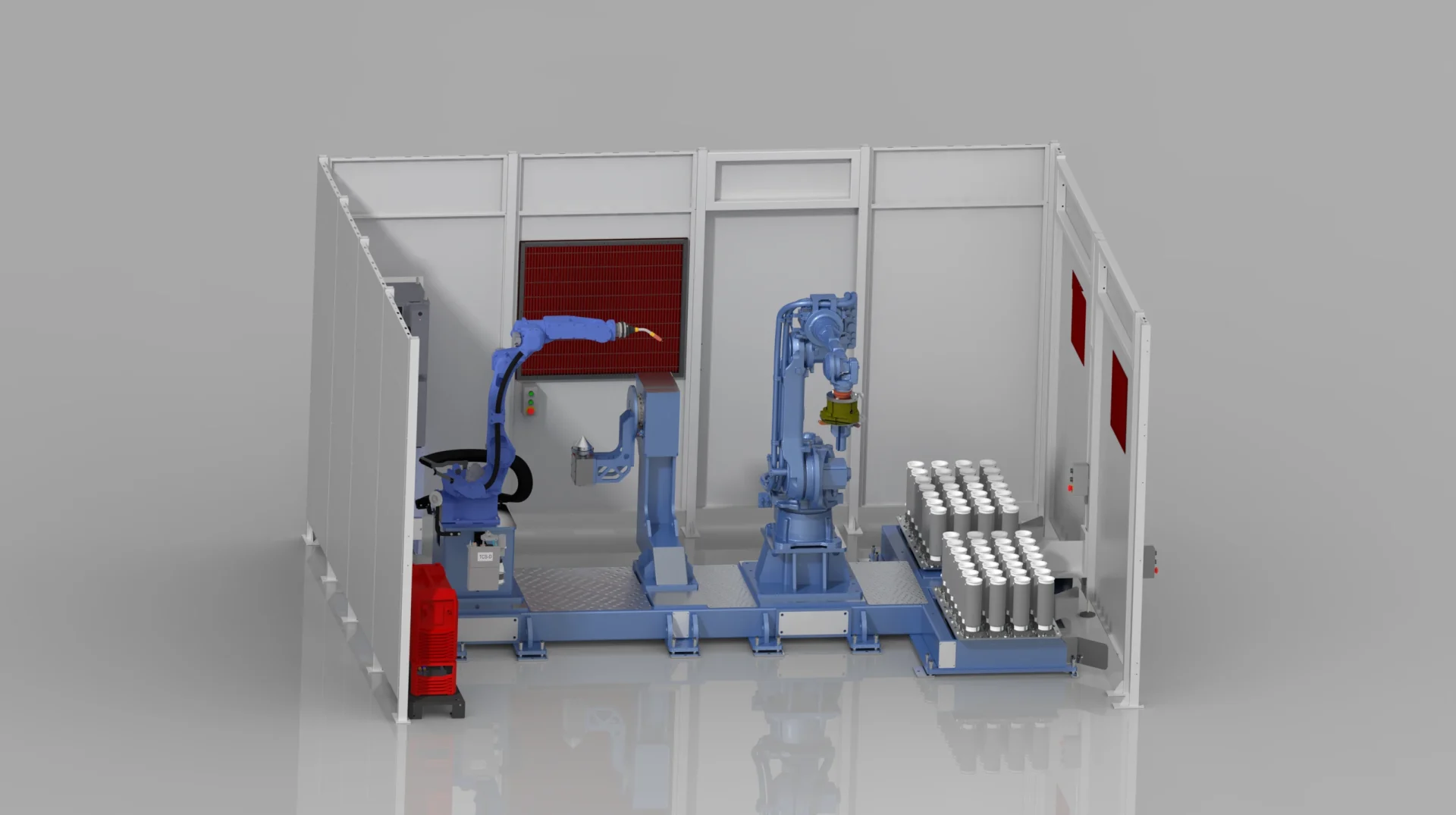
The multi-robot system is designed for the handling and MIG-MAG welding of ice cream batch freezers, ensuring high productivity, precision, and operational continuity.
The system integrates multiple coordinated robots to manage the various process phases, from component handling to welding, optimizing production flows and reducing cycle times. The configuration allows for accurate part positioning and ensures joint quality and repeatability across all processes.
The system is particularly suitable for mass production and for components with complex geometries, where high levels of integration between handling and welding are required.
Available configurations
- Coordinated multi-robot system for handling and welding
- Workstations dedicated to the different process phases
- Specific reference and clamping systems for components
- Customized production based on the size and configuration of the batch freezers
Automatic Robotic Line for Assembly and Laser Welding of Electrical Enclosures
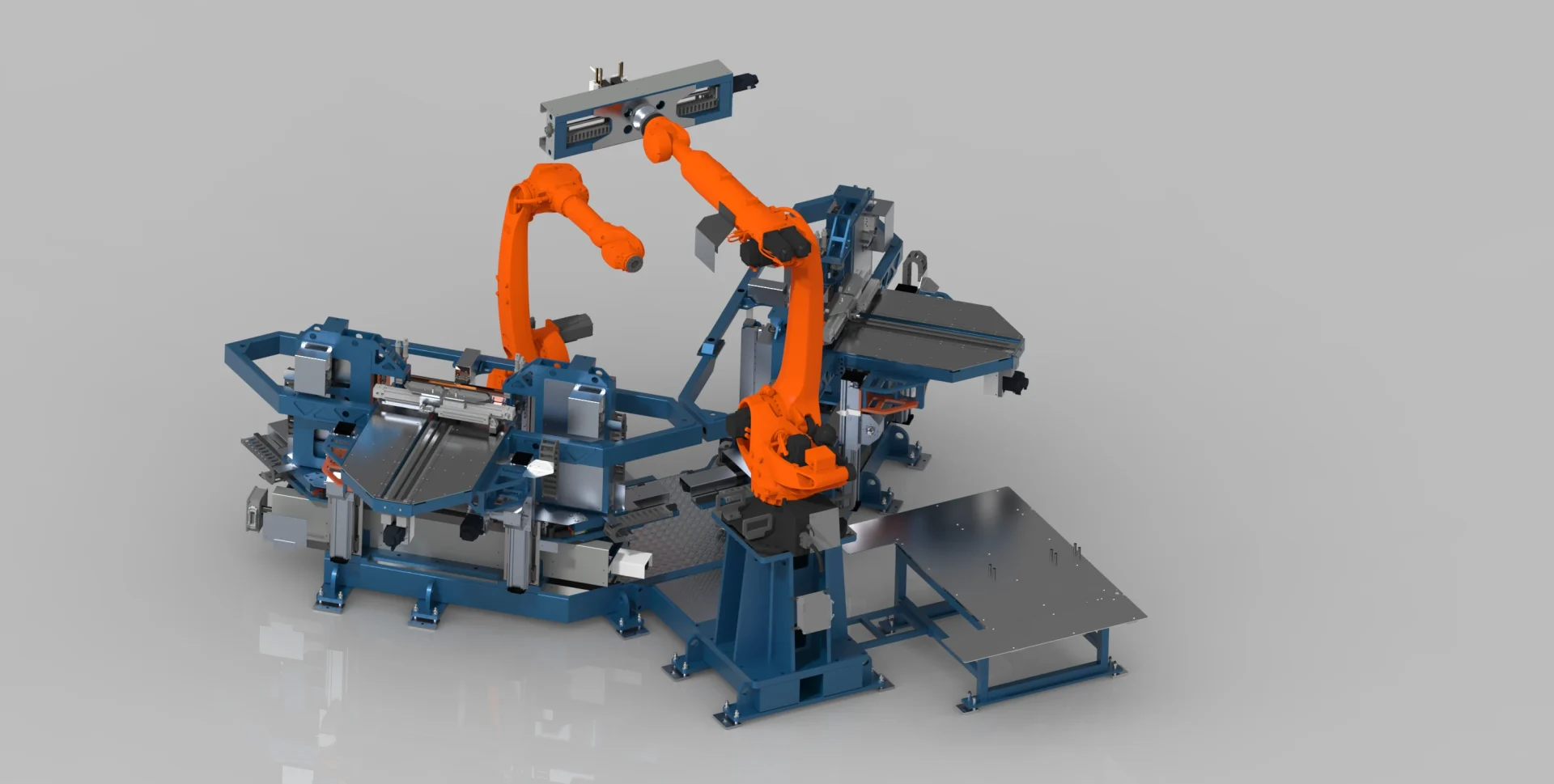
The automatic robotic line is designed for the assembly and laser welding of electrical enclosures, ensuring high precision, joint quality, and production continuity.
The system integrates automatic assembly and welding stations, enabling continuous component management and optimized production flows. The use of laser technology allows for high-quality welds with minimal deformation and maximum process repeatability.
The line’s configuration is designed to ensure correct positioning and locking of components, making it particularly suitable for mass production and applications requiring high quality standards.
Available configurations
- Integrated automatic assembly and laser welding stations
- Dedicated reference and locking systems for electrical enclosures
- Option to integrate with handling and transfer systems
- Customized production based on the size and format of the electrical enclosures
Special Plants: Multi-Process
Multi-process systems are solutions designed to perform different and combined processes within the same production system.
These systems integrate multiple technologies—such as TIG, MIG-MAG, laser welding, handling, and positioning—optimizing workflows and reducing overall cycle times.
The modular and customized configuration allows for the management of components of varying geometries and sizes, ensuring operational continuity, precision, and consistent quality.
The case studies presented highlight how the multi-process approach allows for the combination of different operations in a single system, increasing production efficiency and reducing the need for manual intervention.
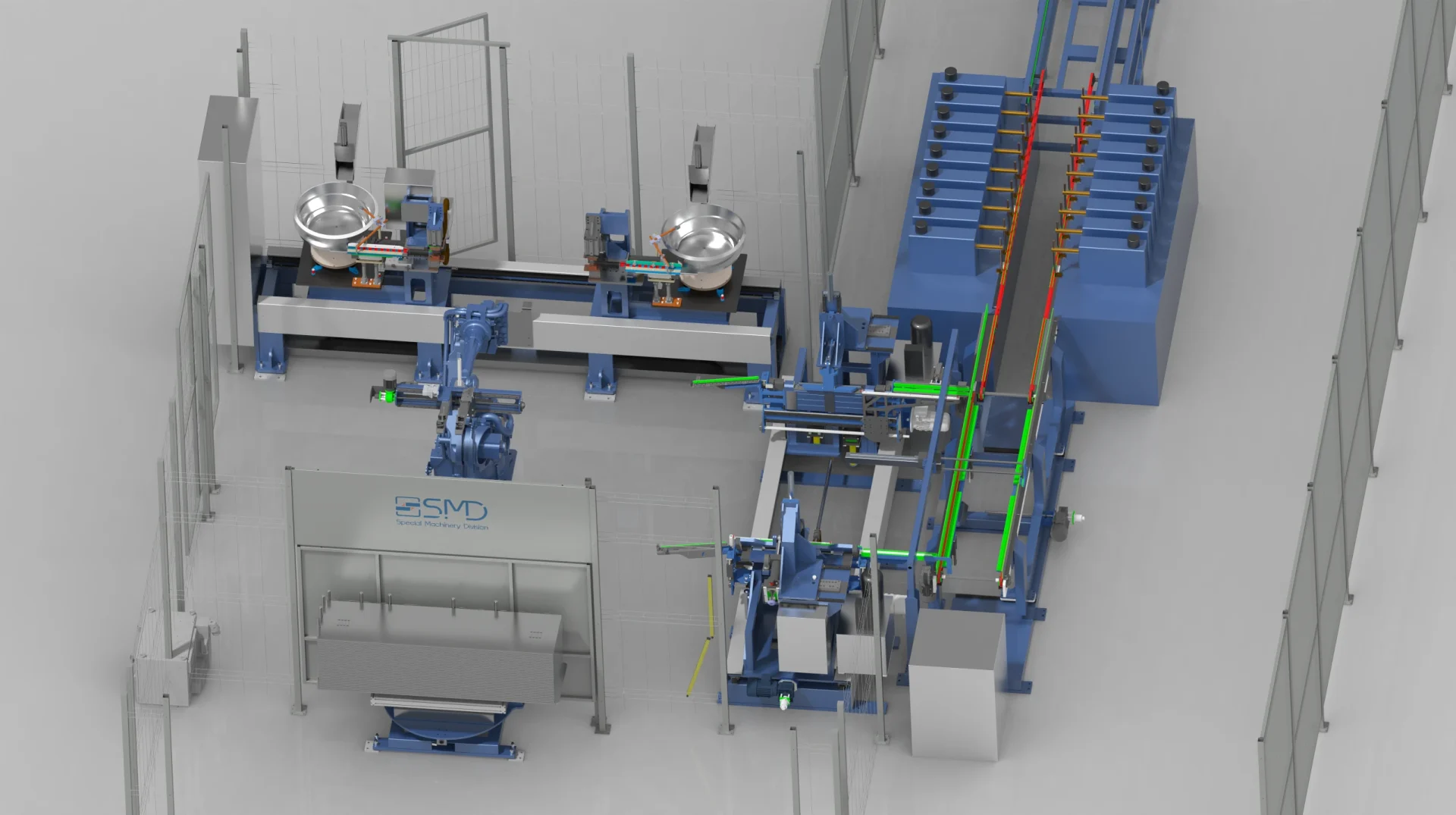
Automatic Line for the Production of Metal Cabinet Doors
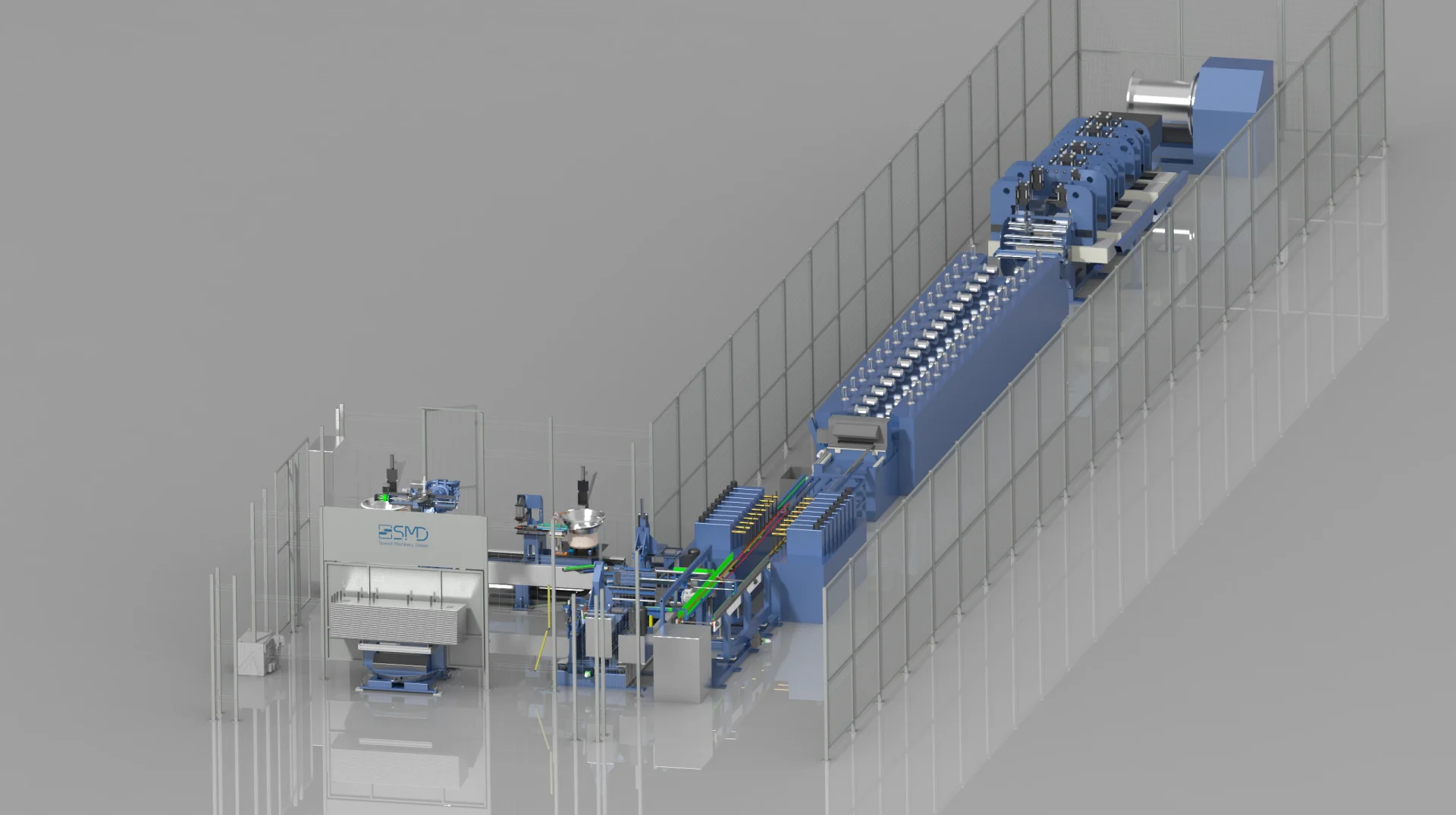
The automatic line is designed for the complete production of metal cabinet doors, ensuring high productivity, precision, and repeatability.
The system performs all processing phases in an integrated and automated manner: from uncoiling the sheet metal coil, to punching, notching, and stamping with automatically set-up hydraulic die units, to lateral edge-wrapping with a profiler and cutting to size according to the door height.
The line also includes multi-point spot welding of the side edges, double bending of the door head and tail, automatic component handling, and resistance welding of the hinges with loading via vibratory feeders, up to palletized unloading ready for the next phase.
This configuration optimizes cycle times, reduces manual intervention, and ensures consistent quality standards for mass production.
Available configurations
- Hydraulic mold units with automatic setup
- Roll forming machine for side edge banding
- Multi-point spot welding of side edges
- Door head and tail bending
- Automatic handling systems and vibratory feeders for hinge welding
- Palletized unloading of finished components
- Custom manufacturing based on door size and configuration
Robotic Line for the Production of Perimeter Fence Posts
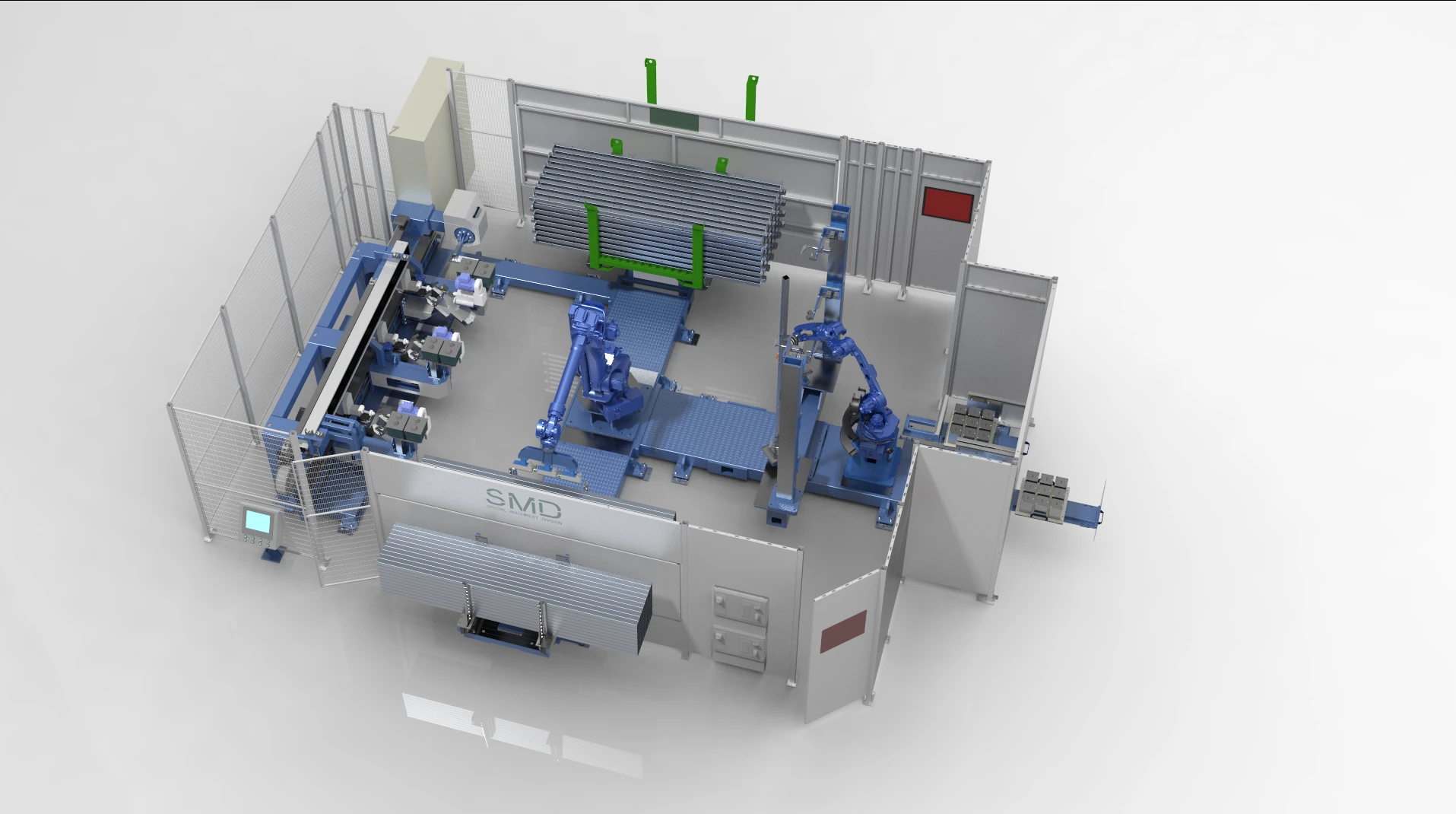
The robotic line is designed for the automatic production of perimeter fence posts, ensuring precision, repeatability, and production continuity.
The system integrates all the main operational phases: component handling, drilling, threading, assembly, and MIG-MAG welding. Automatic configuration optimizes cycle times, reduces manual intervention, and ensures consistent quality on mass production runs.
Available configurations
- Automatic component handling systems
- Integrated drilling and tapping stations
- Assembly and MIG-MAG welding units
- Option to integrate with transfer and palletizing systems
- Customized production based on the size and format of the uprights
Special Plants: Manipulation and Serving
Specialized handling and tending systems are designed to automate the transfer, positioning, and management of components along production lines.
These systems integrate robots, positioners, slides, and handling devices to ensure precision, operational continuity, and optimized cycle times.
The modular and customized configuration allows for adaptation to components of different sizes, geometries, and weights, improving production efficiency and reducing the need for manual intervention.
The case studies illustrate real-world solutions where automatic handling and tending enable the efficient, safe, and repeatable coordination of multiple production processes.
Robotic System Serving a Laser-Tube Machine for Unloading on Buffer
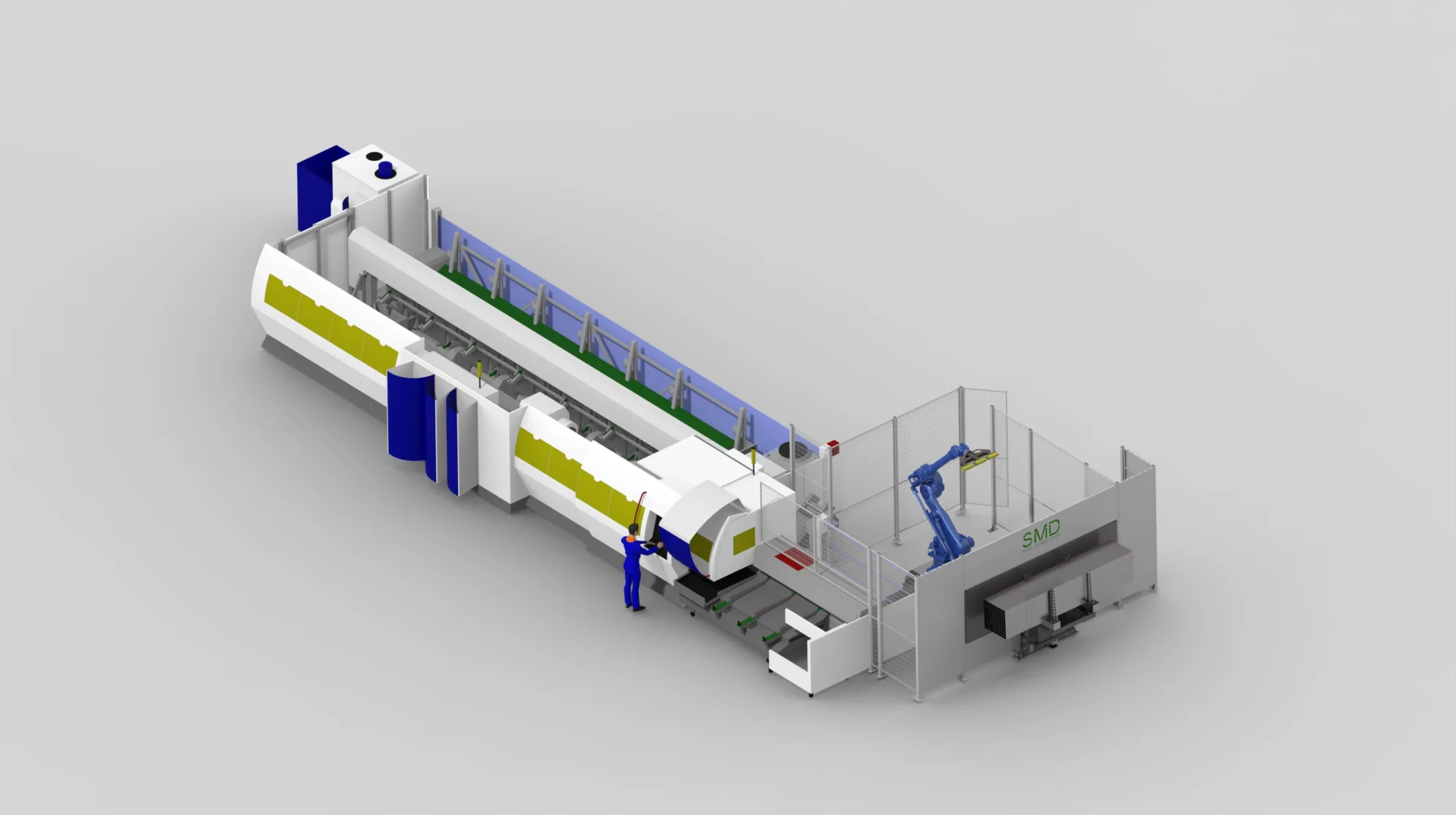
The robotic system is designed to serve a laser tube machine, automatically managing the unloading of processed tubes onto a buffer.
The system ensures operational continuity and optimized cycle times, reducing manual intervention and improving the management of material exiting the laser machine. Thanks to the robot’s precision and the correct positioning of the tubes on the buffer, safety, efficiency, and optimal preparation of components for subsequent production phases are ensured.
Available configurations
- Handling robot dedicated to pipe unloading
- Integrated accumulation buffer for continuous material management
- Option for integration with conveyor or palletizing systems
- Customized production based on pipe size and diameter
Special Systems: Satin Finishing and Brushing
Specialized satin finishing and brushing systems are designed to produce high-quality surface finishes on metal components, ensuring uniformity, precision, and production continuity.
These systems integrate automatic handling, brushing, or satin finishing stations, and handling devices, allowing components of various sizes and geometries to be processed efficiently and repeatably.
The modular configuration optimizes cycle times and reduces manual intervention, ensuring consistent aesthetic and functional results, even in medium- to high-volume production environments.
Case studies illustrate how integrating handling and automatic finishing systems achieves uniform, high-quality surfaces, improving efficiency and overall productivity.
7-Axis Electric CNC Cabinet for Satin Finishing and Brushing Stainless Steel Electrical Panels and Doors
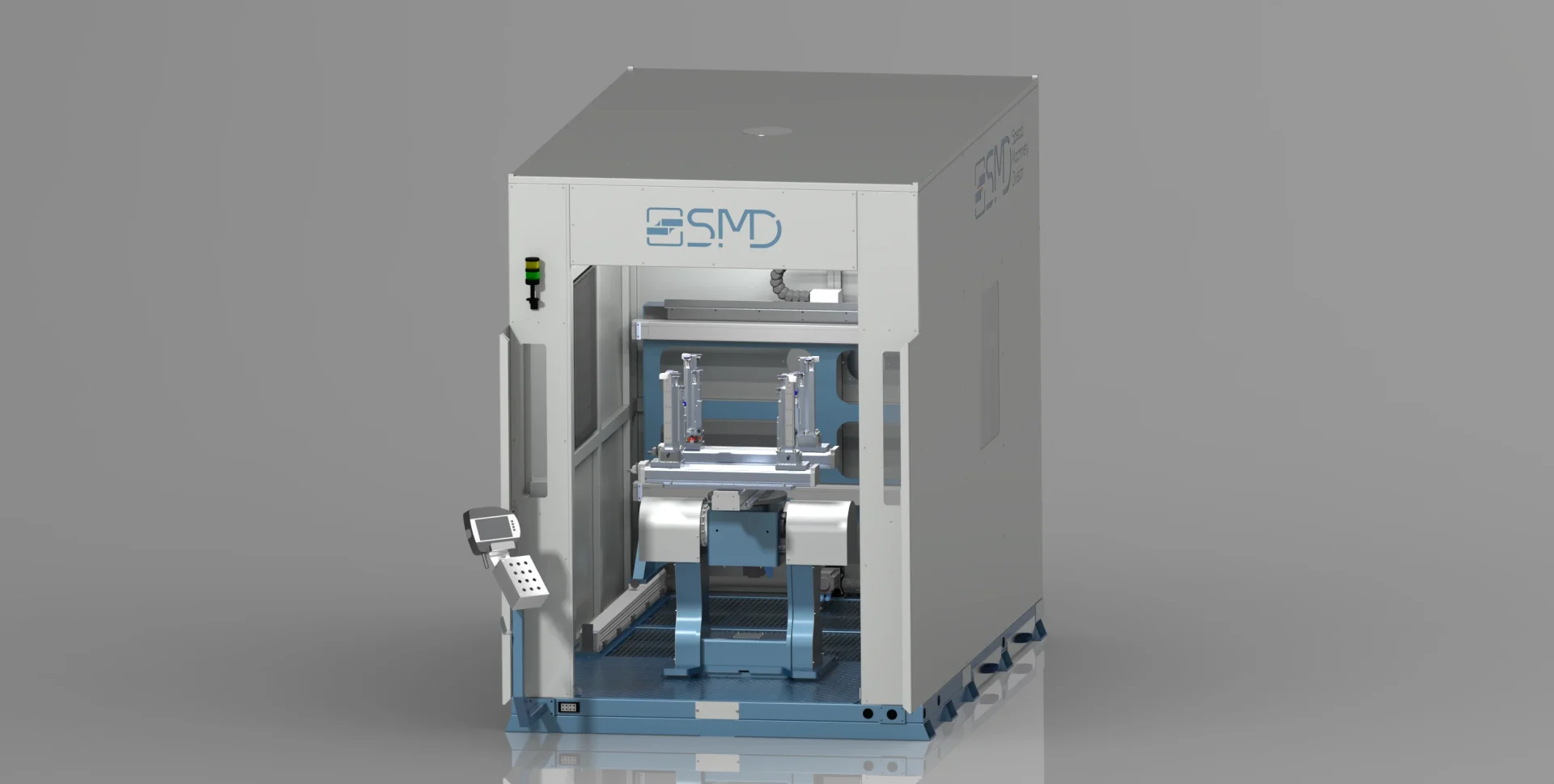
The 7-axis electric CNC cabin is designed for the satin finishing and brushing of electrical panels and stainless steel doors, ensuring uniform finishes, precision, and repeatability.
The system allows for complex machining operations on flat and curved surfaces, thanks to the complete movement of components along seven electronically controlled axes. Automatic configuration ensures production continuity and reduced cycle times, maintaining high aesthetic and quality standards even on medium-to-large production batches.
Available configurations
- 7-axis electric CNC cabinet for complete and precise movements
- Automatic component handling systems
- Customized programming for satin finishing and brushing of frames and doors
- Option of integration with automatic loading/unloading systems
- Custom manufacturing based on component dimensions and geometry
Special Systems: Insertion
Specialized inserting systems are designed for the automatic insertion and application of components such as threaded inserts, blind rivets, or similar systems, ensuring precision, repeatability, and production continuity.
These systems integrate positioning, handling, and insertion stations, allowing components of various geometries and materials to be handled efficiently and safely.
The modular and customized configuration optimizes cycle times, reduces manual intervention, and ensures consistent quality in production processes.
The case studies present real-world examples of how automatic inserting improves efficiency, precision, and productivity, even in medium to large batches.
Automatic Machine for Loading and Tearing 8 Rivets on Office Furniture Components
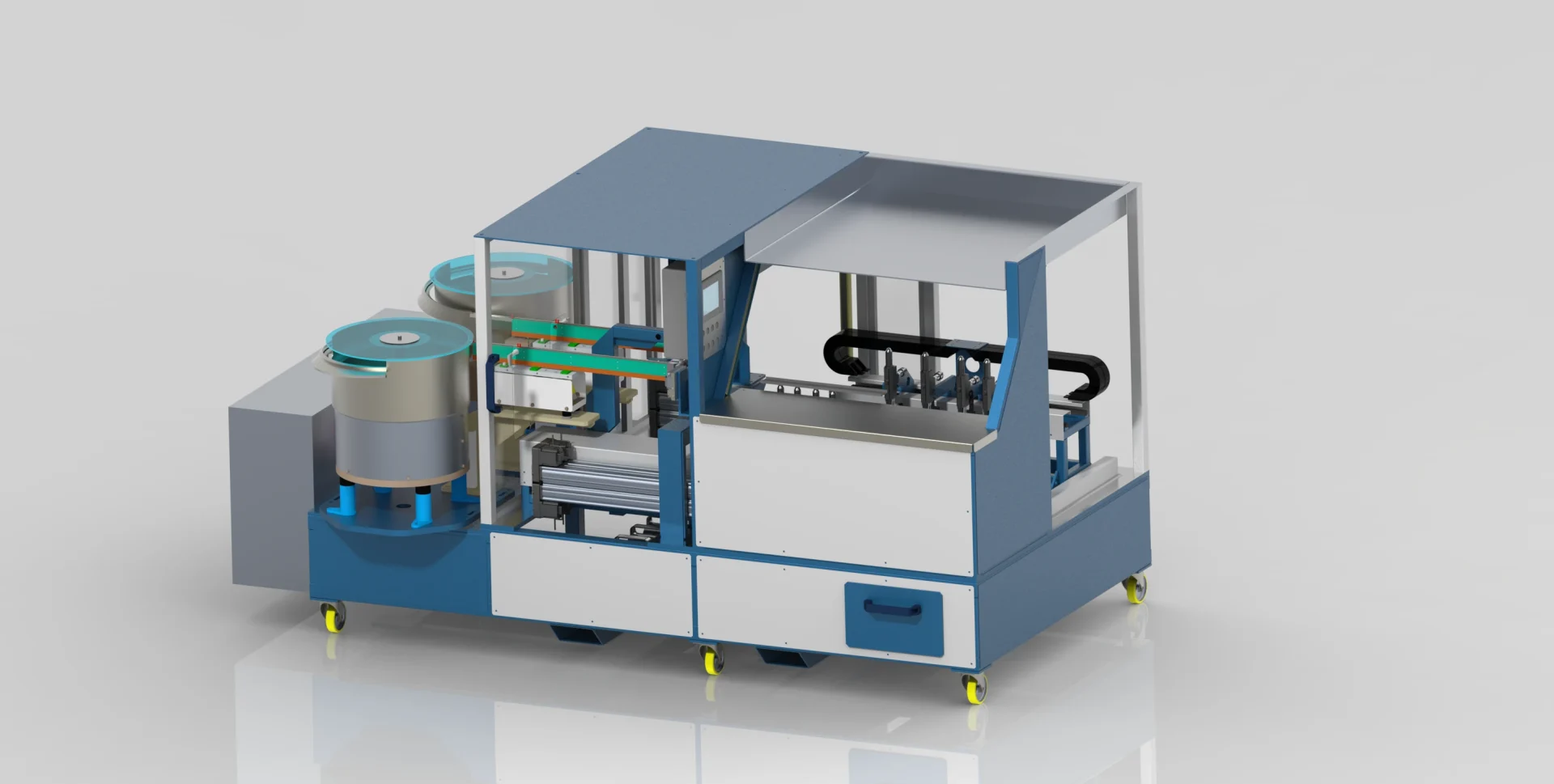
The automatic machine is designed to load and tear rivets on office furniture components, ensuring precision, repeatability, and production continuity.
The system integrates vibratory feeders for automatic rivet loading and eight automatic tearing heads, allowing for quick and efficient completion of the operation.
This configuration reduces manual intervention, optimizes cycle times, and ensures consistent quality in rivet insertion on medium-to-large production batches.
Available configurations
- 8 automatic rivet removal heads
- Vibratory feeders for automatic loading
- Component positioning and locking systems
- Option for integration with automated assembly lines
- Customized production based on component size and geometry
Special Systems: Induction
Special induction systems are designed to heat metal components quickly, precisely, and in a controlled manner using localized electromagnetic energy.
These systems allow for treatments such as preheating, brazing, bending, or forming, optimizing cycle times and ensuring consistent quality of joints and treated surfaces.
The modular and customized configuration allows for the management of components of different sizes, geometries, and materials, improving production efficiency and reducing the need for manual intervention.
The case studies present real-world examples where automatic induction integrates handling and heat treatment processes, ensuring precision, repeatability, and operational continuity.
Shrink Fitting Booth for Support Rings for Hydraulic Cylinders
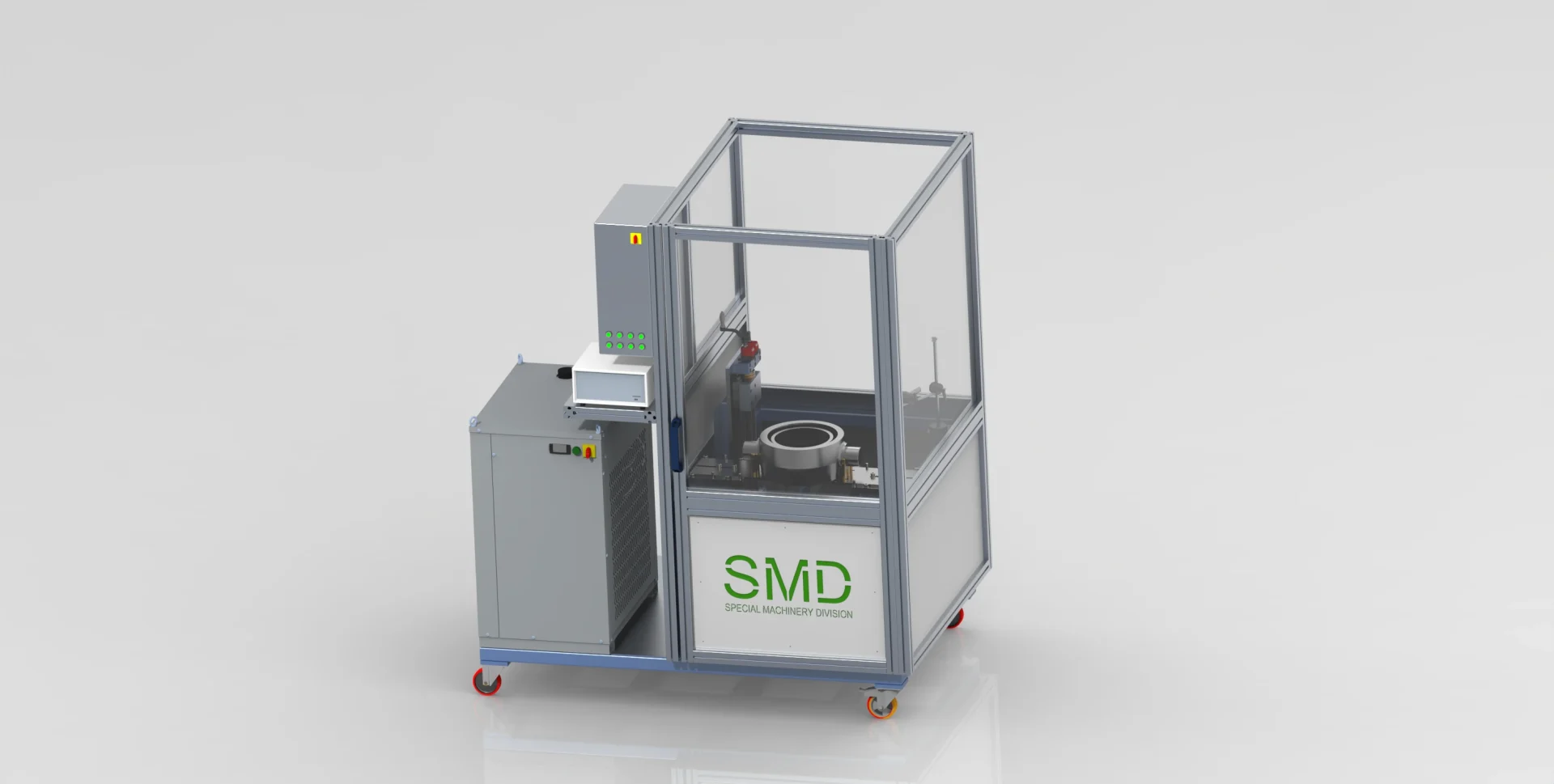
The booth is designed for the heat-shrinking of support rings for hydraulic cylinders, ensuring precision, repeatability, and production continuity.
The process involves heating the rings using an induction system, allowing for uniform and safe shrinking without compromising the mechanical properties of the component.
The automatic setup optimizes cycle times, reduces manual intervention, and ensures consistent quality even for medium-to-large production batches.
Available configurations
- Induction heating system for heat-shrinking
- Safety booth for automated operations
- Ring positioning and locking systems
- Option of integration with production lines or automatic handling
- Customized manufacturing based on component size and material
Special Plants: Assembly
Special assembly systems are designed to automate component assembly and combination operations, ensuring precision, repeatability, and production continuity.
These systems integrate robots, positioners, manipulators, and dedicated devices for clamping and managing components, enabling complex assemblies to be performed efficiently and safely.
The modular and customized configuration optimizes cycle times, reduces manual intervention, and ensures consistent quality even in medium to large production batches.
The case studies present real-world examples of how assembly automation improves production efficiency, precision, and repeatability of industrial processes.
Semi-Automatic Machine with Revolver Table for Loading and Driving Shaped Dowels
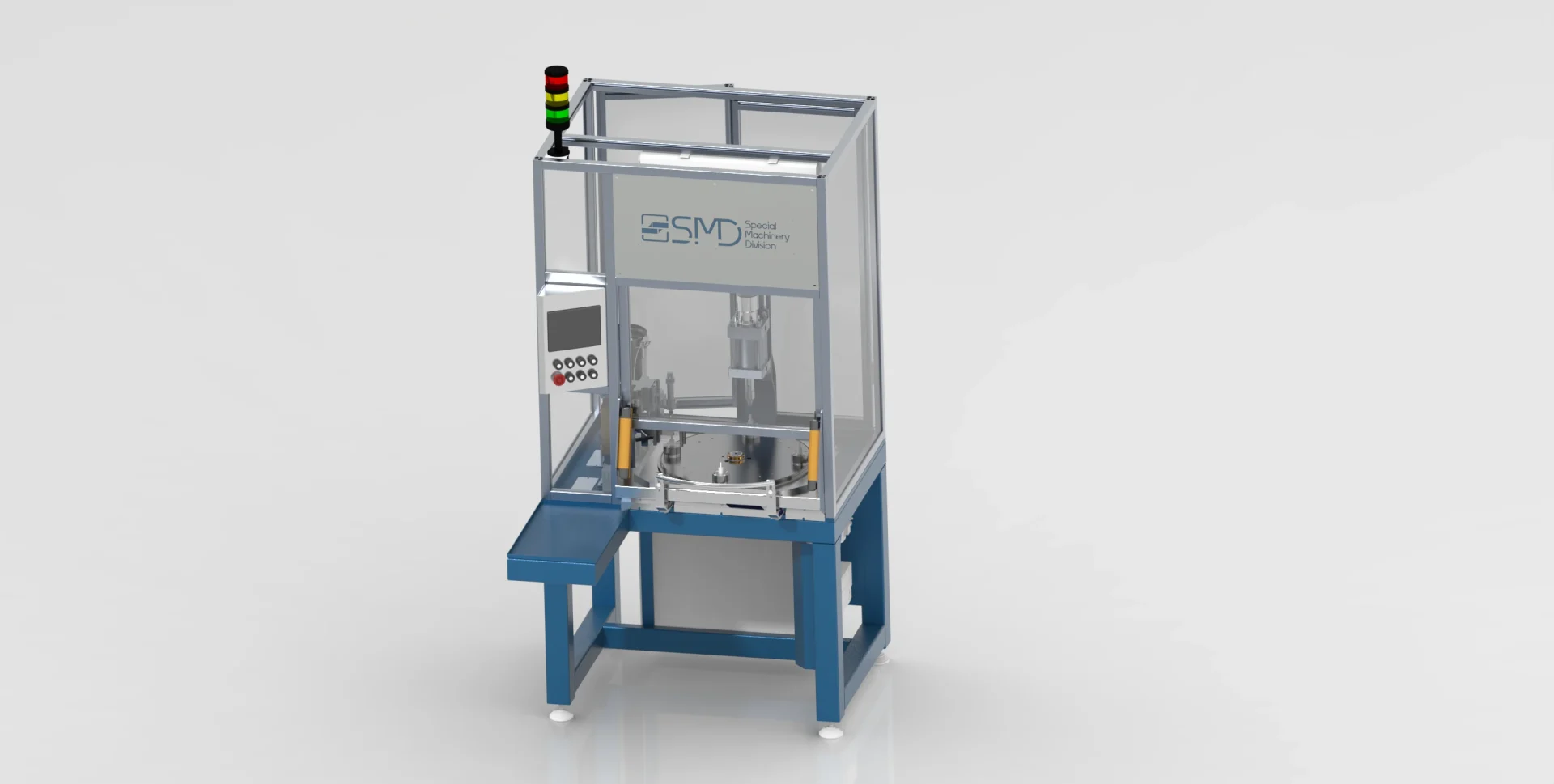
The semi-automatic machine is designed for the automatic loading and driving of shaped pins onto cylindrical bodies, ensuring precision, repeatability, and operational safety.
The system requires the operator to manually load the components onto the turret table, while the pin is driven automatically. The machine is also equipped with a vision system that verifies the correct positioning and timing of the pin to be driven, ensuring consistent quality and reducing waste.
Thanks to extremely short cycle times, just a few seconds per part, the system is also suitable for high-speed production.
Available configurations
- Revolving table for automatic component management
- Automatic system for driving the shaped pin
- Vision system for checking pin positioning and phasing
- Option for integration with automatic component feeding systems
- Custom manufacturing based on the size and geometry of the cylindrical bodies
Special Plants: Mechanical Processing
Specialized mechanical processing systems are designed to perform operations such as drilling, threading, and other processes on metal components, ensuring precision, repeatability, and production continuity.
Depending on the needs, the systems can integrate robotic systems or dedicated machines, or be designed as fully dedicated machines for the specific process.
The modular and customized configuration allows for the efficient management of components of different geometries and materials, optimizing cycle times and reducing manual intervention.
Case studies show how the automation of mechanical processing contributes to improving efficiency, quality, and overall productivity.
Semi-Automatic 14-Axis Electric CNC Machine for Drilling Square or Rectangular Tubes
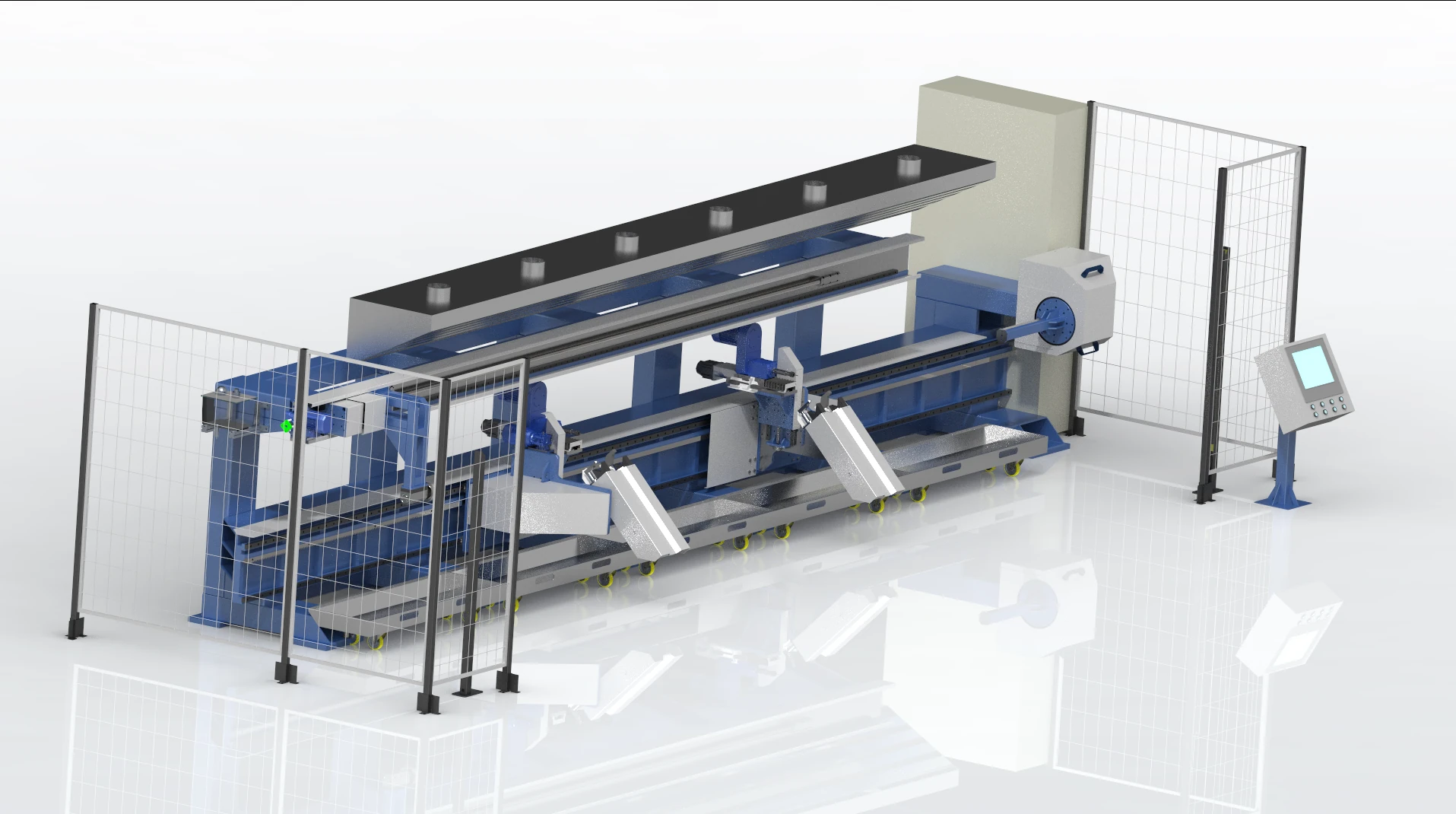
The semi-automatic CNC machine is designed for drilling square or rectangular tubes on all four sides, ensuring precision, repeatability, and consistent quality.
The system allows the operator to load and unload components, while all drilling operations are performed automatically by the 14 CNC-controlled electric axes.
This configuration allows for the processing of tubes of various sizes and geometries, optimizing cycle times and reducing waste.
Available configurations
- 14-axis electric CNC for drilling on 4 sides
- Manual loading and unloading of components by the operator
- Option to adapt to tubes of various sizes and thicknesses
- Customized production based on production needs
Want to know more?
We’re excited to introduce ourselves to new customers and offer solutions that go beyond simple supply, but that address specific and complex needs. Our passion for designing special machines is what drives us and makes us a reliable partner in the world of industrial automation.